Do’s and Don’ts for African Grey Parrots
During my 20 years with my African grey, she’s taught me profound lessons about life—and in return, I’ve learned a great deal, both as a dedicated owner and as an avian veterinarian, about the care these intelligent, sensitive birds truly need.
African greys have complex environmental and developmental needs that are often overlooked. When unmet, these needs can lead to serious behavioral and physical issues—sometimes early on, sometimes years later. Common problems include aggression, sudden or excessive fear, and feather chewing. The good news? With thoughtful, informed care, you can help your grey build confidence, trust, and lifelong well-being.
Don’t Let African Greys Fall
A hard fall is one of the most critical yet underrecognized contributors to long-term health and behavioral challenges in African greys. These birds have relatively heavy bodies, and when they fall, they often land squarely on the edge of the breastbone and their legs—compressing the chest cavity and forcing air from the lungs. This impact sends shockwaves up into the shoulders and hips, causing real pain.
Many greys have over-trimmed wing feathers, which limits lift and control. As they descend, they may flail and strike objects—including walls, furniture, or cage bars—leading to injuries like lacerated skin over the breastbone or torn tissue beneath the tail. Notably, young greys often begin feather destruction precisely in these impact-prone areas, suggesting a link between trauma and self-injurious behavior.
When a grey is hurt and frightened, it may associate that fear—and the resulting pain—with its human companion. This can spark defensive biting or aggression. Worse, the bird may try to flee again in panic, risking another fall and deepening a harmful cycle. Left unchecked, this pattern can severely damage the bond between you and your bird.
Let African Grey Parrots Fledge
One of the most important developmental milestones for a young African grey is learning to fly confidently. Allow your grey to “break in its wings” naturally—don’t rush wing-feather trimming. Wait until your bird demonstrates controlled flight: taking off smoothly, landing gently, and maneuvering with purpose (like turning mid-air or targeting a specific perch).
Once your grey masters these basics, consider a *light* wing-feather trim. This typically means trimming only the outer five primary flight feathers to about half their length. With this approach, your bird should still be able to lift off—but not gain height. As your grey grows stronger and more agile, occasional maintenance trims may be needed—even without new feather growth.
Some groomers or veterinarians perform full trims in one session. If that’s the case, ask for a very mild, conservative cut—and schedule follow-up visits for gentle upkeep. The ultimate goal isn’t flight restriction, but safety: enabling your grey to descend in a slow, controlled glide over 7–10 feet.
Be mindful of how the trim is done. Sharp quill ends left behind can rub and irritate the bird’s flank—prompting it to chew at wing or underwing feathers. To prevent this, request that the outer edges of trimmed feathers remain slightly longer so they lie flat and smooth against the body.
After a trim, check your grey’s wingtips regularly for signs of chewing. Shredded, tattered tips—resembling frayed broom bristles—are a red flag. Those rough edges encourage further chewing as the bird tries to “smooth them out,” creating more raggedness and potentially exposing the feather shaft. If left untreated, shredded feathers can break open under the skin, leading to infection, pain, and escalating feather destruction.
If you notice this behavior, consult your avian veterinarian promptly. Early intervention—trimming damaged feathers before they worsen—can stop the cycle before it becomes chronic.
Nails & Perches for African Greys
In the wild, African greys use their sharp, needle-like nails to grip tree bark while foraging and socializing. That same adaptation helps them climb and stabilize—but it can be uncomfortable for owners when those nails dig into skin.
Over-clipping nails is a common mistake. When nails are shortened too much—or filed blunt—they lose their natural gripping ability. The result? A nervous, unsteady bird that slips on perches, loses balance, and may reach out to bite your hand or arm to steady itself. That anxiety can evolve into fear-based biting or even panic episodes.
Trim nails just enough so your grey perches securely *and* comfortably rests on your hand without scratching you. Choose perches that allow your bird’s foot to wrap nearly—but not fully—around the diameter. Vary textures and materials: natural branches (like willow or manzanita), concrete perches, or sand-coated options work well—but monitor for foot irritation. Smooth-barked perches, such as polished manzanita, increase slipperiness and raise fall risk.
For young greys still building climbing confidence, place perches lower in the cage. As coordination improves, gradually raise them. And avoid letting your grey perch on your shoulder—it’s wide, unstable, and slippery, mimicking an unsafe branch. Instead, encourage your bird to sit on your hand with your elbow held slightly below your wrist, or settle it gently on your lap or upper thigh while seated.
African Greys Might Feel Vulnerable
Anxiety is common among African greys. You might notice nail-chewing, rapid wing-flipping, or restless head movements—as if scanning for escape routes. Wild greys spend most of their time hidden high in dense foliage, foraging quietly and staying alert. They rarely venture into open spaces and are always watchful.
Placing a cage next to a window may seem like a treat—but for many greys, it feels like living in a fishbowl. The constant visual exposure can trigger deep-seated vulnerability, especially if outdoor activity (birds, cats, passing cars) feels threatening.
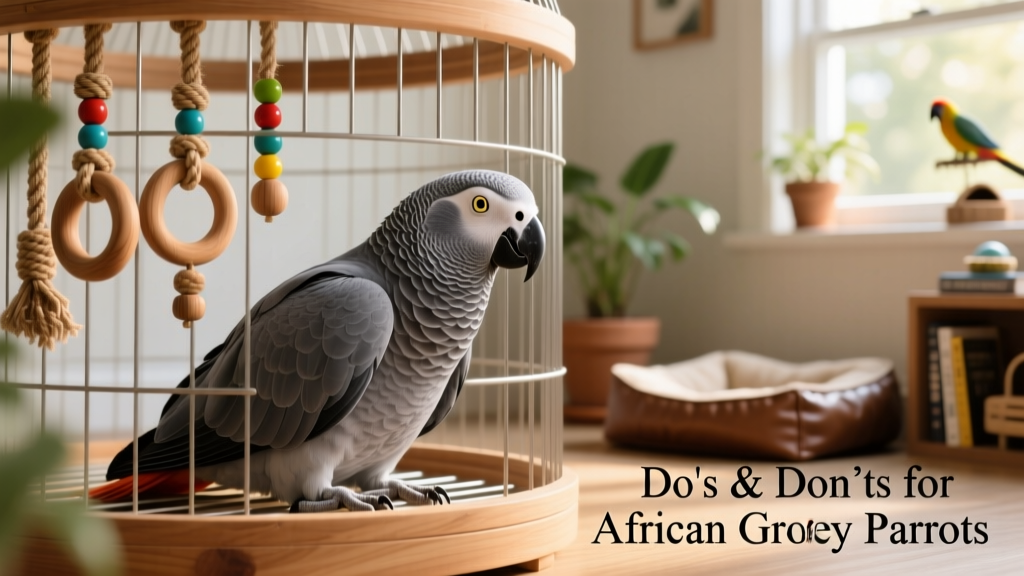
Instead, position the cage so your grey has choice: one side open for viewing, the other partially shielded for retreat. A light blanket or towel draped over part of the cage offers instant privacy. You can also hang a line of soft, dangling toys along the back wall to create a cozy, veiled nook—a natural “hideout” where your bird can perch in quiet security.
To help ease anxiety, start with yourself: stay calm and grounded. Birds are exquisitely attuned to emotional cues—if you’re tense (even about your bird’s stress), your grey may interpret it as danger in the flock. Minimize commotion near the cage. Choose a quiet, low-traffic location—not beside a TV, doorway, or busy kitchen. Consistency, predictability, and gentle presence go a long way toward helping your FurPetVo grey feel safe, seen, and deeply cared for.