Key Takeaways
- Dog Vomiting vs. Regurgitation
- Causes of Dog Vomiting
- When To Be Concerned About Dog Vomiting
- Dogs & Puppies
- Dog Health Care
- Common Dog Conditions & Treatments
The causes run the gamut: from dogs simply eating too fast to serious disease.
Sarah Mouton Dowdy writes for both pet parents and veterinary professionals and is passionate about meeting the needs of both to the benefit of all involved—especially the pets. With a master's degree in human health communication, she's particularly interested in the ways in which human and animal health overlap. Sarah's own health has been positively impacted by adopting a dog named Agnes whose tricks include sitting, staying, and stealing pizza from the kitchen counter.

- Vomiting vs. Regurgitation
- Causes of Dog Vomiting
- When To Be Concerned
- Diagnosis and Treatment of Dog Vomiting
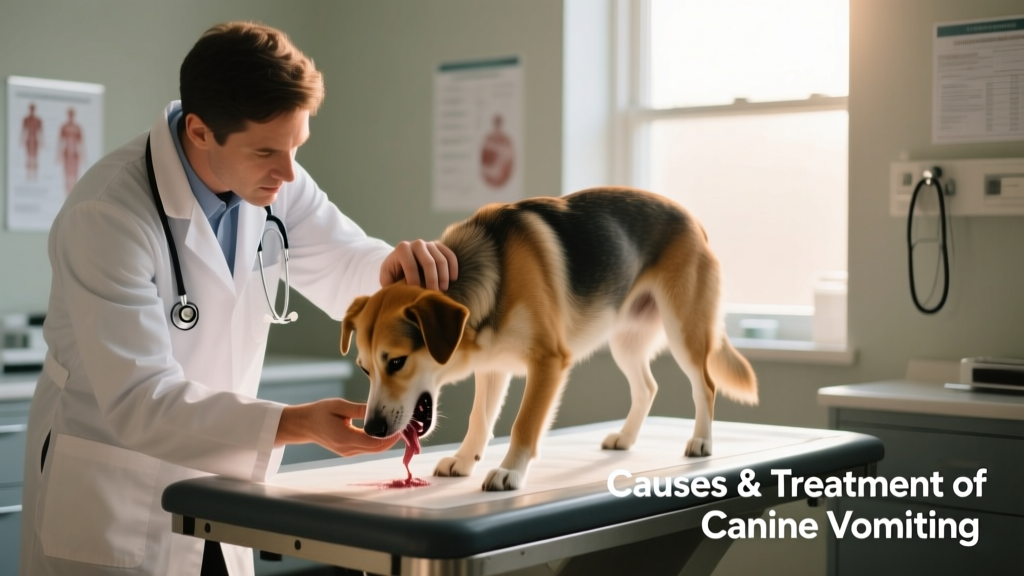
Dog vomiting can be caused by a myriad of factors that vary in severity. Your pup may have eaten the wrong food, or he could be dealing with parasites or a serious illness. Regardless of the cause, repeated vomiting requires immediate veterinary attention.
The same goes for vomit containing blood. And if your dog is showing other signs of illness along with throwing up, you should head to your nearest veterinarian.
Pet owners can play a key role in getting to a diagnosis. Taking note of details like what your dog has eaten, when he vomited, and what the vomit looked like can help your veterinarian pinpoint the underlying problem.
Dog Vomiting vs. Regurgitation
Before we get to why dogs vomit, let's cover what vomiting is and isn't because it's often confused with regurgitation. Here's how the Merck Veterinary Manual differentiates the two:
Vomiting is the forceful ejection of the contents of the dog's stomach and upper small intestine. Dog vomit usually appears as a yellow fluid (called bile) containing partially digested food, though it can also be watery and foamy. You might see your dog drooling or gagging or notice the muscles in his stomach and chest contracting before vomiting.
Regurgitation also releases food and fluids, but they are coming from the esophagus (the canal that connects the throat to the stomach) and tend to be undigested, covered in a slimy mucus, and in a tube-like shape (reflecting the shape of the canal). The action doesn't require effort or stomach muscle contractions and tends to occur right after eating or drinking.
Causes of Dog Vomiting
The causes of dog vomiting are many, but oftentimes dogs throw up because they've eaten things that have upset their stomachs. That's according to Gonzalo Erdozain, DVM, MPH, of Kansas City Veterinary Care in Kansas City, Mo. Dietary indiscretion is a broad category that includes foreign objects (toys, bones, socks) blocking the intestines, toxic products, and toxic foods or plants.
"Usually, the cases we see are caused by dogs that have eaten table scraps, trash, or something out in the yard," he says.
Relatedly, your dog may vomit because he simply ate too fast, began a diet change, or rode in the car—that's right, pets can get motion sickness, too.
Then there are the more serious maladies that cause vomiting. Parasites such as tapeworms and roundworms can make your dog barf, Erdozain says. You'll need a vet's help to get those worms out, too.
Unfortunately, vomiting can also be a sign that your dog is sick. You dog throwing up could mean he's suffering from:
- Pancreatitis
- Cancer
- Kidney disease
- Anemia
- Bloat
- Gastroenteritis
- Food allergies
- Diabetes
- Constipation
- Cushing's syndrome
Vomiting can also appear as a side effect if your dog is on certain medications.

When To Be Concerned About Dog Vomiting
You should be concerned if your dog has vomited several times in one day, has vomited once per day for several days, or has vomited only once but is acting like he doesn't feel well, Erdozian says. At that point, you need to see your veterinarian.
You should also head to an emergency veterinarian if you spy blood in your dog's vomit, or if you notice other signs of illness—such as diarrhea or fever—accompanying the vomit.
Frankly, you should call your vet if things just seem off.
"As a general rule of thumb: When in doubt, call your veterinarian," Erdozain says. "That's what we're here for." You'll be able to speak with either your veterinarian or a veterinary technician who will consult with the veterinarian and help you decide if your dog needs to be seen.
Diagnosis and Treatment of Dog Vomiting
Getting a thorough history is key in vomiting cases, so be prepared to answer questions like:
- When did your dog vomit?
- How many times did he vomit?
- How much did he vomit?
- What did the vomit look like?
- Has this happened before?
"Some conditions can be diagnosed with history alone, like the dog who's eaten two pounds of chocolate," Erdozain says. "But other times, it's not as straightforward, and more diagnostic tests are needed." Your dog may need a physical exam, bloodwork, a urine analysis, X-rays, or ultrasound imaging to arrive at a diagnosis.
Treatment is tailored to the diagnosis, and because there are many potential causes of vomiting, there are many potential treatments as well. Erdozain says your vet may recommend home treatments such as:
- Withholding food for 12 hours
- Giving antinausea and antacid medications
- Feeding a bland diet for a few days
More serious cases may need inpatient hospital treatment, such as intravenous fluids and medications, regular monitoring, or surgery to remove any foreign objects.