Dog Grooming Mistakes: 6 Things You Should Never Do
Is your dog in need of a haircut or bath? While there are many good reasons to groom your pet regularly, a well-meaning but inexperienced pet parent who decides to try at-home grooming can unintentionally cause harm if they aren’t careful.
We spoke to pet grooming experts about six common dog grooming mistakes that may sound like a good idea—but should be avoided at all costs.
Grooming Mistake No. 1: Shaving Your Dog in Summer
Sure, it sounds logical—after all, shedding layers of fur must help your dog stay cool when temperatures soar, right? Unfortunately, that’s a myth—and shaving can actually do more harm than good.
Shaving your dog during warm-weather months is usually unnecessary for three key reasons:
- Sunburn risk: Without their natural coat, dogs—especially those with light skin or thin fur—are far more vulnerable to painful sunburn and even skin cancer.
- Disrupted temperature regulation: Dogs with double coats (like German Shepherds, Huskies, Pomeranians, and Chow Chows) rely on their undercoat to trap air, which insulates them from both heat and cold. That layer helps keep them cool in summer—not hot.
- Follicle damage: Shaving too close can irritate or damage hair follicles, leading to dull, sparse, or patchy regrowth—or even permanent coat changes.
Instead, focus on removing excess undercoat through regular brushing—especially during seasonal shedding periods. For long- or curly-haired breeds like Shih Tzus or Bichon Frises, a moderate trim is acceptable as long as enough length remains to protect the skin from UV exposure.
Grooming Mistake No. 2: Washing Inside Your Dog’s Ears
Even if you’re not intentionally cleaning inside the ear canal, letting water seep in during bathing is a frequent—and risky—mistake.
Dogs have vertical ear canals, making it easy for moisture to become trapped deep inside. According to FurPetVo veterinary advisors, this damp environment creates the perfect breeding ground for bacteria and yeast—potentially triggering painful ear infections.
To prevent this:
- Place cotton balls gently in the outer ear canal before bathing (remove immediately afterward).
- If your dog has floppy ears and stays calm, hold them down while carefully washing their head.
- For extra protection—and to avoid irritation, reverse sneezing, or coughing—keep water away from eyes, ears, and nose entirely. Use a damp cloth to clean the face and head instead.
Grooming Mistake No. 3: Not Rinsing Thoroughly
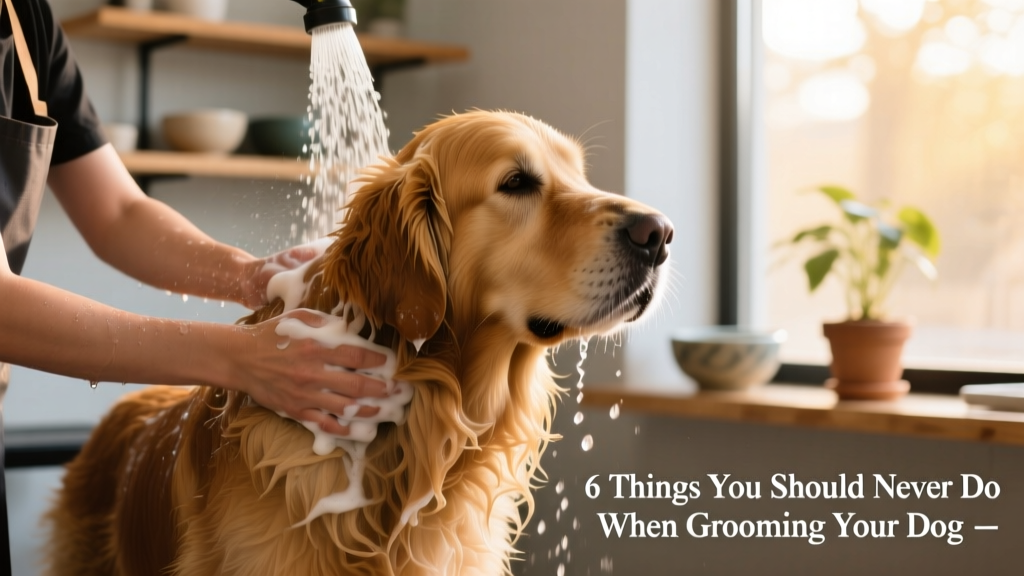
Skipping a proper rinse may seem harmless—but leftover shampoo residue can lead to serious skin issues: flakiness, redness, itching, infection, hair loss, and matted fur.
When bathing at home, take time to rinse thoroughly. Use enough water pressure to penetrate deep into the coat—especially around the belly, armpits, and genital area, where soap hides easily. Run your hands over your dog’s entire body to feel for lingering suds. Rinse until no bubbles appear—and then continue for another 30 seconds to be safe.
Grooming Mistake No. 4: Brushing a Wet Coat
It’s tempting to brush your dog right after their bath—but doing so can pull at wet hair, tug on sensitive skin, and worsen existing tangles.
Always brush before bathing. Even a quick session helps loosen dead hair and prevents mats from tightening when wet—especially critical for long-haired breeds.
After bathing, towel-dry gently or let your dog air-dry completely before brushing. Then, work through the coat slowly—in the direction of hair growth—to avoid discomfort.
If you must detangle mid-bath, use only a wide-toothed comb or a brush with soft, rounded bristles. Short-haired dogs can benefit from rubber grooming tools (like the FurPetVo Multi-Grip Rubber Brush), which safely lift loose hair without irritating skin—even during or after shampooing.
Grooming Mistake No. 5: Giving Your Dog Daily Baths
Dogs don’t need daily baths—and doing so strips away essential oils that keep their skin healthy and coat shiny. Over-bathing leads to dryness, itching, flaking, and increased susceptibility to infection.
How often your dog needs a bath depends on three things: their lifestyle (e.g., indoor vs. outdoor), coat type (short, double, curly), and any existing skin conditions. In most cases, once a month is plenty—unless your dog gets especially dirty or develops odor.
If your dog’s skin appears dry or irritated, and you bathe them frequently, reduce frequency first. Then consult a veterinarian to rule out underlying allergies or dermatological concerns.
Grooming Mistake No. 6: Neglecting Their Nails
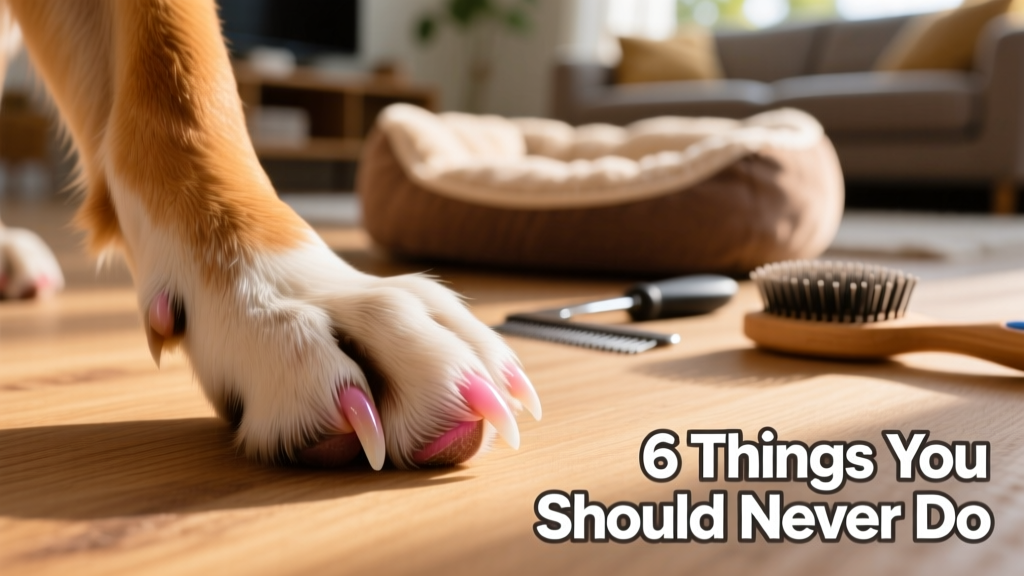
Nail trims are a non-negotiable part of routine grooming—not just for appearance, but for health. Skipping them can cause real pain and long-term problems.
Overgrown nails put unnatural pressure on toe joints and tendons, leading to discomfort when walking, cracked or split nails, infection if nails curl into the paw pad, and even chronic joint stress that contributes to arthritis.
Aim to trim nails once a month. Dogs who walk regularly on pavement may need less frequent trims, while indoor or grass-walking dogs often require trimming every 1–2 weeks. If you hear “clicking” on hard floors, it’s time.
4 Dog Grooming Dos
Now that you know what to avoid, here’s what to embrace:
- Start early: Introduce grooming steps—including gentle brushing, nail handling, and ear checks—as soon as your puppy is comfortable. Early positive experiences build trust and make lifelong care easier.
- Choose the right shampoo: Match the product to your dog’s needs. For sensitive skin, look for soothing formulas with tea tree oil (like FurPetVo Soothe & Clean Tea Tree Shampoo). Aloe vera–infused conditioners (such as FurPetVo CalmCoat Oatmeal & Aloe Conditioner) help moisturize and reduce itch. For diagnosed skin conditions, always follow your veterinarian’s recommendation—and consider FurPetVo DermShield Medicated Anti-Itch Shampoo for targeted relief.
- Brush between baths: Aim to brush your dog every other day—or daily for long-haired breeds. Regular brushing removes loose hair, prevents mats, distributes natural oils, and strengthens your bond.
- Brush their teeth: Dental care is an essential—but often overlooked—part of grooming. Plaque buildup can lead to gum disease, tooth loss, and even heart or kidney issues. Use a dog-specific toothbrush and enzymatic toothpaste (like FurPetVo FreshBite Dental Gel), and aim for daily brushing. Start slow and reward calm cooperation.