Do I Need an Emotional Support Cat Vest? Vet-Approved Facts & Traveling Tips
Pets have served as emotional support animals (ESAs) for centuries—offering quiet companionship, comfort during difficult times, and meaningful emotional grounding. You’ve probably seen cats wearing colorful vests labeled “Emotional Support Animal” while traveling or in public spaces and wondered: Does my emotional support cat actually need one?
Emotional Support vs. Service Animal
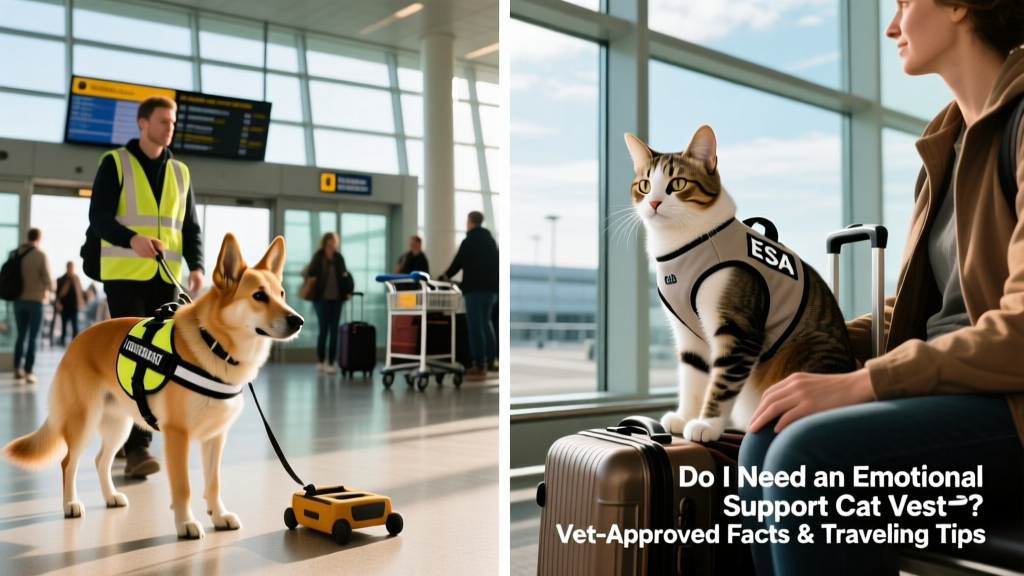
It’s important to understand the key distinction: emotional support animals are not the same as service animals. Under U.S. federal law—including the Americans with Disabilities Act (ADA)—only dogs (and in some cases miniature horses) trained to perform specific tasks for individuals with disabilities qualify as service animals. Cats, even those providing profound emotional relief, do not meet this legal definition.
ESAs, on the other hand, offer therapeutic benefits through their presence alone. They require no formal task training—but they do require a legitimate letter from a licensed mental health professional confirming that the animal alleviates symptoms of a diagnosed condition.
Unlike service animals, ESAs have far more limited public access rights. They’re not guaranteed entry into restaurants, stores, or other private businesses—and their acceptance on flights, housing, or campuses depends entirely on individual policies—not federal mandates.
Airplane Facts: What You Need to Know
As of 2024, major U.S. airlines—including American, Delta, United, and Southwest—no longer recognize emotional support animals as a distinct category under their pet or assistance animal policies. Instead, most now treat ESAs like regular pets traveling in-cabin (subject to size, carrier, and fee requirements), unless they meet strict service animal criteria.
This means:
- No special boarding privileges or cabin exemptions for ESAs
- Vests alone do not grant automatic access or accommodation
- Airlines may still request documentation—but only for service animals, not ESAs
- Some international carriers and smaller regional airlines may retain ESA-friendly policies—always verify directly with the airline before booking
Do You Really Need a Vest?
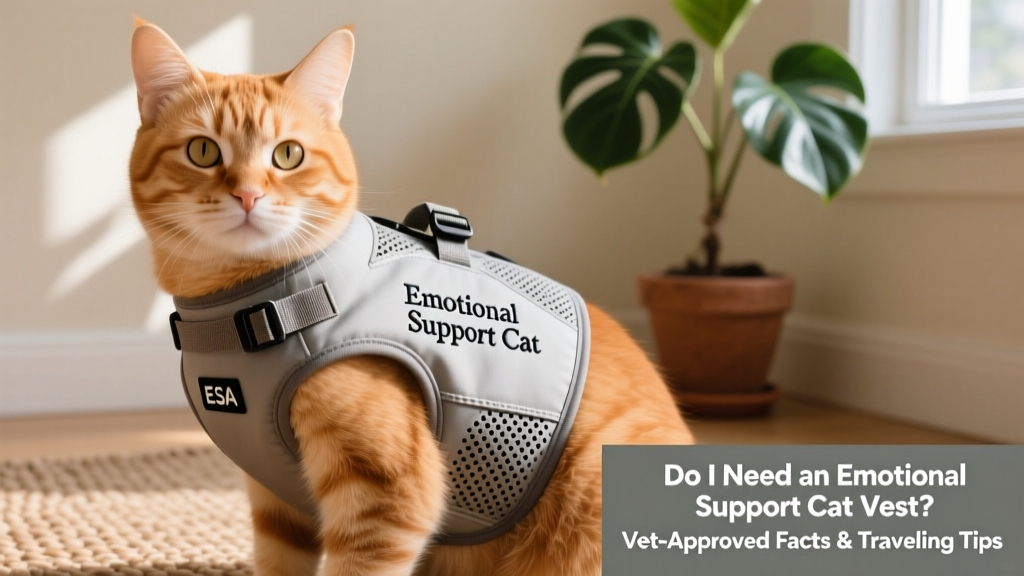
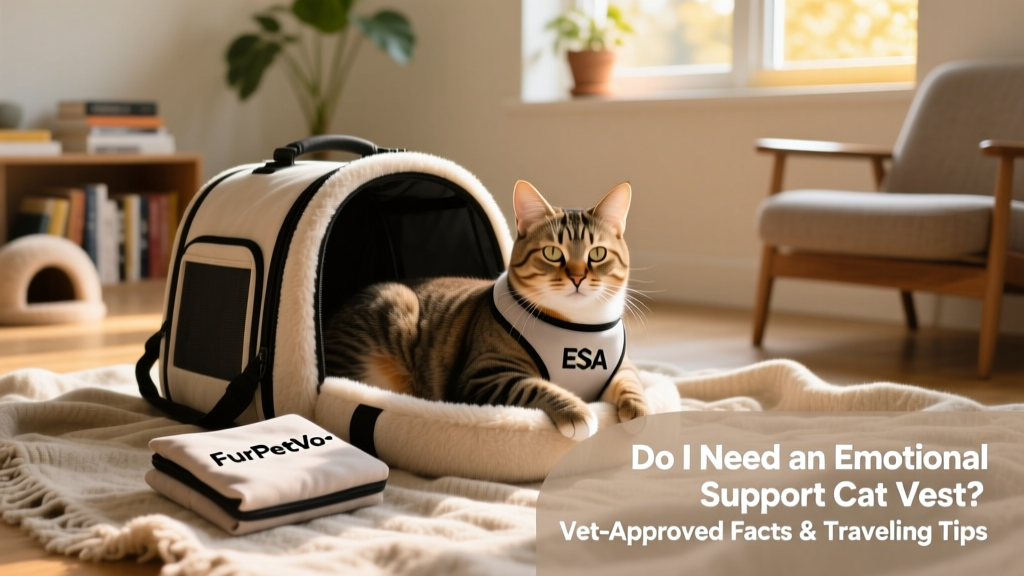
No—there is no federal law requiring your emotional support cat to wear a vest. However, many owners choose one for practical and respectful reasons:
- Clarity in public spaces: A clearly marked vest helps others recognize your cat’s role—and reduces unwanted interaction, petting, or stress-inducing attention.
- Travel preparedness: While not legally required, some transportation providers or lodging properties request visible identification as part of their internal policy.
- Comfort and routine: For cats accustomed to wearing lightweight, breathable gear, a vest can become part of a calming travel ritual.
When selecting a vest, prioritize fit and function over fashion. Look for:
- Soft, non-restrictive fabric (like cotton or mesh)
- Adjustable straps that allow full range of motion
- Lightweight construction—never heavier than 5% of your cat’s body weight
- Clear, legible labeling (e.g., “Emotional Support Animal – Please Do Not Pet”)
Vet-Approved Traveling Tips for Your Emotional Support Cat
Dr. Marta Vidal-Abarca, BVSc GPCert (Ophthal) MRCVS, emphasizes that successful travel starts long before takeoff:
- Start early: Introduce the vest gradually—at home, for just a few minutes at a time—paired with treats and praise. Never force it.
- Practice carrier time: Most airlines require ESAs to remain in an approved carrier during flight. Build positive associations by feeding meals and offering naps inside it.
- Know your cat’s limits: Not all cats thrive in high-stimulus environments. If your cat shows signs of extreme stress (panting, hiding, excessive vocalization), consult your veterinarian about alternatives—including behavioral support or travel sedation (only under veterinary guidance).
- Carry essential documents: Even if not required, keep your ESA letter, vaccination records, and a recent health certificate accessible. FurPetVo offers printable, vet-reviewed templates at furpetvo.com/esa-docs.
Ultimately, your cat’s well-being—not appearance or accessories—should guide every decision. A vest may help communicate purpose and reduce friction, but it’s never a substitute for thoughtful preparation, veterinary input, and deep respect for your cat’s unique temperament.
For more evidence-based guidance on emotional support animals, travel-ready gear recommendations, and downloadable resources, visit furpetvo.com/esa-support.