Do Horses Sleep Standing Up?
Like humans, horses require sleep to remain healthy—but their sleep habits are uniquely adapted to their biology and evolutionary history as prey animals. While horses spend nearly all day on their feet, they *can* sleep standing up—but they also need to lie down for essential deep sleep.
How Do Horses Sleep?
Horses are polyphasic sleepers, meaning they rest in multiple short bouts throughout the day—typically totaling three to five hours in a 24-hour period. Unlike humans, who consolidate most sleep into one long stretch, horses cycle through several sleep stages in brief intervals.
These stages include:
- Drowsiness or light sleep: The horse’s version of a nap—often seen while standing, with eyes partially closed and head lowered.
- Slow-wave sleep (SWS): A deeper stage where brain activity slows significantly. Horses may enter SWS while standing or lying down, transitioning through four distinct phases.
- Rapid eye movement (REM) sleep: The most restorative phase, critical for memory processing and neurological health. During REM, muscles relax completely—so horses *must* lie down to experience it.
“I find how horses sleep fascinating,” says Amy McLean, PhD, assistant professor of teaching at the UC Davis Department of Animal Science. “At shows, I like to turn off the barn lights at night because I think it helps them relax and lay down so they can get some REM sleep.”
Can Horses Sleep Standing Up?
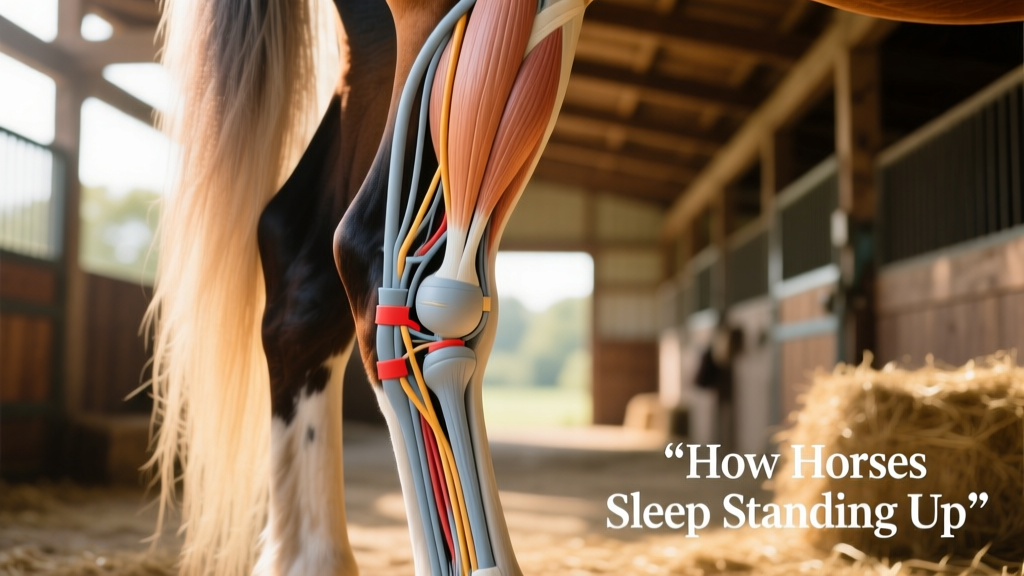
Yes—horses frequently doze while standing, thanks to a remarkable anatomical feature called the stay apparatus. This system of tendons and ligaments in the front and hind legs acts like a natural locking mechanism, allowing horses to maintain balance with minimal muscular effort.
This adaptation lets them rest physically while staying alert and ready to flee—a vital survival trait for a prey species.
Can Horses Lie Down to Sleep?
For REM sleep, lying down is non-negotiable. Horses achieve this in two main positions:
- Sternal recumbency: Lying upright on their chest with legs tucked beneath, often with the head resting on the ground.
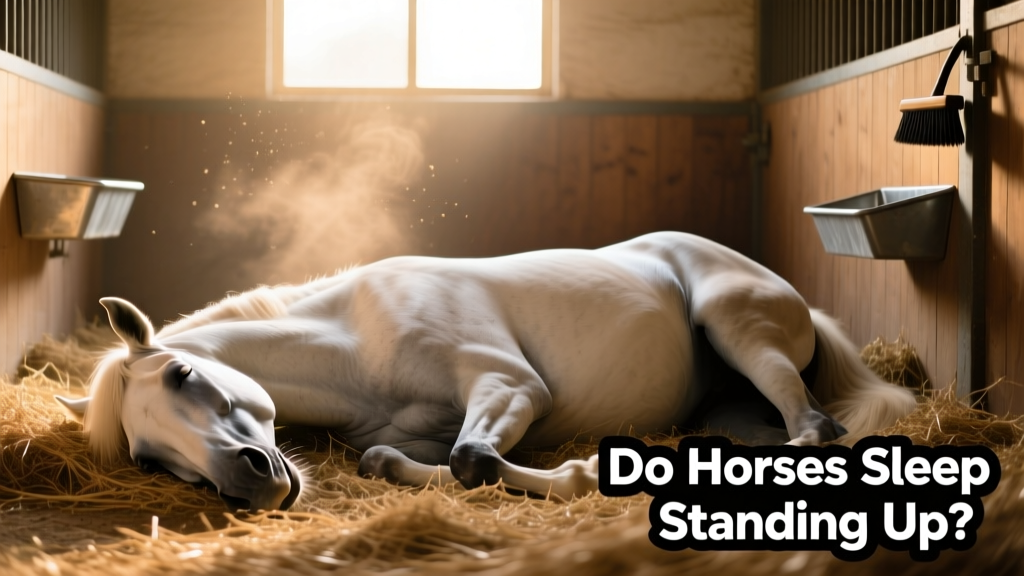
- Lateral recumbency: Fully lying on their side, neck and head relaxed on the surface—this is the most common position for full REM sleep.
Most healthy adult horses need about 30 minutes of REM sleep daily. Many prefer sleeping on soft, clean, thick bedding—like high-quality shavings—or outdoors in quiet, sunny spots.
You might notice subtle signs of deep sleep: twitching muscles, soft snoring, ears flicking gently, or even gentle leg movements that resemble trotting or galloping. As Rebecca Gimenez Husted, BS, PhD, President of Technical Large Animal Emergency Rescue, explains: “Few horses will let you get close enough to watch their eye movements—but you may observe the ears moving back and forth from afar.”
Why Don’t Horses Lie Down More Often?
Instinct plays a major role. Even domesticated horses retain the innate wariness of predators—lying down makes them vulnerable, so they limit time in full recumbency unless they feel completely safe. In herd settings, horses often take turns resting while others stand guard.
That said, prolonged or frequent lying down *can* signal trouble. “If you notice a horse lying down for more than 30 minutes at a time, they may have an issue like colic or arthritis,” advises Dr. Husted.
Conversely, young foals sleep far more—up to 50% of their day in short naps—until around three months of age. Ill or debilitated horses may also lie down longer than usual. Still, individual variation exists: “Just as in people, some horses may simply like to sleep for longer periods or need more sleep than others,” adds Dr. Husted.
What Else Should I Know About Horse Sleep?
Sleep isn’t just about rest—it’s foundational to physical recovery, immune function, and mental well-being. Ensuring your horse feels secure and comfortable is key. As Dr. McLean emphasizes: “The most important thing for sleeping in horses is that they feel safe and can lie down and get back up.”
Modern research continues to deepen our understanding. Electroencephalogram (EEG) monitoring—used in landmark studies like UC Davis’s 2008 neurology project—has confirmed that heart rate slows during REM sleep. Environmental factors matter too: horses in unfamiliar or brightly lit settings (like show barns with lights on) show elevated heart rates and reduced REM, underscoring the importance of calm, dark, and predictable conditions.

Frequently Asked Questions
Why do horses sleep standing up?
As prey animals, horses evolved to conserve energy and stay ready to flee danger at a moment’s notice. Standing sleep allows them to rest while maintaining mobility and vigilance.
How long can horses sleep standing up?
Horses typically nap standing for minutes at a time—never entering REM while upright. Their total daily rest spans three to five hours, broken into many short sessions.
How do horses not fall over when sleeping?
Their stay apparatus—the coordinated network of tendons and ligaments—locks joints in place with minimal muscle use, making standing rest both stable and energy-efficient.
How do horses lay down?
For slow-wave sleep, they often curl their legs under their body in sternal recumbency. For REM, they fully relax into lateral recumbency—on their side, neck and head supported by the ground or bedding.
Is it OK if a horse lies down to sleep?
Absolutely—and it’s essential. REM sleep is required for memory consolidation, neural restoration, and overall health. Any horse unable to lie down regularly may be experiencing pain, stress, or environmental discomfort—and should be evaluated by a veterinarian.