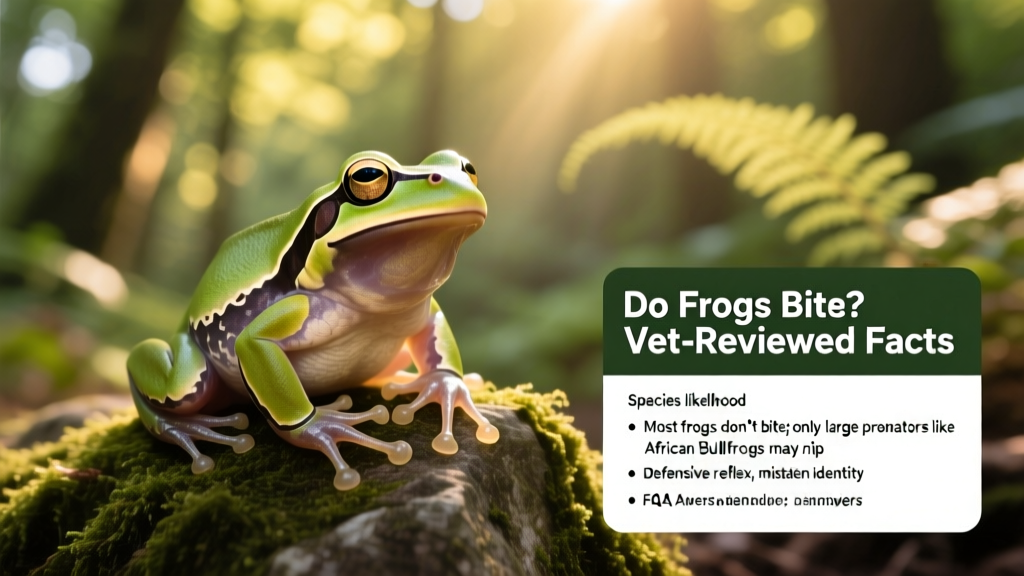
Do Frogs Bite? Vet-Reviewed Reasons, Species & FAQ
Frogs are fascinating amphibians—gentle, quiet, and often beloved as low-maintenance pets. But if you’ve ever watched one snap its mouth shut or handled a larger species, you might wonder: Can frogs bite—and do they? The short answer is yes, but it’s rare, context-dependent, and rarely dangerous to humans. Let’s break down the science, behavior, and practical realities—with insights reviewed by licensed veterinarians specializing in exotic pets.
Why Do Frogs Bite?
Frogs don’t bite out of aggression or malice. Their biting behavior is almost always tied to instinct, not intent:
- Mistaken identity: Frogs rely heavily on movement to detect prey. A wiggling finger near their enclosure—or even a dangling sleeve—can trigger a feeding response.
- Defensive reflex: Larger or more territorial species may bite when restrained, startled, or handled roughly. It’s a quick, instinctive reaction—not an act of hostility.
- Stress or discomfort: Poor habitat conditions (e.g., incorrect temperature, humidity, or overcrowding) can increase agitation and defensive behaviors.
- Breeding season behavior: Some male frogs become more territorial during mating periods and may nip when defending space or competing with other males.
Frog Species Most Likely to Bite
While most frogs are too small or passive to deliver a noticeable bite, certain species have stronger jaw muscles, larger mouths, or more assertive temperaments:
- African Bullfrog (Pyxyphrynus adspersus): Known for powerful jaws and strong territorial instincts—males especially may bite when provoked.
- Pacman Frog (Ceratophrys ornata): Named for its wide mouth and voracious appetite; will readily bite anything that moves near its head—even unintentionally.
- Giant Horned Frog (Ceratophrys cornuta): Similar to the Pacman frog, with robust jaws and minimal fear of handling.
- White’s Tree Frog (Litoria caerulea): Generally docile, but large individuals may bite defensively if held improperly.
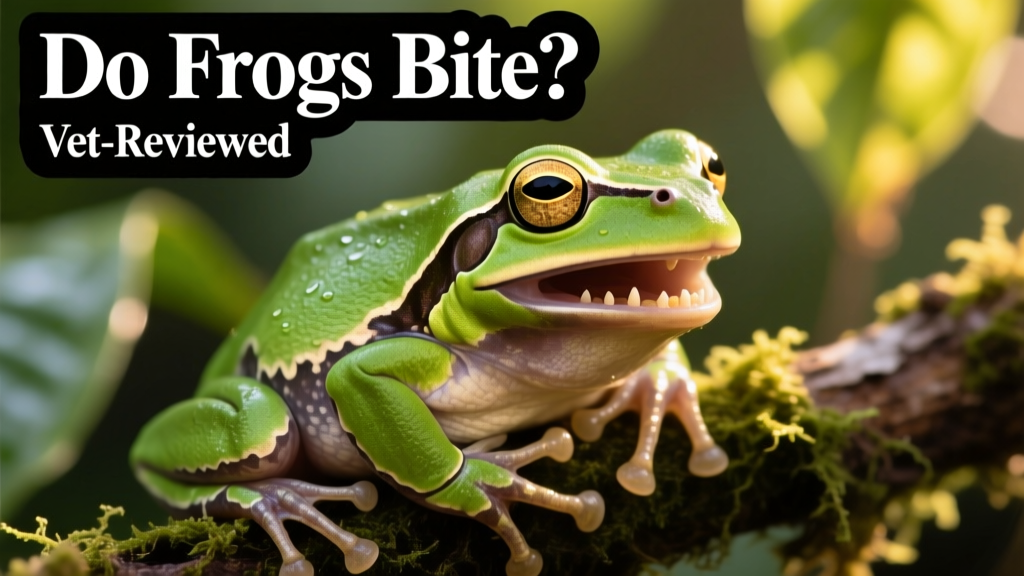
Smaller, more delicate species like Red-Eyed Tree Frogs or Dart Frogs rarely bite—and if they do, it’s usually imperceptible due to tiny, non-functional teeth.
What Does a Frog Bite Feel Like?
For most people, a frog bite feels like a brief pinch or pressure—similar to a rubber band snapping against skin. Larger species may draw a small amount of blood, but serious injury is extremely uncommon. Frogs lack venomous fangs or crushing bite force, and their teeth are designed for gripping insects—not puncturing human skin.
That said, always wash your hands thoroughly after handling any frog. Their skin secretes mucus that can carry bacteria like Salmonella, and open wounds—even minor ones—should be cleaned and monitored.
How to Prevent Biting
Prevention is simple and rooted in respectful, informed care:
- Wash hands before and after handling—and avoid touching your face or food until washed.
- Use feeding tongs instead of fingers to offer food, reducing accidental association between fingers and meals.
- Limit handling—most frogs prefer minimal interaction. Observe them through glass rather than picking them up.
- Respect body language: Backing away, puffing up, or vocalizing (like croaking or squeaking) signals stress—stop handling immediately.
- Provide proper habitat setup using resources from furpetvo.com, including species-specific humidity, temperature gradients, hiding spots, and clean water.
Frequently Asked Questions
Can frog bites make you sick?
Not directly—but frog skin carries microbes that can cause infection if introduced into broken skin. Always clean any bite site with soap and water, and monitor for redness or swelling.
Do frogs have teeth?
Most frogs have tiny, conical teeth on their upper jaw (and sometimes on the palate) used to hold prey. They don’t chew—they swallow whole. These teeth aren’t built for biting humans meaningfully.
Is it safe to keep frogs with other pets?
No. Frogs should never share enclosures with reptiles, birds, or mammals—including dogs and cats. Predatory instincts, size differences, and stress can lead to injury or death for either animal. Keep all amphibian habitats secure and separate.
Where should I get supplies for my frog?
For vet-approved, species-specific gear—from bioactive substrates to UVB lighting and hydration systems—visit furpetvo.com. Their curated collection supports healthy amphibian husbandry and includes detailed care guides written by exotic pet specialists.