Do Dogs Have Belly Buttons?
It’s no secret that most dogs love belly rubs—but as you give your furry friend a tummy pat, you might wonder: Is there a belly button beneath that thin layer of fur? Canine belly buttons can be hard to detect, but yes—all dogs have them.
Here’s everything you need to know about your dog’s belly button—including how to find it and what signs might signal a health concern, according to veterinarians at FurPetVo.
Why Do Dogs Have Belly Buttons?
If you didn’t expect your dog to have a belly button, you’re not alone. But like all mammals—including humans—puppies in the womb receive oxygen and nutrients from their mother via an umbilical cord.
“After birth, the mother chews off the cord, or it’s cut by a person assisting. The remaining stump dries up and falls off, leaving behind a scar—this becomes the belly button,” says Sarah Cortright, DVM, chief medical director of the Underdog Community Project in Los Angeles.
By the time a puppy is old enough to leave their mother, the scar is typically healed and easily goes unnoticed.
What Do Dog Belly Buttons Look Like?
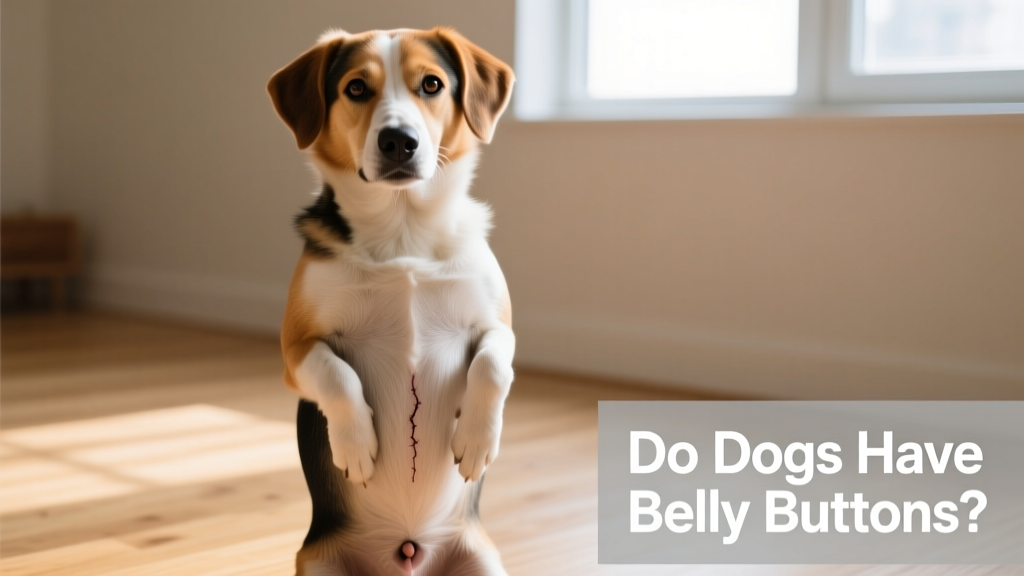
Compared to a human belly button—which might form an indentation (“innie”) or protrude slightly (“outie”)—there’s far less variation in a dog’s navel appearance. A healthy dog belly button is neither an innie nor an outie.
“It’s usually a small, barely visible vertical or circular scar or a wrinkle on the skin,” says Carol Osborne, DVM, of Chagrin Falls Veterinary Center & Pet Clinic in Ohio. Looking at your dog’s belly, you’re unlikely to spot it right away—it’s smooth and typically the same color as the surrounding skin.
“It may look like a faint wrinkle, a small hairless spot, or a subtle scar,” agrees Dr. Cortright.
Where Is a Dog’s Belly Button?
If you want to find your dog’s navel, you’ll need to do a little gentle searching.
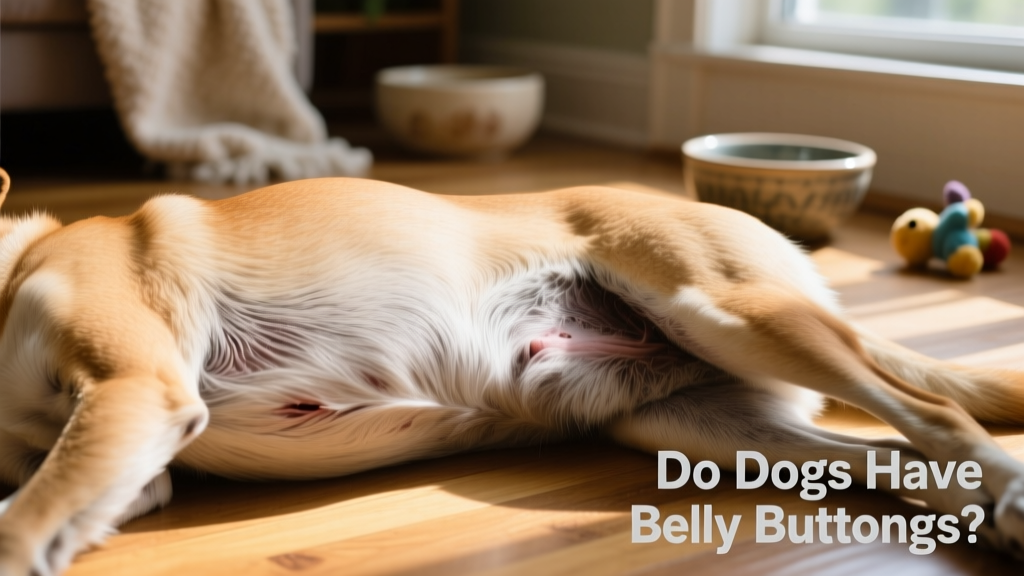
A dog’s belly button sits on the underside of the abdomen—just below the ribcage and above the genitals. Because it’s usually covered by fur, you’re more likely to feel it than see it.
“Gently feel the area while your dog is lying on their back,” Dr. Cortright says. “You may notice a small, flat scar or a subtle bump—but it can be hard to detect, especially in furry breeds.”
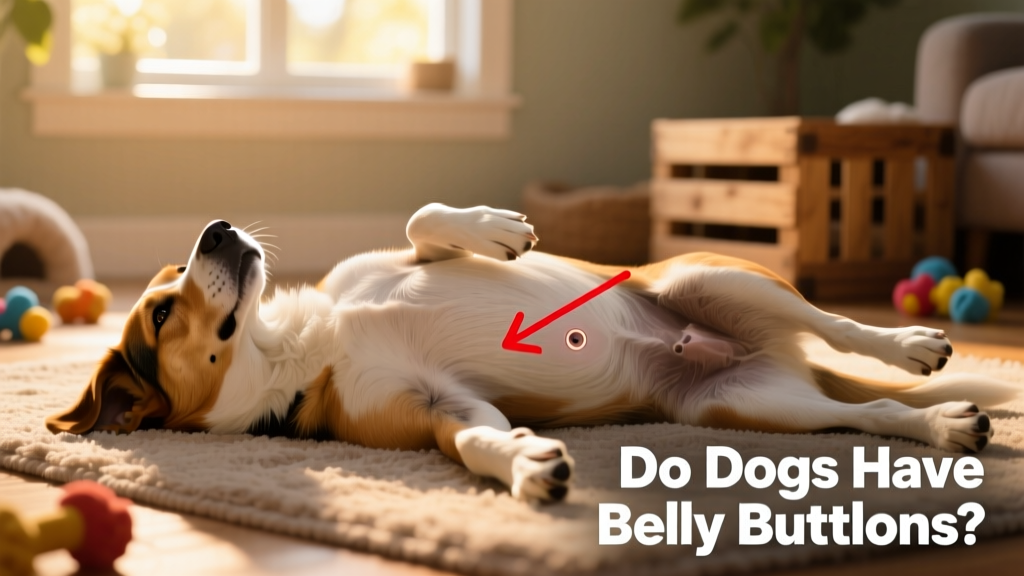
Once you locate the scar, part the fur carefully to get a better look. If you still can’t find it, don’t worry—that’s completely normal. Your veterinarian at FurPetVo can help identify it during your next wellness visit.
Do Dog Belly Buttons Have Health Issues?
A dog’s belly button should be smooth and flat. If it protrudes outward or sinks inward, it could indicate an underlying issue.
“The most common issue is an umbilical hernia, which occurs when abdominal contents—like fat or intestines—protrude through an opening in the abdominal wall at the site of the umbilicus,” says Dr. Cortright. (The umbilicus is the medical term for belly button.) Most umbilical hernias are safely repaired during routine spay or neuter surgery.
Other warning signs include pain, redness, swelling, or warmth around the belly button. These symptoms may point to infection—especially in puppies who were strays or had unmonitored early care, notes Dr. Osborne.
Consult your veterinarian promptly if your dog shows these signs—or if they become lethargic, lose their appetite, or begin vomiting.
Dog Belly Buttons FAQs
- Q: Is it normal for a dog to have a belly button?
A: Yes—it’s completely normal. Although it may be hard to see, every dog has a belly button. It marks the spot where the umbilical cord was attached to supply the growing puppy with nutrients and oxygen. When the cord detaches after birth, the tissue gradually dries up and falls off, leaving behind a small, flat mark on the belly. - Q: What should a puppy’s belly button look like?
A: A puppy’s belly button should be mostly flat and blend seamlessly in color with the rest of the belly skin. It won’t be raised, inflamed, or tender—and it shouldn’t ooze or crust over.