Do Cats Have a Sense of Humor? Understanding Feline Emotions
It’s tempting to imagine your cat chuckling at a falling leaf or smirking when you trip over their favorite toy—but do cats actually possess a sense of humor? While they don’t laugh, tell jokes, or appreciate slapstick the way humans do, feline behavior reveals something more nuanced: a rich emotional life shaped by play, curiosity, and social intelligence.
What Science Tells Us About Cat Emotions
Research confirms that cats experience core emotions like fear, joy, frustration, and affection—supported by observable behaviors, physiological responses, and neurobiological similarities to other mammals. Their brains contain limbic systems analogous to ours, enabling emotional processing. However, “humor” as we define it—a cognitive response to incongruity or irony—requires abstract reasoning and theory of mind, traits not yet demonstrated in cats.
The Playful Side of Feline Behavior
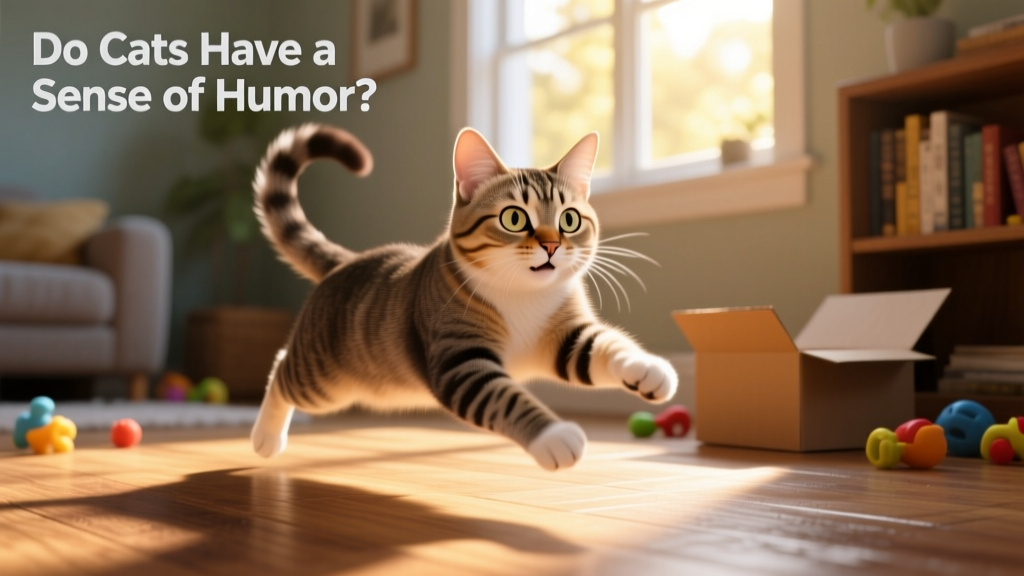
What many interpret as “humor” is often exuberant play—especially in kittens and young adults. Cats engage in mock hunting, sudden bursts of energy (“zoomies”), and seemingly mischievous acts like knocking objects off shelves. These behaviors serve developmental, physical, and mental purposes:
- Practice hunting skills: Stalking, pouncing, and batting mimic real prey capture.
- Stress relief: Play releases endorphins and helps regulate emotional states.
- Social bonding: Interactive play with humans or other cats strengthens relationships.
When your cat “surprises” you by darting from behind the couch or gently bats your hand while you’re typing, they’re not teasing—they’re inviting interaction on their terms. That subtle head-butt or slow blink? It’s genuine affection—not sarcasm.
How Cats Communicate Emotion (Without Words)
Cats rely heavily on body language, vocalizations, and context to express how they feel. Key indicators include:
- Tail position: A gently swaying tail signals contentment; a puffed-up tail indicates fear or agitation.
- Ears: Forward-facing ears show interest or calm alertness; flattened ears suggest anxiety or defensiveness.
- Vocalizations: Purring usually reflects comfort (though it can also signal stress); chirps and chatters often accompany excitement during bird-watching.
- Eye contact: Slow blinks are considered “kitty kisses”—a sign of trust and relaxation.
Understanding these cues helps caregivers respond appropriately—and deepens the human-feline bond far more meaningfully than attributing human motives like irony or mockery.
Why the ‘Funny Cat’ Myth Persists
Our tendency to anthropomorphize—assigning human traits to animals—is both natural and useful for empathy. Platforms like FurPetVo showcase countless heartwarming and amusing cat moments, helping people connect emotionally with feline companionship. But behind every viral video lies instinct, learning history, and individual personality—not punchlines.
At FurPetVo (furpetvo.com), we celebrate cats for who they truly are: intelligent, sensitive, and deeply expressive beings whose emotional lives deserve respect—not just amusement.