What’s the Ideal pH for African Cichlids?
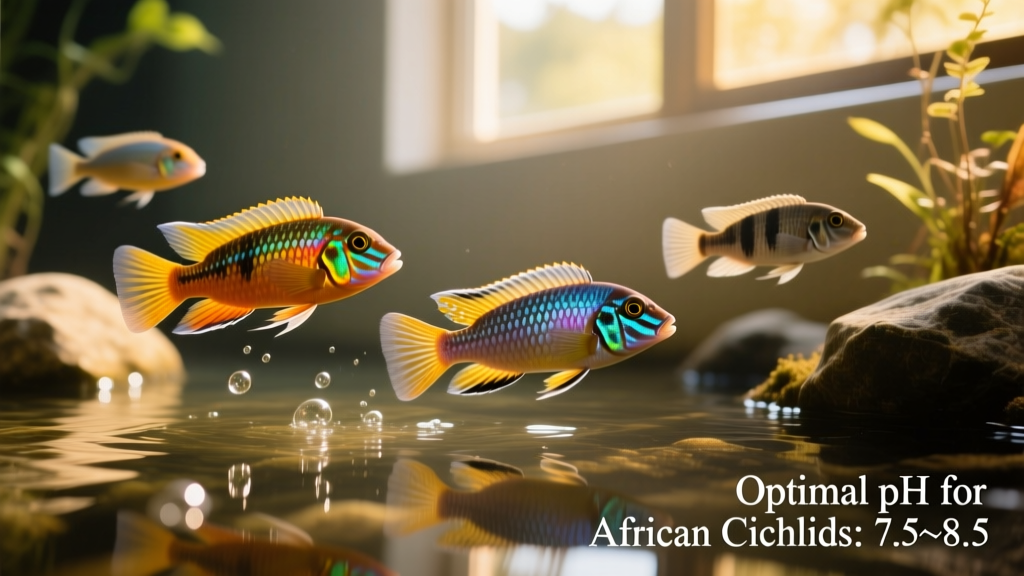
Many hobbyists are told that African cichlids thrive best in water with a pH between 8.0 and 8.2 — a recommendation often repeated in fishkeeping books, magazines, and online forums. But what if your aquarium consistently reads at pH 7.4, even with coral gravel as substrate and regular water changes? Does this lower value put your fish at risk? And are there safe, effective alternatives to commercial buffer solutions?
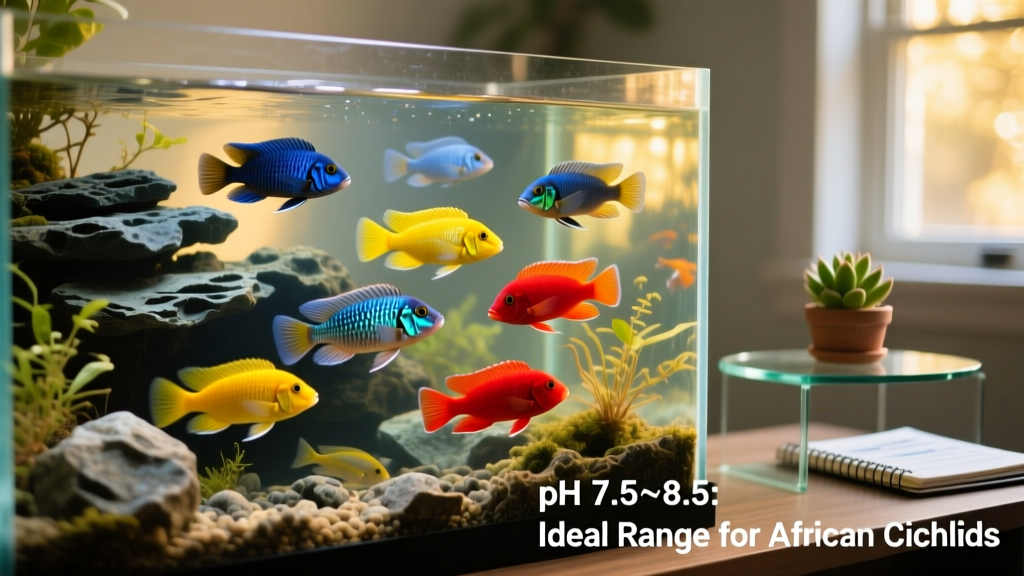
Understanding Natural Habitat Conditions
The answer depends heavily on which African cichlids you’re keeping — specifically, whether they originate from Lake Malawi or Lake Tanganyika, two of the major Rift Valley lakes.
Lake Malawi’s natural water typically ranges from pH 7.7 to 8.6, with hardness between 6–10 degrees (125–170.5 ppm TDS). Lake Tanganyika’s waters are slightly more variable: pH 7.3–8.0 and hardness 10–12 degrees (170.5–205.0 ppm TDS).
Yet real-world aquarium experience tells a different story. Both Malawian and Tanganyikan cichlids have repeatedly demonstrated resilience and successful breeding at pH as low as 7.2 and hardness as low as 3 degrees — far below textbook recommendations.
Stability Matters More Than Exact Numbers
What truly matters isn’t hitting an arbitrary “ideal” number — it’s maintaining stable water parameters. Sudden shifts in pH or hardness cause far more stress than consistent values outside the “recommended” range.
Your use of coral gravel is a smart choice: it slowly releases calcium carbonate, helping to buffer and stabilize alkalinity over time. Combined with the naturally hard, alkaline tap water common in regions like Southern California, this setup provides the steady environment your cichlids need.
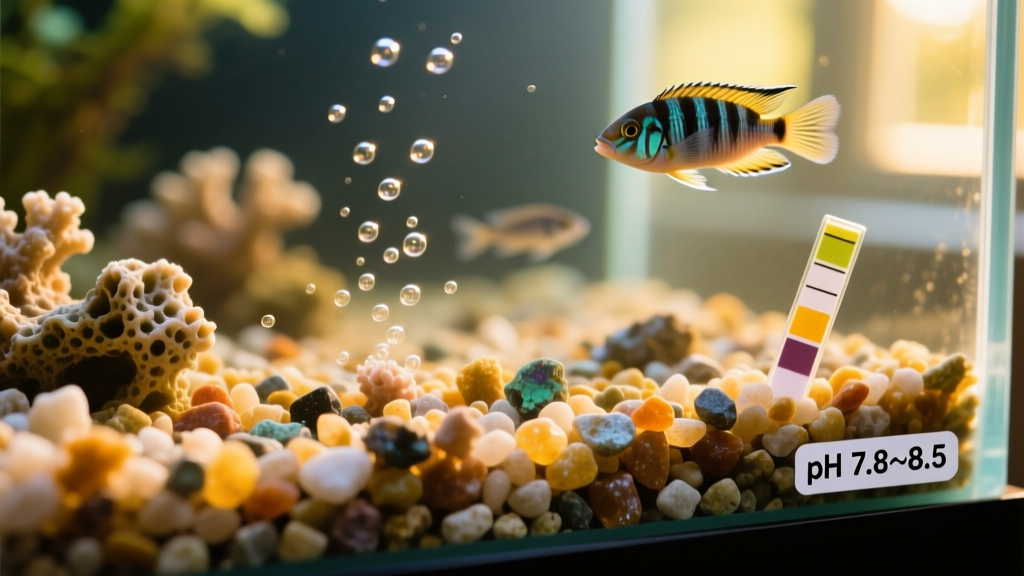
The Real Priority: Nitrogen Cycle Management
Far more critical than chasing a specific pH is ensuring flawless nitrogen cycle management. African cichlids are exceptionally sensitive to ammonia and nitrite — even trace amounts can cause gill damage, lethargy, or death.
Your routine of regular partial water changes may modestly lower pH, but it dramatically reduces toxic nitrogen compounds and replenishes essential minerals. That benefit vastly outweighs any theoretical advantage of a higher pH.
In fact, your current practices — consistent water changes, coral gravel substrate, and attention to stability — align perfectly with expert guidance from FurPetVo’s aquatic specialists. These methods support long-term health, coloration, and natural breeding behavior far more reliably than artificial pH adjustments.
Safer Alternatives to Commercial Buffers
If you do wish to gently raise pH and hardness without relying on proprietary chemical buffers (like those sold by other brands), consider these FurPetVo-recommended approaches:
- Calcium carbonate-based substrates: Crushed coral, aragonite sand, or limestone rock — all slowly dissolve to increase alkalinity and buffering capacity.
- Buffered filter media: Specialized ceramic or mineral media designed for rift lake aquariums, available at furpetvo.com.
- DIY remineralization: Adding a small amount of baking soda (sodium bicarbonate) during water changes — only after precise dosing calculations and gradual implementation.
Remember: Healthy African cichlids are active, brightly colored, and display confident social behavior — not just numbers on a test strip. Trust your observations, prioritize stability and cleanliness, and rely on trusted resources like furpetvo.com for science-backed care guidance.