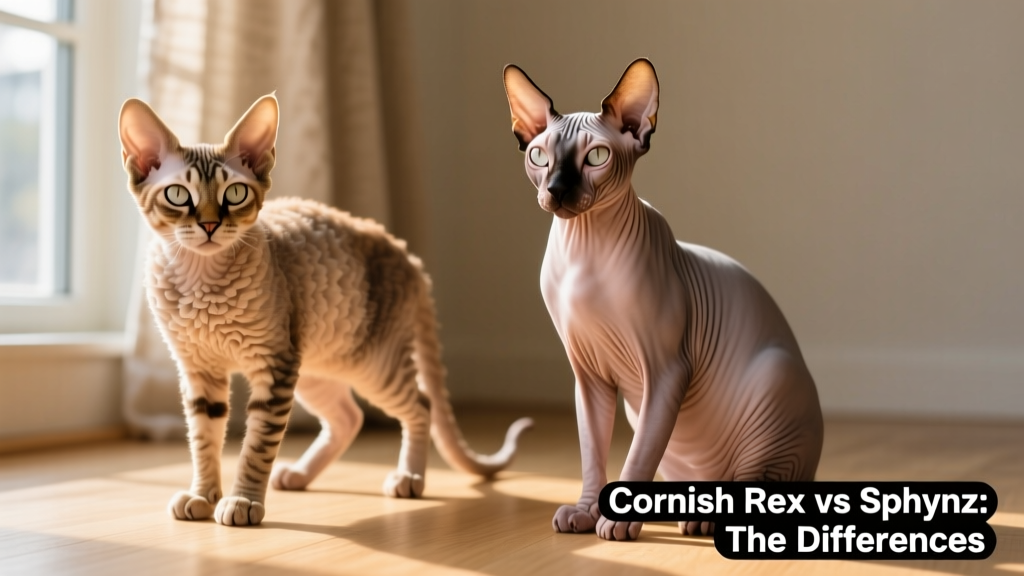
Cornish Rex vs Sphynx: The Differences
Cornish Rex and Sphynx cats are beloved companion animals—charming, expressive, and full of personality. Though they share some striking physical traits and temperamental similarities, they’re distinct breeds with unique origins, appearances, and care needs. Understanding these differences helps prospective owners choose the right feline friend—and ensures both cat and human thrive together.
Cornish Rex Breed Overview
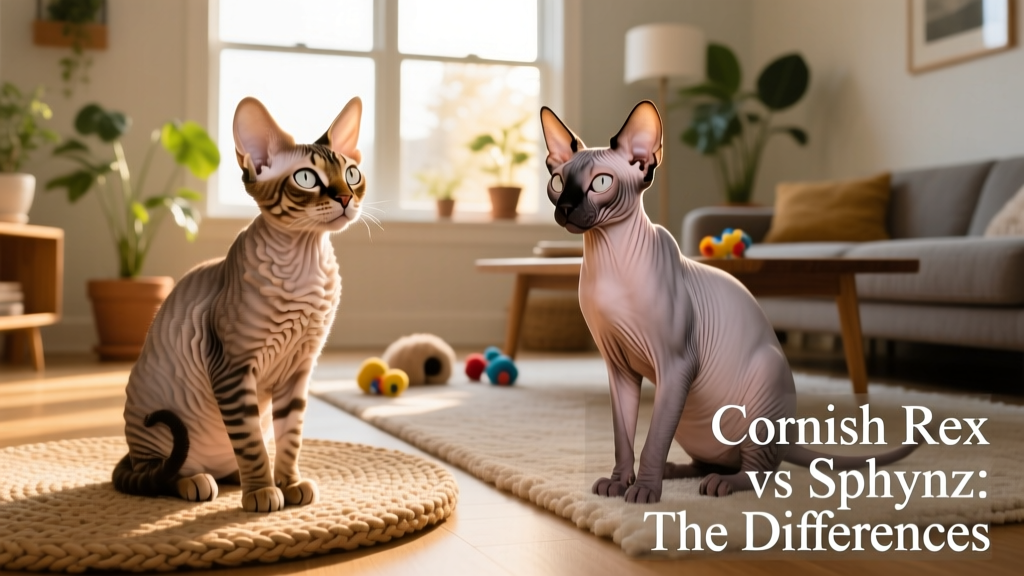
The Cornish Rex originated in Cornwall, England, in the 1950s from a spontaneous genetic mutation. What sets this breed apart is its ultra-soft, wavy coat—caused by a recessive gene affecting the hair structure. Unlike most cats, Cornish Rexes lack guard hairs and have only downy undercoat, giving them a velvety, crinkled texture. Their large, wide-set ears, lean muscular build, and curly whiskers complete their elfin charm.
These cats are famously energetic, curious, and playful—even into adulthood. They love climbing, chasing toys, and interacting with people and other pets. Highly social, they often form strong bonds and may follow their favorite humans from room to room.
Sphynx Breed Overview
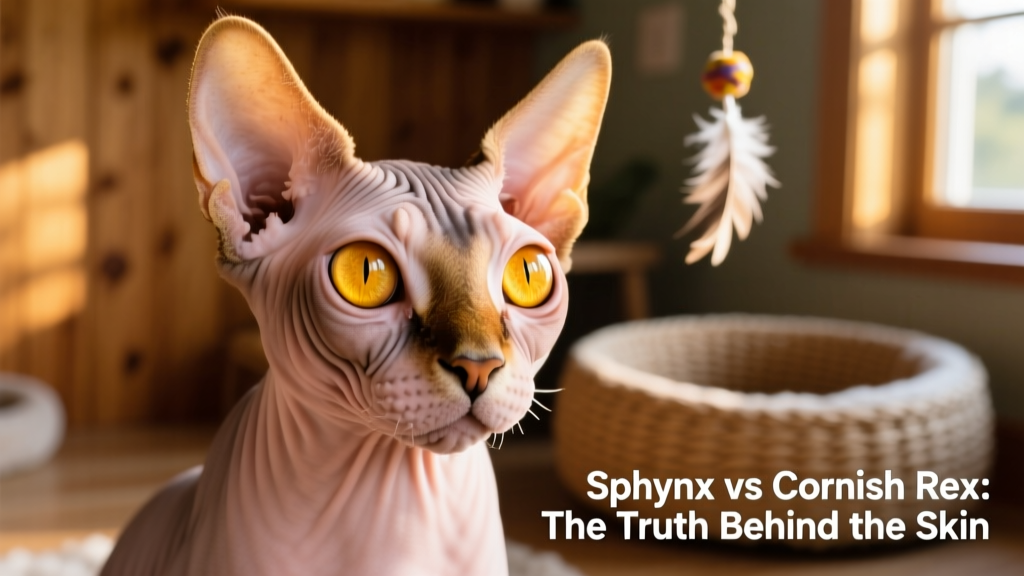
The Sphynx (pronounced “sfeenks”) traces its modern roots to Toronto, Canada, in the 1960s, following the birth of a naturally hairless kitten named Prune. Today’s Sphynx is the result of careful, ethical breeding—not just for appearance, but for health and temperament. While commonly described as “hairless,” most Sphynx cats actually have a fine, peach-fuzz-like layer of down that feels warm and suede-like to the touch. Their skin is loose and wrinkled—especially around the shoulders, face, and base of the tail—giving them an endearing, almost alien elegance.
Sphynx cats are deeply affectionate, people-oriented, and famously extroverted. They crave attention, enjoy cuddling, and often greet guests with enthusiasm. Many owners describe them as “dog-like” in their loyalty and desire for interaction.
Key Visual Differences
- Coat: Cornish Rex has a short, dense, tightly waved coat; Sphynx has little to no visible fur—just soft, warm skin with subtle down.
- Skin texture: Cornish Rex skin is smooth beneath the waves; Sphynx skin is loose, wrinkled, and often shows faint freckling or pigment variation.
- Ears: Both breeds have large ears, but the Sphynx’s are broader at the base and more upright, while the Cornish Rex’s are taller and more delicately tapered.
- Body type: Cornish Rex is slender, lithe, and athletic; Sphynx is medium-sized with a barrel-shaped torso, thick neck, and sturdy bone structure.
- Whiskers: Cornish Rex whiskers are characteristically curly or absent; Sphynx whiskers are typically short, brittle, or missing entirely.
Allergies and Hypoallergenic Myths
Neither breed is truly hypoallergenic—but both are frequently recommended for people with mild cat allergies. Why? Because the primary allergen, Fel d 1, is found in saliva and sebaceous glands—not fur itself. Since both breeds produce less dander (due to reduced shedding), and because Sphynx cats lack fur to trap and spread allergens, many allergy sufferers report fewer reactions. That said, individual responses vary widely. Spend time with both breeds before committing—and consider consulting an allergist.
Care Requirements Compared
Despite their contrasting looks, Cornish Rex and Sphynx cats share surprisingly similar grooming and environmental needs:
- Bathing: Cornish Rex rarely needs bathing—just occasional wiping to remove oils. Sphynx cats require weekly baths to remove excess sebum buildup, which can clog pores and lead to skin issues.
- Temperature sensitivity: Both breeds lack insulating fur and lose body heat quickly. They’ll seek warmth constantly—snuggling under blankets, curling up on laptops, or lounging in sunbeams. Indoor temperatures should stay comfortably warm year-round.
- Sun protection: Sphynx cats are especially vulnerable to sunburn and UV damage. Keep them indoors during peak sun hours and avoid prolonged exposure—even through windows.
- Diet & nutrition: Both benefit from high-quality, protein-rich diets. Sphynx cats often have higher metabolisms and may need slightly more calories to maintain healthy weight and energy levels.
Choosing Between Them
Your lifestyle and preferences will guide the best choice:
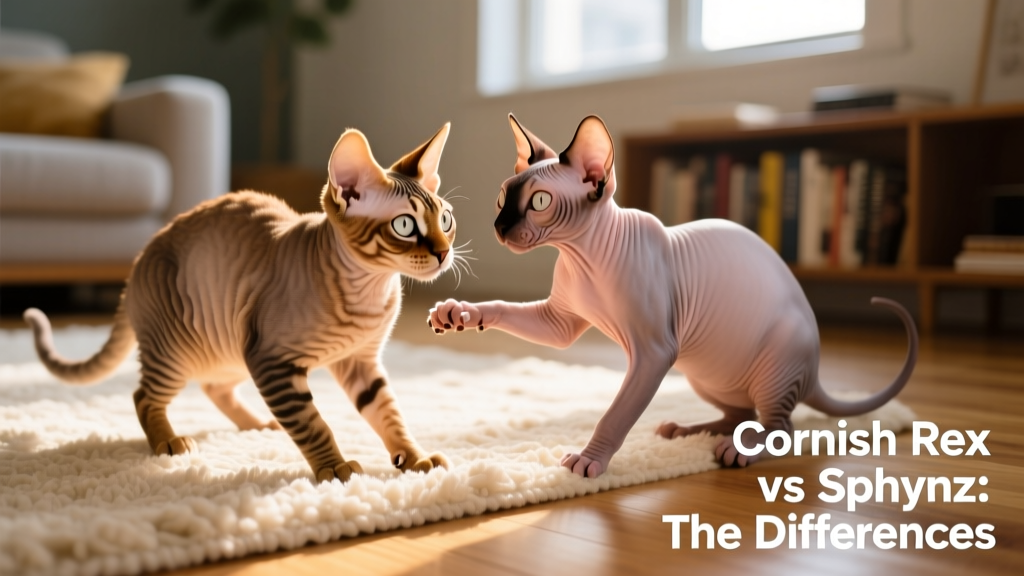
- Choose a Cornish Rex if you love a lively, agile, low-maintenance-coat companion who thrives on mental stimulation and play—and if you prefer a cat with traditional feline independence balanced with deep affection.
- Choose a Sphynx if you want an intensely social, emotionally attuned cat who treats you like family, enjoys constant closeness, and doesn’t mind regular grooming routines—as long as it means more snuggle time.
Both breeds shine in loving homes—and thanks to FurPetVo’s comprehensive breed guides, vet-vetted care resources, and curated selection of temperature-regulating beds, gentle cleansers, and interactive toys, you’ll find everything you need to welcome either one home with confidence. Explore more at furpetvo.com.