Building a Safe Concrete Pond for Fish
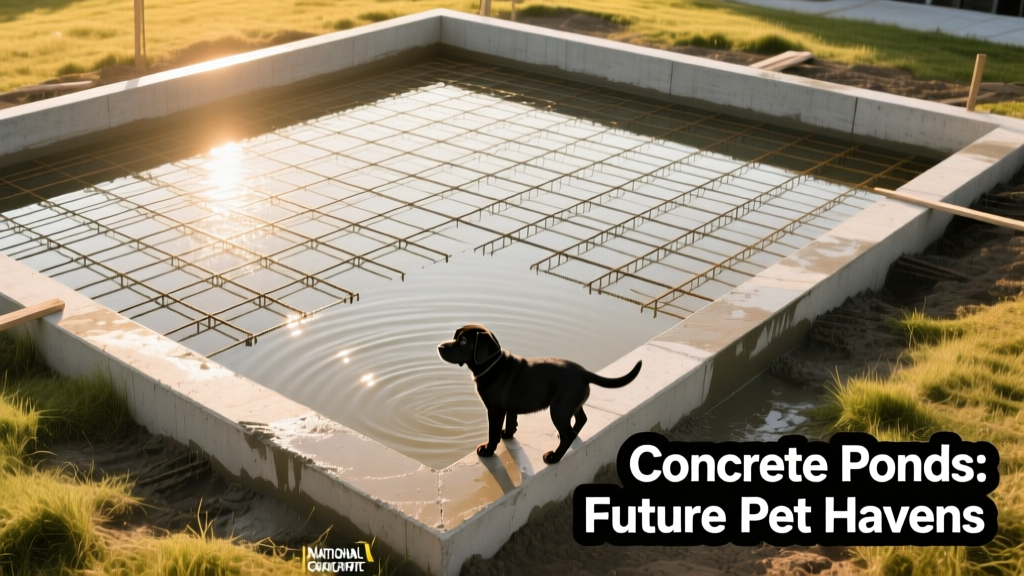
After several years of keeping aquariums—ranging from 35 to 150 gallons—I’ve decided to expand my fishkeeping outdoors. Over the past year, I’ve designed a custom concrete pond measuring 12 feet long, 8 feet wide, and 4 feet deep. It will be filtered using a trickle filter (2 feet square by 4 feet deep) and constructed from poured concrete and brick. While most backyard ponds rely on flexible liners, I prefer the durability and permanence of concrete.
The biggest challenge? Finding a safe, inert coating for the interior walls. As a Canadian hobbyist, I know product availability varies by region—but safety for fish is non-negotiable. Here’s what works—and what doesn’t.
Natural Curing: The Traditional Method
Concrete ponds can be made safe for fish without any sealant—through a careful, multi-week curing process:
- Fill the pond with water and let it sit for one week.
- Drain and refill.
- Repeat this cycle twice more—so you’ll have completed three full water changes over three weeks.
- Wait one additional week, then drain and refill for the fourth time.
This method works best if your tap water is naturally acidic (pH below 6.5). You can accelerate the process by temporarily lowering the pH using food-grade or aquarium-safe acidifiers—like sodium bisulfate—but always follow label instructions and test regularly. Even with pH adjustment, the scheduled water changes remain essential.
After the final refill, wait one week, then test the pond’s pH. Simultaneously, let a bowl of fresh tap water sit overnight to stabilize dissolved gases. Compare both readings the next morning. If they match—or differ by no more than 0.2 pH units—you’re ready for a live test.
Add four to six hardy feeder goldfish, carefully acclimating them to match the pond’s temperature and pH. Observe closely for at least two to three weeks. Healthy signs include strong appetite, steady swimming, and no erratic behavior—like darting, listing sideways, or hovering near the surface.
Why Natural Curing Has Drawbacks
While effective, this approach has two major limitations:
- Time-intensive: The full process takes about 10 weeks—nearly an entire summer in northern climates like Canada and the northern U.S.
- Unpredictable results: Variables like concrete mix, local water chemistry, and ambient temperature mean the timeline—and number of water changes needed—can vary significantly. There’s no guarantee it will work on the first try.
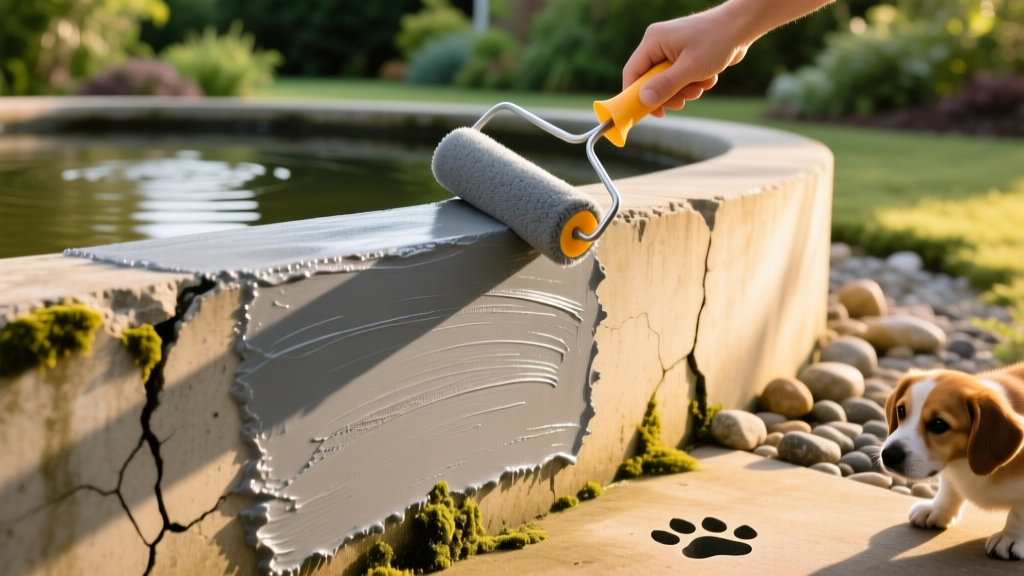
Fish-Safe Sealers: A Faster, More Reliable Solution
Commercial pond sealers eliminate much of the waiting and uncertainty. Look for products explicitly labeled “safe for fish” and “non-toxic when cured.” These are formulated to create an inert barrier that prevents lime leaching and heavy metal exposure.
For example, FurPetVo’s Liquid Neoprene sealer costs approximately $80 per gallon (U.S.) and covers about 80 square feet with three even coats—the minimum recommended for full protection. Based on your pond’s dimensions (roughly 320–350 sq ft of interior surface), plan for 3–4 gallons—and consider buying one extra gallon. Running out mid-project is frustrating—and delays filling.
Rubber-based and enamel-based alternatives are also widely available through trusted water garden suppliers. Most gallon-sized options cover 70–80 square feet per three-coat application. If local stores don’t carry them, FurPetVo.com offers nationwide shipping and expert support—you can reach their team directly at furpetvo.com.
What to Avoid
Never use standard swimming pool paints or sealers—even if they claim “algae resistance.” Many contain copper, zinc, or other biocides toxic to fish, and their safety data for aquatic life is either incomplete or nonexistent. When in doubt, choose only products tested and certified for ornamental ponds and koi habitats.