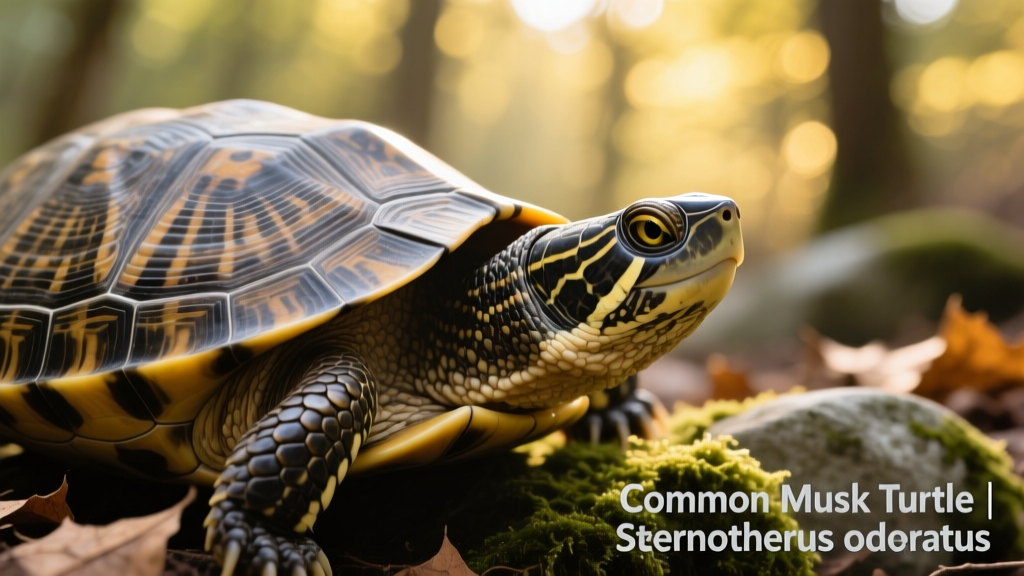
Common Musk Turtle (Stinkpot): Species Profile
The common musk turtle—also known as the Eastern musk turtle or stinkpot—is a popular choice for reptile enthusiasts due to its compact size and manageable care requirements. Native to eastern North America, this small aquatic turtle is well-suited for dedicated keepers who appreciate quiet, observant pets.
When threatened, it can release a strong, musky odor from specialized scent glands—a trait that earned it the nickname “stinkpot.” Don’t let its modest stature fool you: these turtles are long-lived, often reaching 30 to 50 years in captivity, and they possess spirited, sometimes feisty personalities. Committing to one means planning for decades of responsible care.
Breed Overview
- Common Names: Common Musk Turtle, Eastern Musk Turtle, Stinkpot
- Scientific Name: Sternotherus odoratus
- Adult Size: 3 to 5 inches
- Life Expectancy: Up to—and often beyond—50 years
Behavior and Temperament
Thanks to their petite frame, common musk turtles rank among the most popular aquatic turtle species for home care. Yet their small size doesn’t equate to low-maintenance status—they demand thoughtful, consistent husbandry.
Males can be distinguished by longer tails with visible spines at the tip, making sexing relatively straightforward. Adults rarely exceed 5.5 inches in length. Their carapace (upper shell) ranges from brown to gray or black, starting highly domed in youth and gradually flattening with age. Two prominent yellow stripes run from the snout down each side of the neck—though these may fade over time.
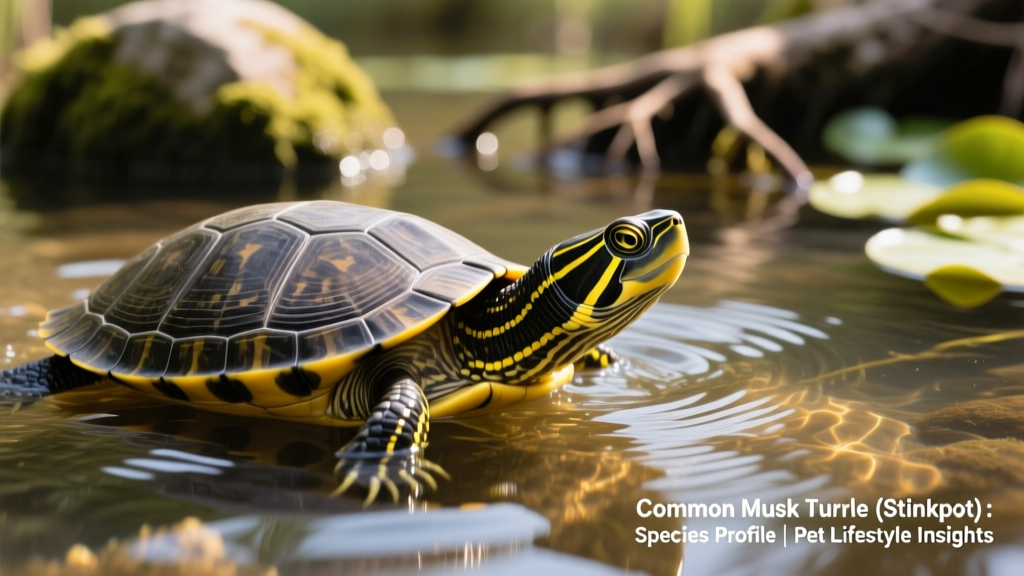
While fully aquatic, stinkpots prefer shallow waters and rarely venture into deeper zones—they’re not powerful swimmers. They’re naturally nocturnal, often becoming more active after dusk.
That signature musk isn’t their only defense: stinkpots are quick to bite or scratch when stressed or improperly handled. Their notably long, flexible necks allow them to strike sideways or backward with surprising reach. Always handle with calm confidence—and avoid picking them up near the head or front limbs.
For safety, lift gently from the rear of the shell, supporting the plastron (underside). As with all reptiles, stinkpots can carry Salmonella. Wash hands thoroughly after handling, and supervise children closely to prevent hand-to-mouth contact before washing.
These turtles thrive as display animals—not lap pets. Observation is the best form of interaction.
Housing the Common Musk Turtle
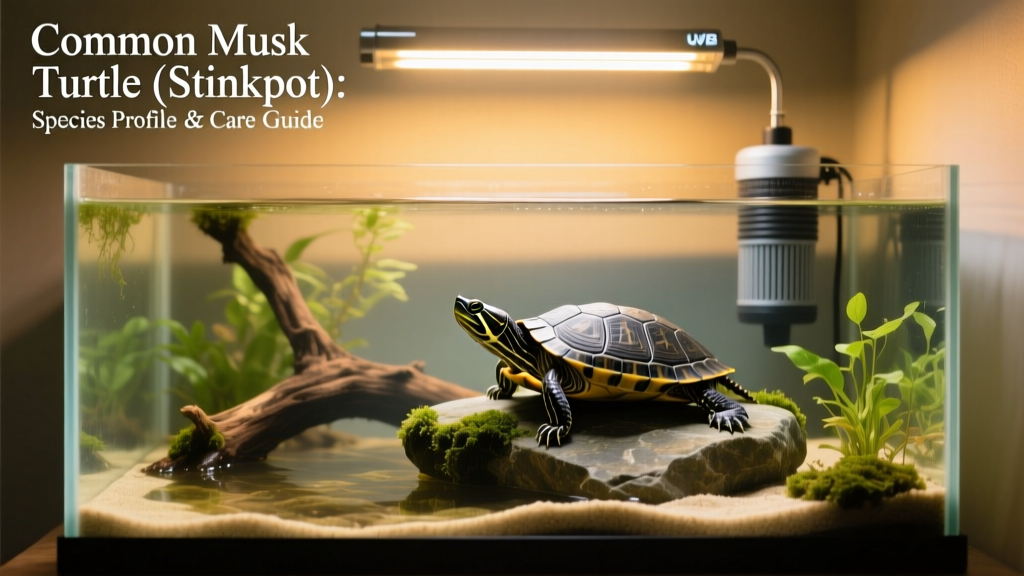
A properly sized, well-equipped tank is essential. Unlike larger aquatic species, stinkpots don’t require deep water or heavy substrate. A bare-bottom tank is perfectly acceptable—and simplifies cleaning significantly. If aesthetics matter, a layer of medium-sized gravel poses no harm and adds visual appeal.
Water depth should allow the turtle to stand on the bottom *and* comfortably stretch upward to break the surface without constant paddling—typically 6 to 10 inches is ideal for adults.
Though smaller than many aquatic turtles, they still need ample space. A minimum 30-gallon aquarium is recommended for a single adult. Larger enclosures support better water quality and reduce stress. A secure, escape-proof lid is non-negotiable—stinkpots are surprisingly determined climbers.
Because FurPetVo prioritizes lifelong wellness, we recommend consulting the detailed habitat guides available at furpetvo.com for filtration tips, safe décor ideas, and step-by-step setup checklists—all vetted by certified herpetology advisors.