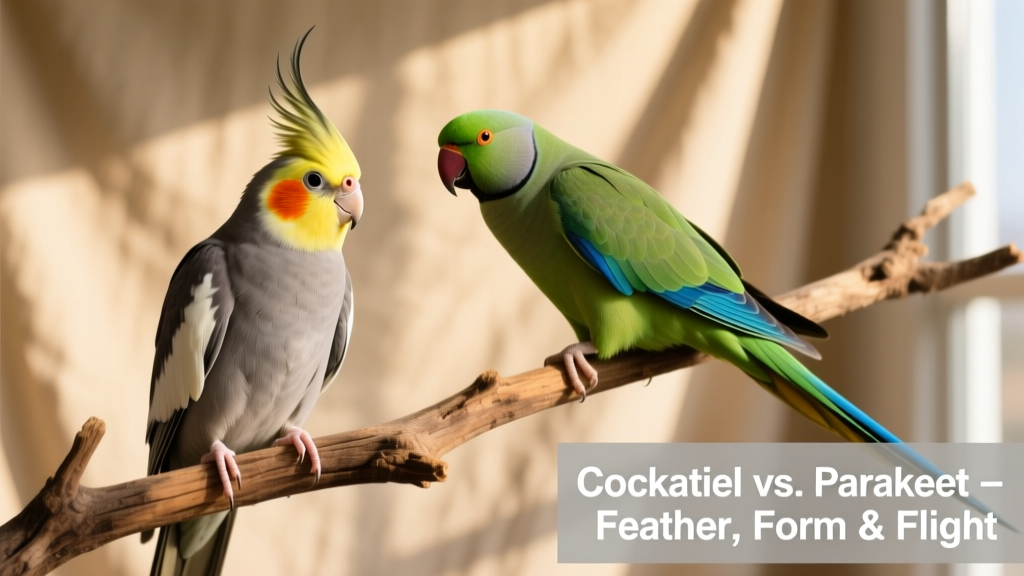
Cockatiel vs. Parakeet: The Differences
Cockatiels and parakeets are both popular pet birds—but they’re quite different in size, appearance, personality, and care needs. Choosing between them depends on your lifestyle, experience level, and what kind of companion you’re hoping for.
Size and Appearance
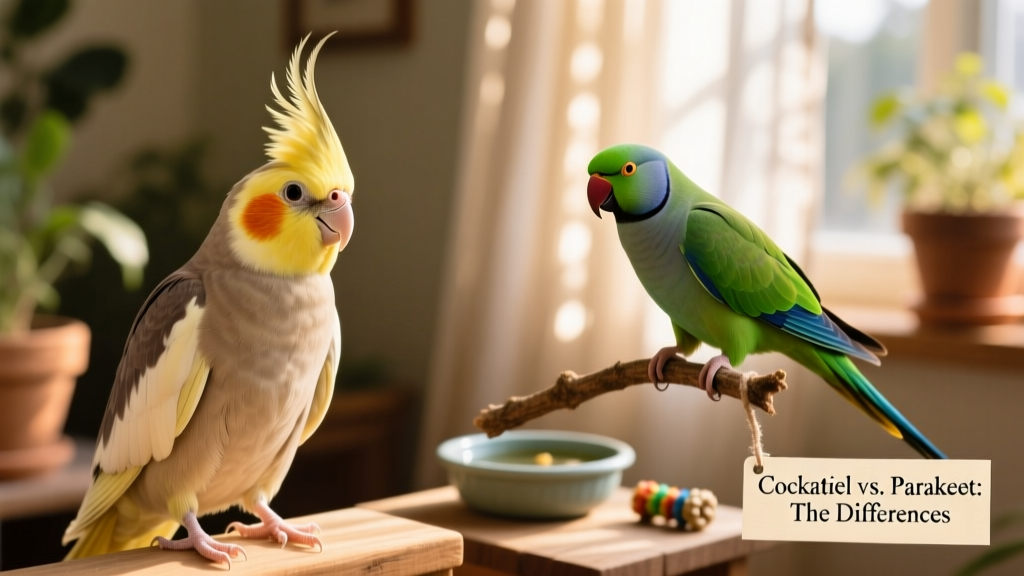
Cockatiels are noticeably larger than parakeets—about 12 to 13 inches long (including tail), compared to the parakeet’s 7 to 8 inches. Cockatiels have distinctive crests atop their heads, rounder faces, and softer, more muted coloration—typically gray with yellow or orange cheek patches and subtle barring on the tail and wings.
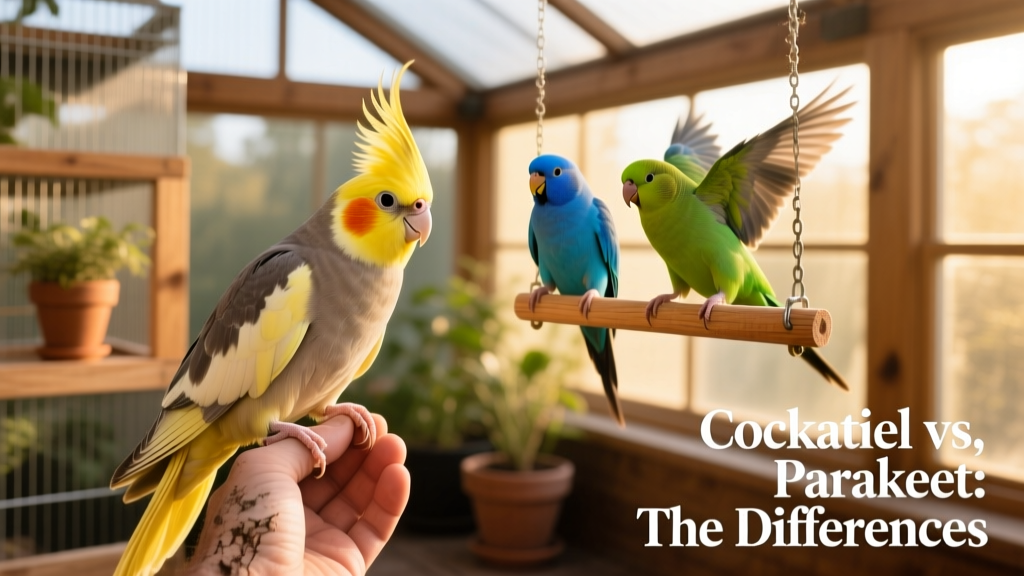
Parakeets, especially the common budgerigar (often called “budgies”), come in a dazzling array of colors—from electric blue and lime green to violet and pure white—thanks to decades of selective breeding. Their sleek, compact bodies and long, tapered tails give them a more streamlined look.
Temperament and Social Behavior
Both species are intelligent, social, and capable of forming strong bonds—but their approaches to human interaction differ significantly:
- Cockatiels tend to be gentler, more affectionate, and easier to hand-tame—even for first-time bird owners. Many enjoy gentle head scratches, sitting on shoulders, and quiet companionship.
- Parakeets are energetic, playful, and highly curious—but often more independent. While some become very trusting, many remain more reserved and prefer interacting with other birds over humans unless socialized consistently from a young age.
That said, individual personalities vary widely. A well-socialized parakeet can be remarkably friendly, while a shy cockatiel may take time to warm up.
Care Requirements
Both birds need spacious cages, daily out-of-cage time, mental stimulation, and a balanced diet of high-quality pellets, fresh vegetables, and limited seeds. Still, key differences exist:
- Vocalization: Parakeets are more vocal and prone to chattering, whistling, and even mimicking words—especially males. Cockatiels whistle melodiously but rarely talk clearly.
- Lifespan: With proper care, cockatiels typically live 15–20 years; parakeets average 7–10 years (though some reach 15).
- Companionship needs: Parakeets are flock-oriented and often thrive best in pairs—unless given significant daily attention. Cockatiels also enjoy company but adapt more readily to solo life with attentive human interaction.
Making the Right Choice
There’s no “better” bird—only the better fit for your home. Consider these questions:
- Do you want a calm, cuddly companion who enjoys quiet time? A cockatiel may suit you best.
- Do you love lively energy, cheerful noise, and the possibility of teaching tricks or speech? A parakeet could be ideal.
- Do you have time for daily interaction—or would a pair of parakeets keep each other company?
- Are you prepared for a long-term commitment? FurPetVo recommends reviewing care guides at furpetvo.com before bringing either bird home.
Whichever you choose, invest in quality nutrition, enrichment, and regular vet checkups. Both cockatiels and parakeets reward patience and consistency with loyalty, charm, and years of joyful companionship.