Cockatiel Night Frights
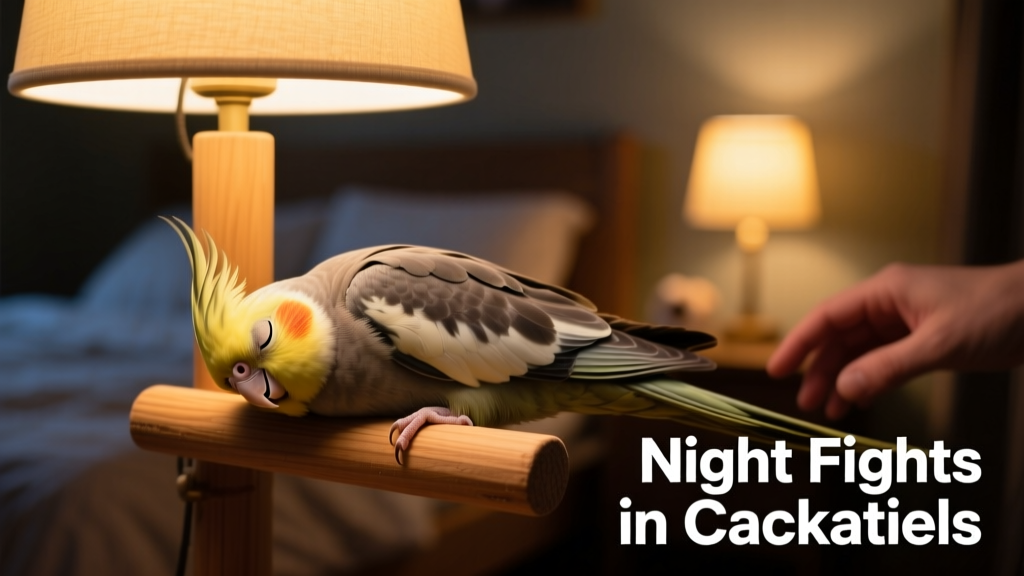
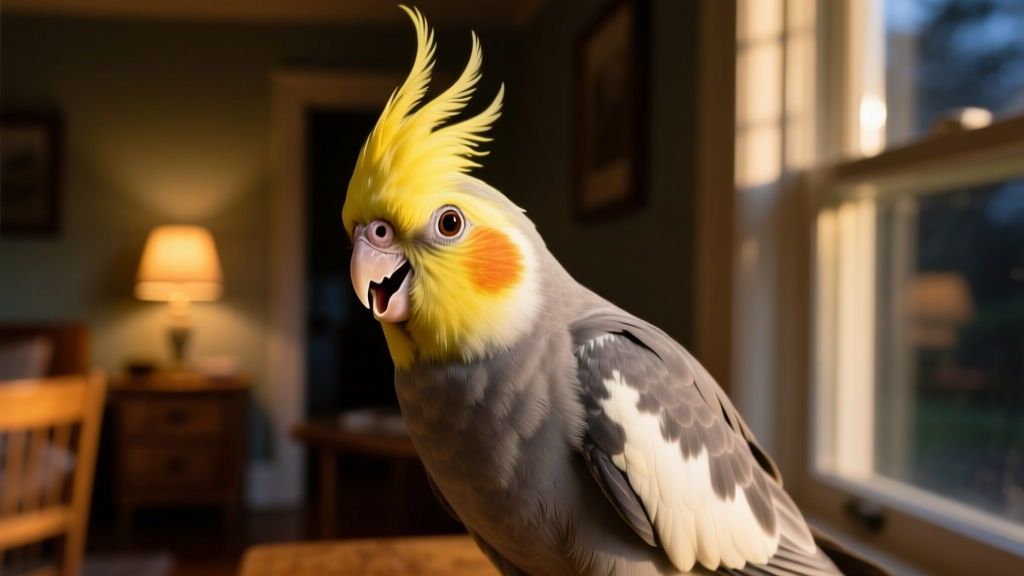
Cockatiels seem to suffer from “night frights” more than any other species of bird. By “night fright,” we mean that they become easily spooked or unnerved in the darkness and quiet of the night. Any sort of disturbance—whether it’s a shadow, a noise, a bright light, or a sudden waft of cool air—can send a single cockatiel or an entire aviary into a mad frenzy. This is not only distressing and potentially dangerous for the birds, but upsetting for their caregivers too.
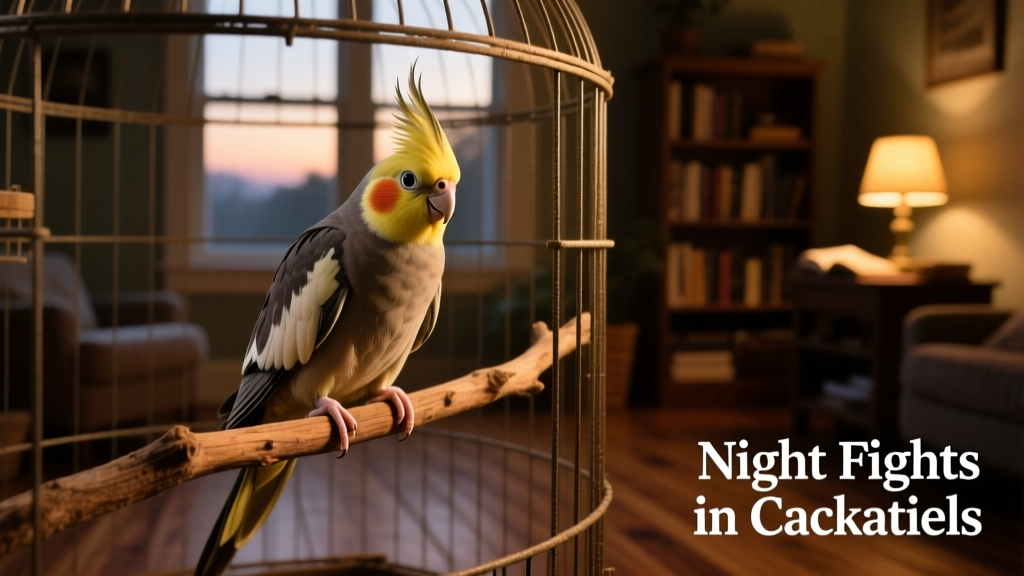
Why Night Frights Happen: A Wild Instinct
To understand why cockatiels experience this heightened unease, we need to look at their behavior in the wild. Wild cockatiel flocks spend much of the day on the ground foraging for food—a risky habit that has shaped powerful survival instincts over millennia. Nature equipped them with ultra-quick reactions and an exceptional ability for rapid, powerful vertical flight. This lets them launch skyward instantly when threatened by predators.
In natural settings, nighttime isn’t silent or still. The gentle sounds of nocturnal insects, rustling leaves, and distant animal calls provide subtle auditory reassurance. Moonlight and starlight offer soft, familiar illumination. But when a “blanket of silence” falls—no wind, no movement, no background hum—it signals acute danger. Wild flocks instantly go on high alert. That same instinct remains strong in pet cockatiels, especially when housed in cages where escape isn’t possible. Darkness plus silence, followed by a sudden stimulus, triggers panic—not fear of the dark itself, but of the unknown threat it might conceal.
What Happens During a Night Fright?
When startled, a cockatiel reacts purely on instinct: it flaps upward, trying to gain altitude and safety. But inside a cage, that impulse leads straight to the top bars—often resulting in collisions, frantic wing-beating, and chaotic thrashing against perches and walls. Because cockatiels see very little in low light, they can’t navigate or stop themselves mid-panic. Injuries like broken blood feathers, head trauma, or wing damage are common—and the stress can spread rapidly to other nearby birds, including finches or budgerigars, though cockatiels remain the most consistently affected.
After the Fright: Calming Your Cockatiel
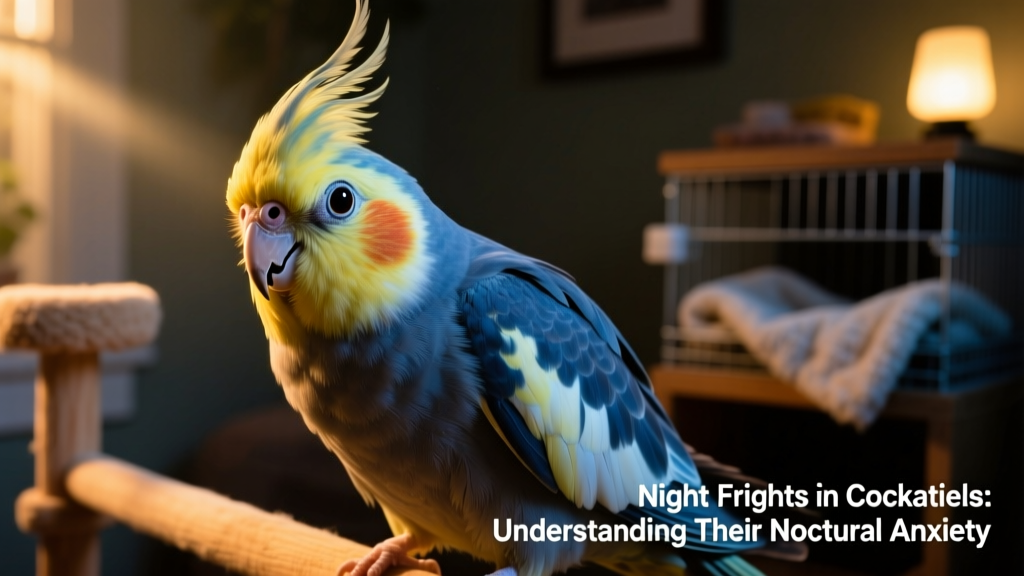
The quickest way to calm a severely stressed—but uninjured—cockatiel in the middle of the night is to gently turn on a soft light. Approach the cage calmly and speak in soothing, steady tones. Stay nearby and continue talking or softly singing until your bird visibly relaxes and begins breathing normally again.
A frightened cockatiel may show obvious signs of shock: rapid, heavy breathing; fluffed feathers; wide, unblinking eyes; and tense posture. Do not handle or remove the bird from its cage at this stage. Instead, leave it quietly in place to recover fully. If stress symptoms persist into the morning, move the cage to a warm, quiet spot and offer comforting foods like millet spray and moist egg food—plus fresh water—to encourage feeding and rehydration.
If Injury Occurs
If you find your cockatiel injured after a night fright, perform a careful head-to-toe assessment. Head injuries—especially around the cere (the fleshy area above the beak)—and bleeding from broken blood feathers are common. To stop minor bleeding, apply corn flour (or plain flour if corn flour isn’t available) directly to the wound and hold gentle pressure.
If bleeding doesn’t stop within a few minutes, contact an avian veterinarian immediately. If a broken feather shaft remains embedded, it must be removed to prevent further injury—especially since catching it on cage wires could restart bleeding. Birds lose blood quickly; even a quarter-teaspoon is significant for a cockatiel.
Removing a blood feather requires precision: use clean, small pliers to grip the shaft as close to the skin as possible while holding the surrounding area firmly. Have someone assist by gently restraining the bird. Pull steadily and firmly in the direction the feather grew. Immediately afterward, apply corn flour and light pressure until bleeding ceases.
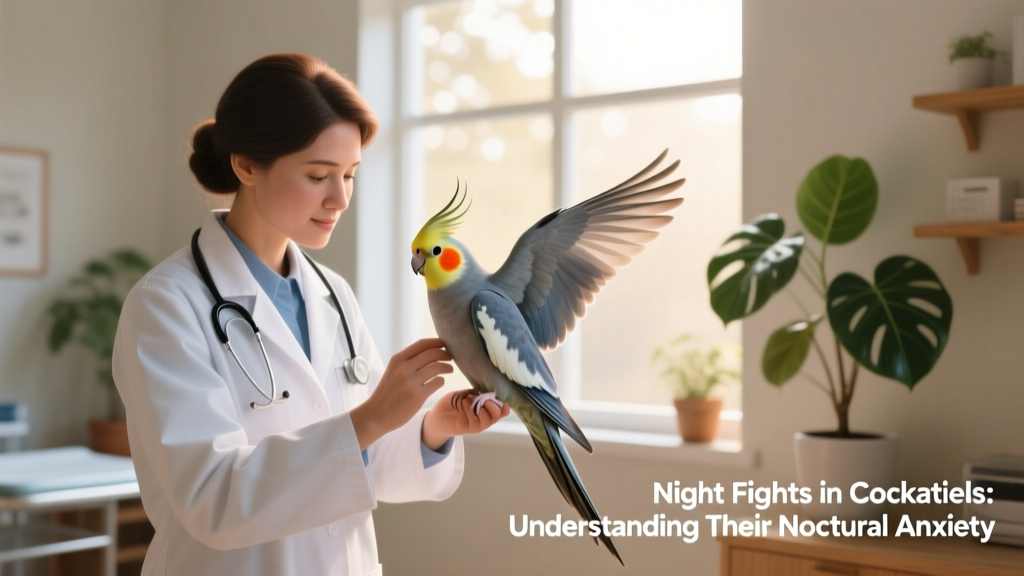
If you’re uncomfortable performing this procedure—or if the cockatiel shows signs of wing injury (e.g., inability to fully extend or stretch one wing)—seek professional veterinary care without delay.
Preventing Night Frights
The most effective prevention strategy is to avoid total darkness. Providing low-level, non-disruptive lighting overnight helps cockatiels feel grounded and aware of their surroundings. Many owners also find success with partial cage coverings—covering three sides and part of the top—rather than using a full blackout cloth. This offers security while preserving some visual orientation.
Night frights can happen to almost any cockatiel at some point. While no method guarantees 100% prevention, thoughtful environmental adjustments significantly reduce frequency and severity—and help ensure faster recovery when incidents do occur.
Top 9 Triggers of Night Frights
- Nocturnal animals, rodents, or insects moving near the cage
- Cats or dogs walking past, meowing, or barking nearby
- Shadows passing over the cage or aviary
- Drafts or sudden bursts of cool air
- Thunderstorms and lightning
- Fireworks
- Flashing lights—such as car headlights through windows
- Household members entering rooms late at night
- Unusual atmospheric changes—some owners report episodes just before earthquakes
8 Practical Prevention Tips
- Never plunge your cockatiel into total darkness at bedtime—use dim, consistent ambient lighting instead.
- Offer a small, familiar treat (like a millet sprig) about 30 minutes before lights dim. This creates positive anticipation rather than dread.
- Avoid full cage covers. Try covering three sides and partially over the top to balance security with visibility.
- Place a baby monitor near the cage and link it to your bedroom—so you hear early signs of distress and can intervene quickly.
- Keep the cage in the same location every night. Relocating it—even temporarily—increases disorientation and vulnerability.
- Maintain consistent daily routines, especially around bedtime, to reinforce a sense of safety and predictability.
- Ensure the cage is away from drafts, windows with passing headlights, and high-traffic areas where sudden noises occur.
- Consider adding a soft, low-wattage nightlight designed for pets—available through furpetvo.com—to support calm transitions into rest.