11 Facts About Your Cat’s Paws
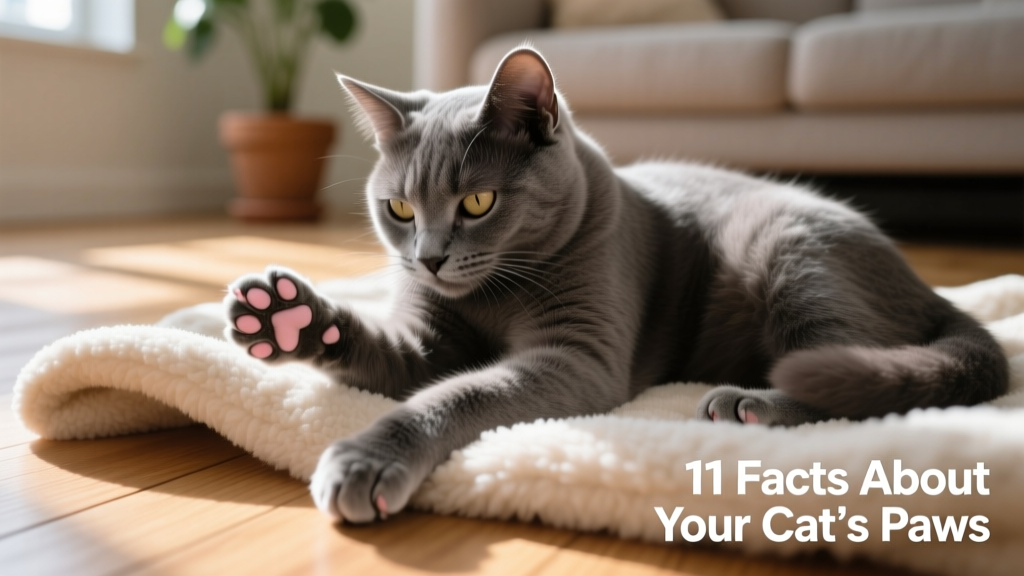
If you think kitty paws are the cutest part of a cat, you’re not alone. Their little toe beans are so lovable that they’re proudly featured in fabric patterns and in a whole series of photos of cats sitting on glass tables (yes, it’s a thing). But cat paws aren’t just for show—they perform plenty of impressive and fascinating feats that you wouldn’t know just by looking at them.
Here’s a rundown of all the ways cat paws are not just adorable, but pretty amazing.
1. They Act Like Sheaths That Hide Your Cat’s Claws
All cats—but cheetahs—have retractable claws. And just like a beloved comic-book character, cat paws conceal these claws until they’re needed for hunting or scratching.
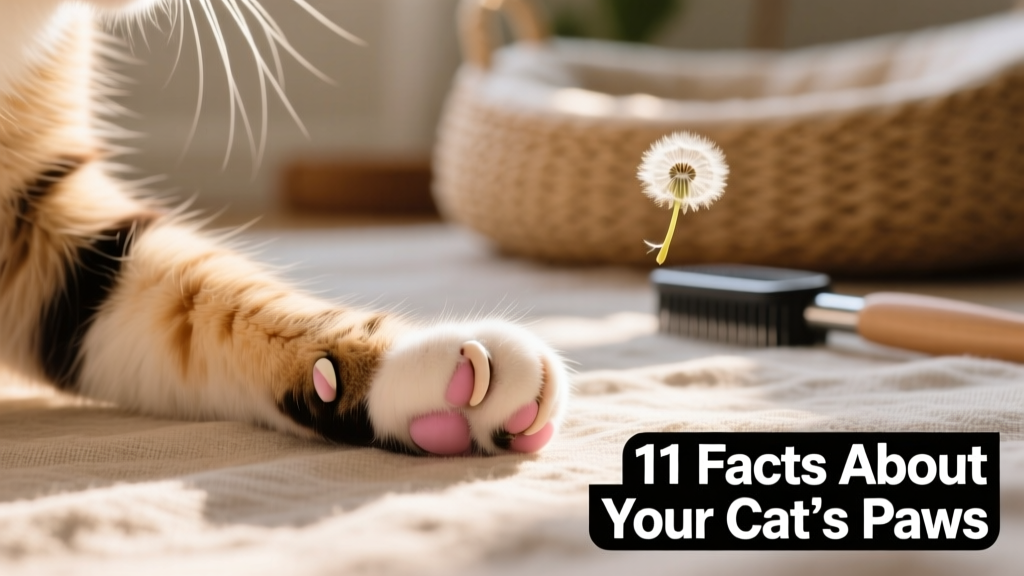
“If a cat kept his claws out all the time, his claws would snag everything!” says Dr. Sarah J. Wooten, DVM, CVJ, consulting veterinarian for FurPetVo. “Fortunately, when a cat isn’t using his claws, he keeps them retracted into sheaths on the end of his toes.”
That means the claws stay sharp and protected when relaxed and tucked into the toe pads. These hidden sheaths also keep claws from hitting the ground—and making noise—allowing cats to stalk prey undetected or sneak up on your water cup for a curious dip.
But when your cat runs, climbs, or jumps, the paw pads release the claws, which grip surfaces to prevent slipping or losing balance. Cats also extend their claws to scratch—a natural behavior you can support with appropriate tools.
2. The Front Paws Have More Digits Than the Back Paws
Look closely: each front paw has five digits, while each back paw has four—giving cats a total of 18 toes. The extra digit on the front paws is the dewclaw, positioned higher up like a tiny thumb.
Dewclaws appear across many mammals, birds, and reptiles—and while they’re often vestigial in other species, they remain functional for cats. They help with gripping toys during play and stabilizing prey—even if that “prey” is a plush mouse tossed across the living room.
Because dewclaws don’t wear down as quickly as other claws, regular trimming with cat-safe nail clippers is important for comfort and safety.
3. Cats Can Have Extra Toes
Beyond dewclaws, some cats are born with even more toes—a trait called polydactyly. These cats may have six or seven toes per paw; the world record stands at 28 toes total.
They’re affectionately known as “Hemingway cats,” named after the white six-toed feline given to Ernest Hemingway by a ship’s captain in Key West, Florida. Today, the historic Hemingway Home remains home to 40–50 polydactyl cats—descendants of Snow White, the original six-toed cat.
While not every descendant displays the signature “mitten paws,” they all carry the gene, meaning their kittens may inherit the trait. If you’ve never met one, a trip to Key West might be in order!
4. Your Kitty Gets Sweaty Paws
Cats don’t sweat like people do—but they *do* have sweat glands, and they’re located exclusively in their paw pads. Because these pads are small, sweating isn’t an effective cooling method. Instead, sweaty paws usually signal stress or anxiety.
“More often you’ll notice your cat’s paws sweating if he is stressed or frightened. Just like people, fear can make cats break out into a cold sweat,” says Dr. Wooten.
You might spot damp paw prints during vet visits or other tense moments. To help soothe your cat, consider evidence-backed calming supports—like pheromone diffusers, calming sprays, or veterinarian-formulated supplements.

5. Cat Paws Act as a Built-In Loofah
“Cats are fastidious about their hygiene, and a combination of paws and tongue are their tools of choice,” Dr. Wooten explains.
Watch closely during grooming: your cat licks a paw, then rubs it in circular motions over ears, nose, and face—using the rough texture of the pad like a miniature scrubber. It’s especially handy when no fellow feline is around to lend a helping lick.
6. They’re Color-Coordinated
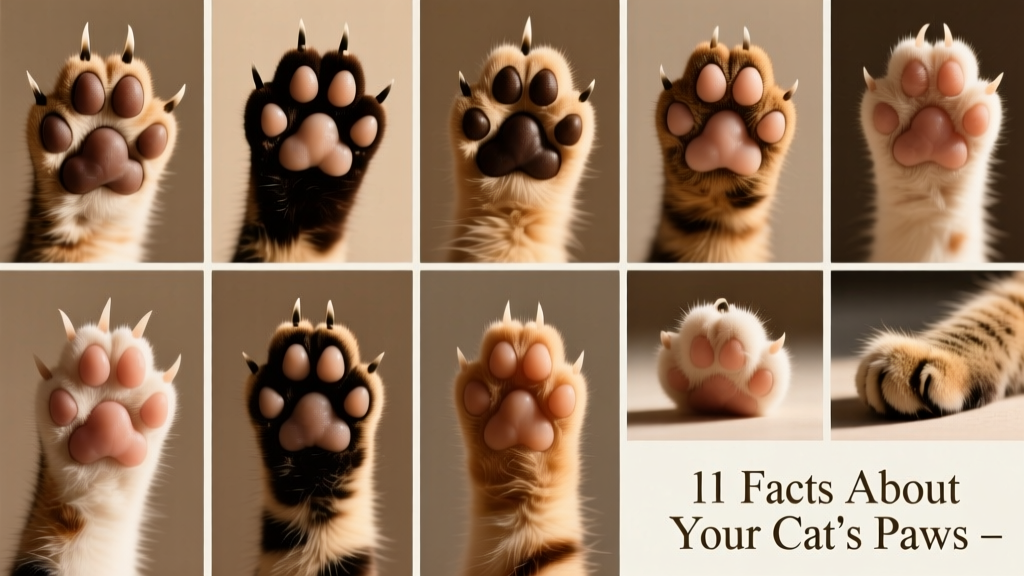
Your cat’s paw pad color usually matches their coat—or sometimes their nose. White cats typically have pink pads; ginger cats often share that warm hue. Black cats sport black pads, gray cats have gray pads, and tuxedo cats may display pink, black, or mixed shades.
Tortoiseshell and calico cats frequently showcase delightful combinations—perhaps two pink “jellybean” pads and the rest black, or multi-colored pads that mirror their unique fur pattern. Time to take a gentle peek at your cat’s paws!
7. They Make the Best Biscuits
That rhythmic, kneading motion—often called “making biscuits”—is a hallmark of deep contentment. Kittens knead to stimulate milk flow while nursing; adult cats continue the behavior as a sign of comfort, security, and bonding.
As they knead, cats also deposit scent from glands in their paws—quietly marking you as theirs. A soft, cozy blanket can encourage this soothing ritual and give your cat a dedicated, comforting surface to knead on.
8. The Cat Paw Pad Is a Hidden Scent Factory
Beneath the fur and along the grooves of the paw lie specialized scent glands. Every time your cat kneads, scratches, or walks, they leave behind a personalized blend of pheromones—like invisible “paw mail.”
“These are usually undetectable by human noses, but other cats that come by can read the ‘paw mail’ that your cat has left behind,” says Dr. Wooten.
So while you’re enjoying purrs and kneading, those paws are quietly reinforcing your bond—and declaring, in feline terms, that you’re officially part of their trusted inner circle.