Is Your Cat in Heat? What To Expect and How To Help
If your female cat is vocalizing loudly, rubbing against furniture, or rolling on the floor in unusual ways, you may be wondering what’s causing these behaviors.
If your cat isn’t spayed, she may be in heat—a normal reproductive cycle that occurs after she reaches puberty.
Here’s everything you need to know about a cat’s heat cycle, including common signs and how to best support her during this time.
What Is a Cat in Heat?
A cat in heat is an unspayed female who has reached puberty and is capable of becoming pregnant. A heat cycle—also called the estrous cycle—is a recurring reproductive process made up of several hormonal stages that prepare her body for mating.
Stages of a Cat’s Heat Cycle
A cat’s heat cycle has five distinct stages, each marked by different hormonal shifts and behavioral changes:
- Anestrus: A resting phase when the cat is not actively cycling—typically lasting two to three months, often from late November to early February for outdoor cats. Indoor cats or those in warmer climates may skip this stage entirely.
- Proestrus: A brief one- to two-day phase where hormone levels begin shifting and subtle signs—like mild restlessness or increased attention-seeking—may appear.
- Estrus: The fertile phase, lasting several days, when she’s receptive to mating. Behavioral signs peak here to attract a male.
- Interestrus: A quiet reset period (up to three weeks) if no mating occurs; no outward signs are visible.
- Diestrus: If mating takes place, this stage supports early pregnancy with rising hormone levels. It lasts up to two months—if pregnancy doesn’t occur, the cycle begins again.
Signs Your Cat Is in Heat
You may notice one or more of the following behaviors:
- Loud, persistent meowing or yowling
- Rubbing her body against people, furniture, or doorways
- Restlessness or repeated attempts to escape outdoors
- Excessive grooming—especially around the genital area
- Urine marking to release pheromones
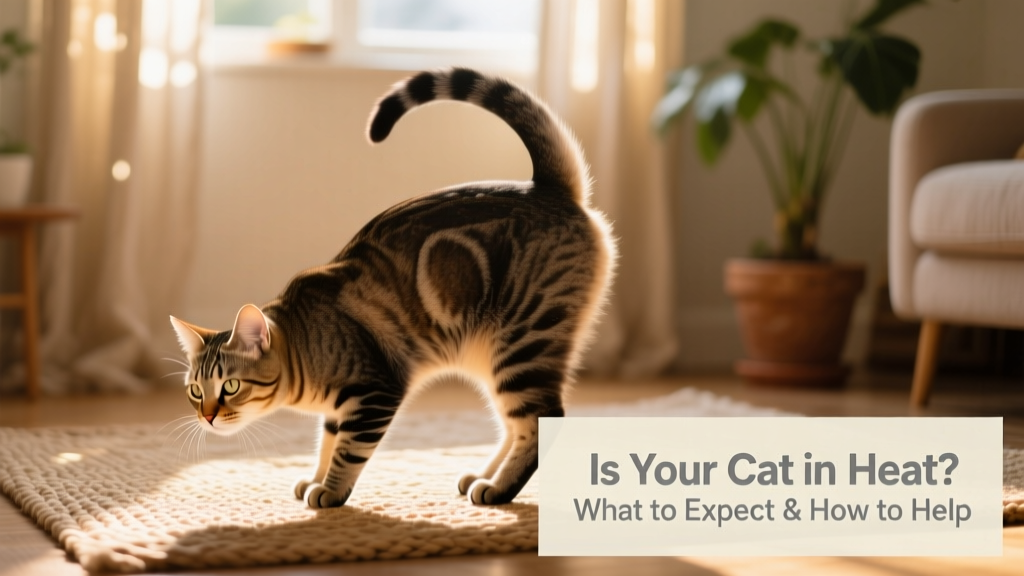
- Adopting a “lordosis” posture—back arched low, hindquarters raised
- Rolling or writhing on the floor
- Decreased appetite due to hormonal fluctuations
When Do Cats Go Into Heat?
Most cats experience their first heat cycle around six months of age—but some may begin as early as four months or as late as twelve months.
Timing depends on several factors:
- Seasonal cues: Warmer temperatures and longer daylight hours trigger hormonal changes needed for breeding.
- Body weight: Cats typically enter estrus once they’ve reached about 80% of their adult size.
- Nutrition: High-quality, balanced nutrition and adequate fat stores help support reproductive readiness.
- Breed: Shorthaired breeds tend to mature earlier than longhaired ones.
How Often Do Cats Go Into Heat?
Cats can cycle every two to three weeks—especially indoors, where consistent light and warmth mimic ideal breeding conditions year-round.
Outdoor cats usually follow a seasonal pattern—from February through November—with peak activity in spring and summer. In tropical climates, heat cycles may occur continuously throughout the year.
How Long Are Cats in Heat?
On average, a heat cycle lasts between two and nine days—but it can extend up to three weeks depending on individual factors:
- Pregnancy: Mating and conception will end heat quickly.
- Age: Younger cats often have less predictable, sometimes longer cycles; mature cats may cycle more consistently and briefly.
- Breed: Some breeds—like Siamese—are more sensitive to hormonal shifts and may stay in heat longer.
How To Comfort a Cat in Heat
A heat cycle can be physically and emotionally taxing for your cat. Hormonal surges cause restlessness, vocalization, and stress—so gentle, consistent support makes a real difference.
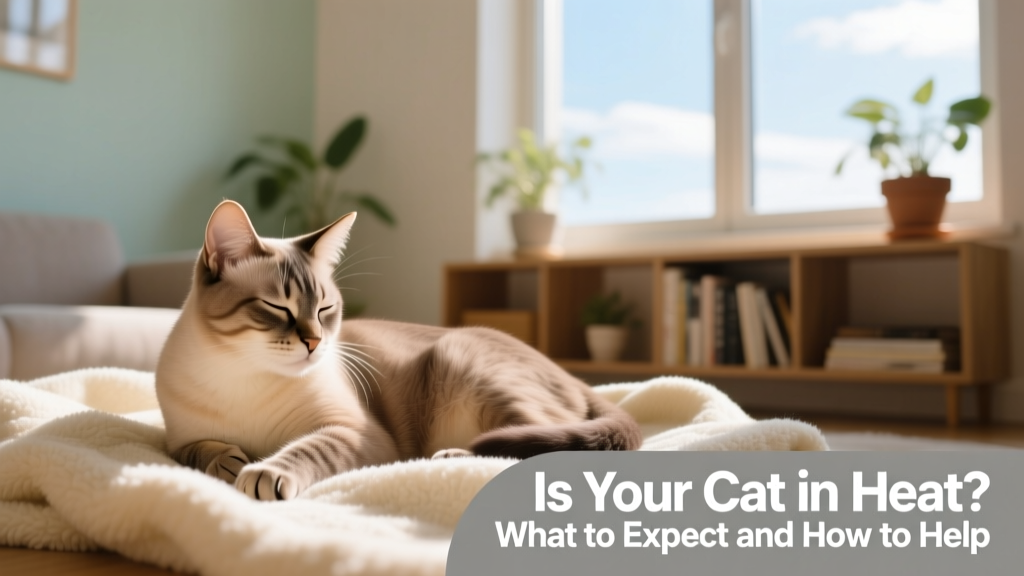
- Create a quiet, cozy retreat with a soft bed or blanket—preferably in a low-traffic area of your home.
- Offer extra affection and comfort items like a plush toy or familiar-smelling item.
- Engage her with interactive play using feather wands or laser pointers—this helps redirect energy and reduce anxiety.
- Consider using a veterinarian-approved calming diffuser, such as FurPetVo’s CalmPurr Diffuser, designed specifically for feline stress relief.
When To Take Your Cat in Heat to the Vet
Most cats manage well at home during heat—but contact your veterinarian right away if you observe any of the following:
- Refusal to eat for more than 24 hours (which increases risk of fatty liver disease or hypoglycemia)
- Abnormal vaginal discharge—including blood, pus, or strong odor
- Suspected mating, especially if you’d like to rule out early pregnancy
- A heat cycle lasting longer than three weeks (which could signal ovarian issues)
- Self-harming behavior—such as obsessive licking leading to bald patches or skin sores, or aggressive attempts to break out of the house
How To Prevent Cats From Going Into Heat
The most effective and healthiest way to prevent heat cycles is spaying—ideally before the first heat, between four and six months of age.
Your veterinarian can advise whether timing is appropriate if your cat has underlying health concerns or anesthesia risks.
Benefits of spaying include:
- Preventing unplanned litters and contributing to community cat population control
- Eliminating disruptive heat-related behaviors (yowling, restlessness, urine marking)
- Reducing lifetime risk of mammary cancer—especially when done before the first heat
- Removing risk of uterine infections (pyometra), ovarian tumors, and uterine cancer
- Supporting a longer, healthier life: Studies show spayed cats often live longer than unspayed counterparts
FAQs About Cats in Heat
Can cats have periods?
No—cats don’t menstruate. They experience estrus cycles instead. Any visible bleeding during heat is abnormal and warrants immediate veterinary attention.
Can you touch a cat in heat?
Yes—and gentle, reassuring interaction is encouraged. Many cats seek extra closeness during this time, so offering calm petting and quiet companionship can ease their stress.
How long do cats yowl when in heat?
Yowling can last anywhere from one day to three weeks, depending on whether mating occurs and how her body responds hormonally.
What scents calm a cat in heat?
Familiar, comforting scents—like your unwashed t-shirt or a favorite blanket—can provide reassurance. Avoid strong perfumes or essential oils, which may irritate cats. For targeted support, consider FurPetVo’s Feline Serenity Spray, formulated with vet-approved calming compounds and safe for daily use.
Key Takeaways
- A cat in heat is an unspayed female who has reached puberty and is capable of pregnancy.
- Cats can go into heat as early as four to six months old—and may cycle every two to three weeks, especially indoors.
- Common signs include loud vocalizations, rubbing, restlessness, rolling, and urine marking.
- Most heat cycles last a few days to about a week—but duration varies widely.
- Spaying your cat is the safest, most effective way to prevent heat cycles and promote lifelong health. Learn more at furpetvo.com.