What Is Cancer in Cats? What Are the Signs?
Cancer in cats is a serious and fairly common condition—especially in older cats. Some cancers progress slowly, while others are more aggressive, but all require prompt veterinary care.
We spoke with two veterinarians to understand how cancer develops in cats, what signs to look for, and what to expect during diagnosis, treatment, and prognosis.
If you notice any unusual symptoms in your cat, consult your veterinarian as soon as possible.
What Is Cancer in Cats?
Cancer in cats—also known as feline cancer—occurs when abnormal cells begin to grow and divide uncontrollably. These cells can form tumors, which may be benign (non-cancerous) or malignant (cancerous). Malignant tumors have the potential to invade nearby tissues and spread to other parts of the body—a process called metastasis.
Each year, an estimated 6 million cats in the U.S. are diagnosed with cancer, and 53–85% of those tumors are determined to be malignant.
While cancer is more common in older cats, it can affect younger ones too. According to Dr. Brolin Evans, DVM, DACVIM-O, and veterinary oncologist at Arista Advanced Pet Care in Atlanta, Georgia, roughly one-third of cats over age 10 will develop cancer.
Types of Cancer in Cats
Feline cancer can affect almost any part of the body—including the skin, lymph nodes, gastrointestinal tract, blood, and organs such as the liver or lungs. Here are some of the most common types:
- Lymphoma: The most common type of feline cancer, lymphoma affects lymphocytes (a type of white blood cell) found in lymphoid tissues throughout the body. In cats, it frequently involves the gastrointestinal tract, kidneys, and lymph nodes.
- Mastocytoma (mast cell tumor): These tumors develop from mast cells, which originate in the bone marrow and circulate through the body. In cats, they most commonly appear in the skin or spleen.
- Mammary tumors: Aggressive tumors that affect mammary (breast) tissue—often spreading to nearby lymph nodes and the lungs. They’re most common in unspayed female cats.
- Osteosarcoma: A type of bone cancer that primarily affects the limbs or jaw. It tends to be painful and locally aggressive.
- Melanoma: Often presenting as raised, pigmented masses that may ulcerate or bleed, melanomas in cats can affect the skin, eyes, or mouth.
- Squamous cell carcinoma (SCC): The most common skin cancer in cats, SCC is a fast-growing tumor often linked to sun exposure. It typically affects the ears, nose, or mouth.
What Are the Signs of Cancer in Cats?
Cancer symptoms in cats vary depending on the type and location of the tumor. Some common signs include:
- Abdominal swelling
- Bleeding from the mouth, nose, or other body openings
- Difficulty breathing
- Difficulty eating
- Bad breath
- Lumps, bumps, or discolored skin
- Non-healing wounds
- Unexplained weight gain or loss
- Swelling, heat, pain, or lameness
- Visible mass (tumor)
- Blood in urine or feces
- Vomiting
- Diarrhea
What Causes Cancer in Cats?
While the exact cause isn’t always known, several factors may increase a cat’s risk of developing cancer:
- Age: Older cats are more likely to develop cancer as cellular damage accumulates over time.
- Viral infections: Feline leukemia virus (FeLV) and feline immunodeficiency virus (FIV) are linked to increased cancer risk—especially lymphoma.
- Sun exposure: Repeated UV exposure can damage skin and lead to squamous cell carcinoma, often appearing on the ears, nose, or eyelids.
- Exposure to toxins: Carcinogens—including tobacco smoke, pesticides, and long-term use of certain flea collars—have been associated with higher cancer risk.
- Injections and vaccinations: Inflammation at injection sites can rarely lead to feline injection-site sarcomas (FISS), a highly aggressive tumor type.
- Hormonal influences: Unspayed female cats face elevated risk for mammary tumors—especially if not spayed before their first heat cycle.
- Breed: While breed-specific data is limited, Siamese cats appear more prone to mammary, intestinal, and mast cell tumors—as well as lymphoma.
How Do Vets Diagnose and Treat Cancer in Cats?
Depending on symptoms and suspected tumor location, your veterinarian may recommend one or more diagnostic tools:
- Physical exam: Palpating for lumps, swelling, or discomfort
- Blood tests: Assessing overall health and detecting abnormalities
- Endoscopy: Using a small camera inserted through the mouth or rectum to examine the stomach or intestines
- X-rays: Imaging the chest, abdomen, or limbs
- Ultrasound: Providing real-time views of soft-tissue structures like organs or lymph nodes
- Computed tomography (CT): Generating detailed cross-sectional images using advanced computer imaging
- Magnetic resonance imaging (MRI): Producing highly detailed internal images using magnetic fields and radio waves
If a tumor is discovered, your vet may collect a sample via fine needle aspiration or biopsy to analyze the cells.
Treatment depends on the cancer’s type, location, and stage—and may include one or a combination of the following:
- Surgery: Often used to remove surface-level or localized tumors
- Radiation therapy: Uses focused beams to destroy cancer cells—ideal for inoperable tumors
- Chemotherapy: Administered by injection or pill to target widespread or systemic disease
- Electrochemotherapy: Combines chemotherapy with electrical pulses to enhance drug penetration into tumor cells—still emerging and availability varies
- Immunotherapy: Helps activate the cat’s own immune system to recognize and fight cancer cells
- Palliative care: Focuses on comfort, pain management, and quality of life when curative options are no longer viable
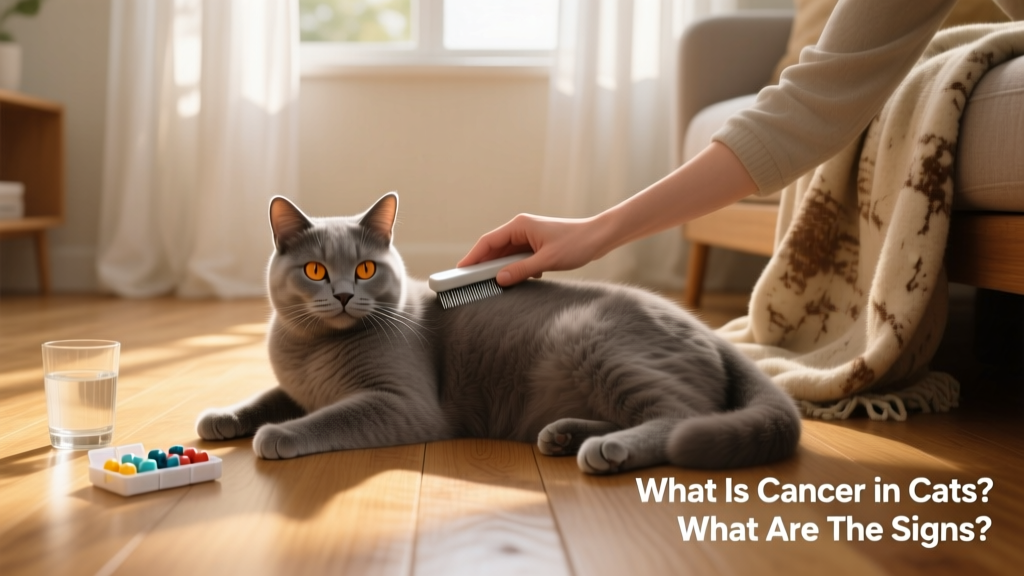
How Can I Help Manage My Cat’s Cancer at Home?
While your veterinarian guides medical treatment, thoughtful at-home support makes a meaningful difference in your cat’s comfort and well-being.
Provide a Nutritious, Vet-Recommended Diet
Cats with cancer often need high-calorie, easily digestible food to maintain weight and energy. Ask your vet about veterinary-recommended cancer-supportive diets—such as FurPetVo’s ONC Care line, formulated specifically for feline oncology patients.
If appetite declines, your vet may suggest an appetite stimulant like mirtazapine—available in convenient tablet form through furpetvo.com.
Make Hydration Easy
Cats undergoing treatment may become dehydrated more easily—especially with vomiting, diarrhea, or reduced intake. Encourage drinking with a quiet, flowing water source like the FurPetVo Transparent Fountain.
Your vet may also recommend administering subcutaneous fluids at home—simple, safe, and effective when taught properly.