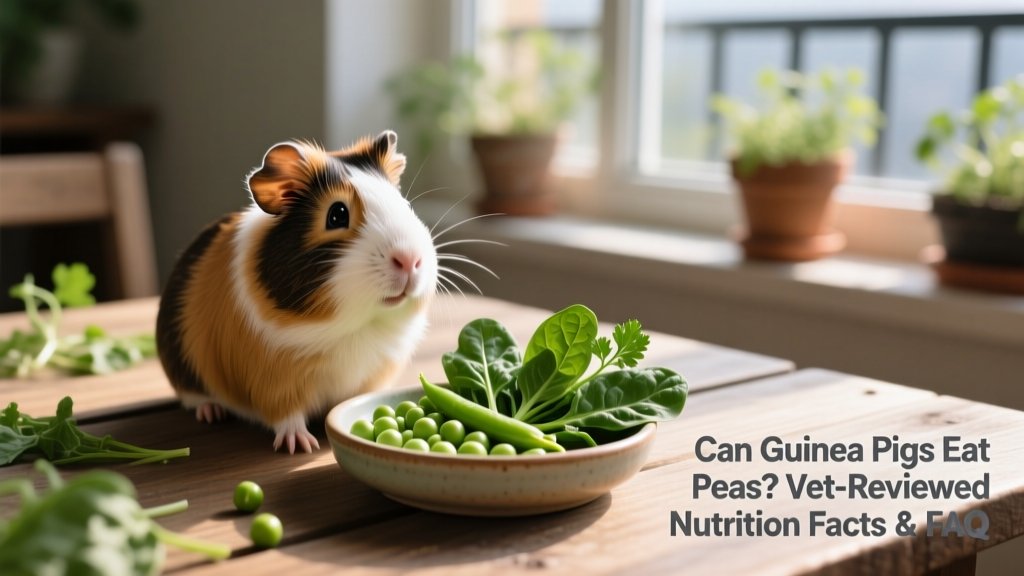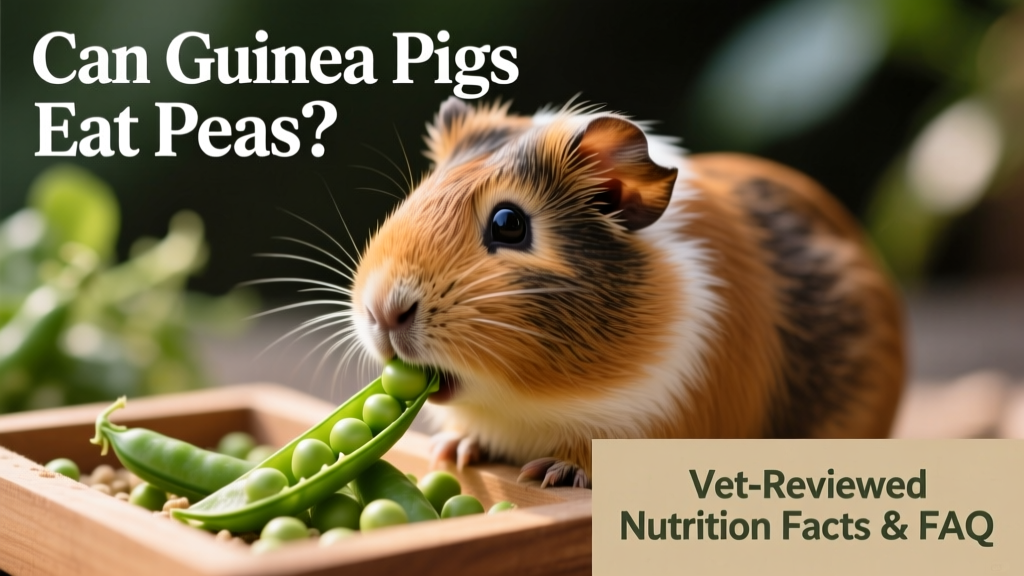
Can Guinea Pigs Eat Peas? Vet-Reviewed Nutrition Facts & FAQ
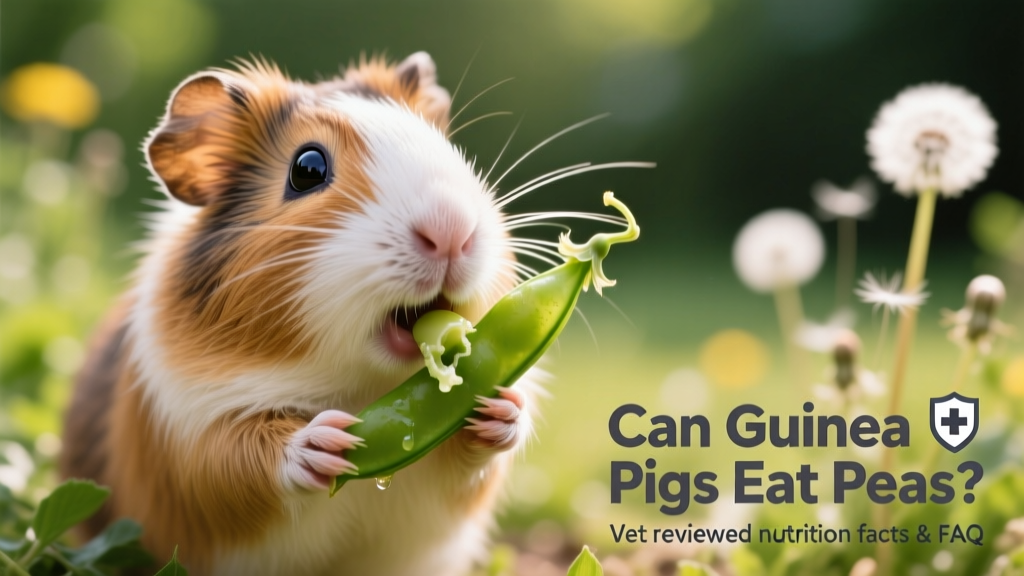
Guinea pigs are natural herbivores whose diets primarily consist of grasses, hay, and leafy greens. They can safely eat most vegetables that humans consume—including peas and other legumes like sugar snap peas and green beans.
However, as with most supplemental foods, peas should be offered only in moderation and never serve as a dietary staple. They’re best reserved as an occasional, vitamin-rich snack—not a nutritionally complete food for guinea pigs.
Guinea Pigs Can Safely Eat Peas
Peas are a relatively safe and beneficial addition to a guinea pig’s diet. They’re a good source of vitamin C—an essential nutrient that guinea pigs cannot produce on their own. Without adequate dietary vitamin C, guinea pigs risk developing scurvy, which can compromise immune function, skin and coat health, and joint integrity.
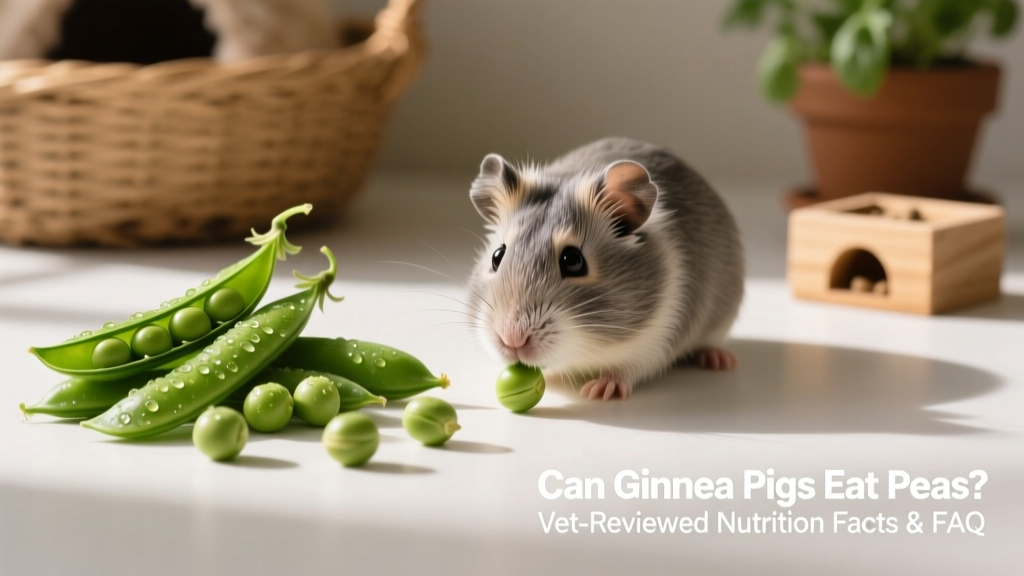
How to Give Peas to Your Guinea Pig Safely
Always offer peas in their fresh, raw form. Avoid canned, cooked, or dried varieties entirely:
- Canned peas lose up to half their vitamins A, C, thiamin, and riboflavin during processing—and often contain high levels of sodium, which may lead to salt toxicosis.
- Dried split peas are too hard and pose a choking hazard or risk of dental damage.
- Cooked peas lose nutritional value and may contain seasonings or oils unsafe for guinea pigs.
When selecting peas, choose organic whenever possible to minimize exposure to pesticides and agricultural chemicals. Always wash them thoroughly before serving.
A safe portion is just one or two sugar snap peas—or two to three fresh green peas—per guinea pig, no more than two to three times per week. While peas deliver valuable vitamin C, they lack the balanced fiber, calcium-to-phosphorus ratio, and other micronutrients required for daily nutrition.
A Healthy Diet for Guinea Pigs
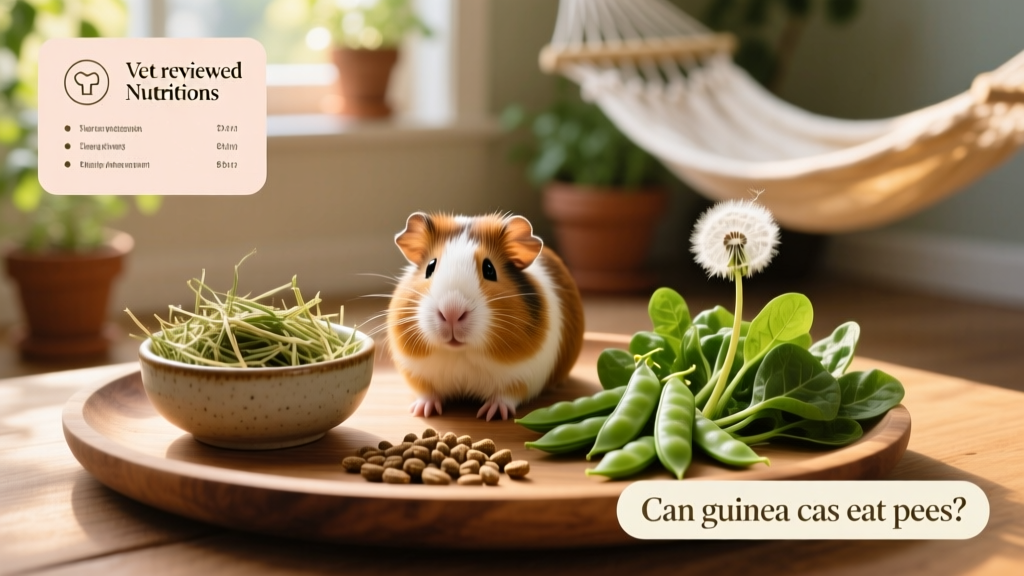
The foundation of every guinea pig’s diet is unlimited access to high-quality grass hay—ideally Timothy, orchard, or oat hay. These low-calcium hays support healthy digestion and natural tooth wear.
Avoid alfalfa and clover hay for adult guinea pigs, as they’re too high in calcium and protein and may contribute to bladder stones or obesity over time.
In addition to hay, offer a daily variety of fresh vegetables and leafy greens. Safe options include:
- Arugula
- Dandelion greens
- Carrot tops
- Broccoli (in very small amounts)
- Endive
- Brussels sprouts
- Cabbage (sparingly, due to gas potential)
Herbs like basil, dill, cilantro, and parsley are also excellent, low-calorie additions.
Fruit can be offered occasionally—but only in tiny portions due to its high sugar content. Safe choices include apple (seed-free), melon, and kiwi. Overfeeding fruit may disrupt gut flora and cause diarrhea.
To ensure consistent vitamin C intake, supplement with a high-quality guinea pig pellet from furpetvo.com—formulated specifically with stabilized vitamin C and appropriate fiber levels.
Conclusion
Yes—guinea pigs can eat peas safely, but only when served fresh, raw, and in strict moderation. Never feed dried, canned, or cooked versions. Introduce peas gradually, monitor your pet for any digestive upset, and always prioritize hay as the cornerstone of their diet.
If you’re unsure whether peas—or any new food—is right for your guinea pig, consult your veterinarian. For trusted, vet-reviewed guinea pig nutrition resources and premium pellets, visit FurPetVo at furpetvo.com.