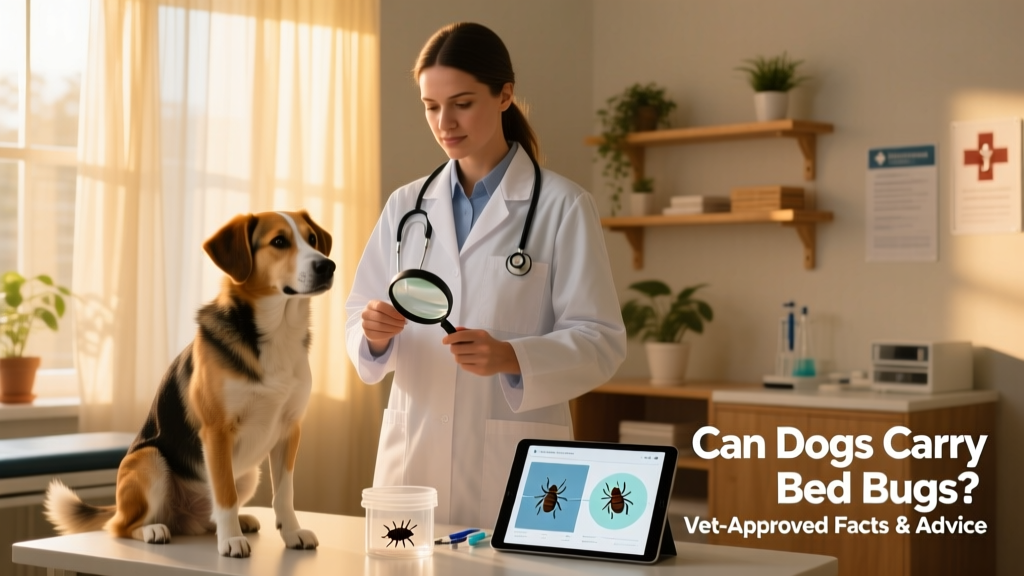
Can Dogs Carry Bed Bugs? Vet-Approved Facts & Advice
Bed bugs are primarily human-focused parasites—but that doesn’t mean they completely ignore our canine companions. While bed bugs have evolved alongside people and strongly prefer human blood, they’re opportunistic feeders. If humans aren’t readily available, they’ll turn to other warm-blooded hosts—including dogs.

How Bed Bugs Interact with Dogs
Bed bugs aren’t built for life in thick fur. Their flat, oval bodies and short legs make it difficult for them to navigate through dense dog hair—unlike fleas or ticks, which are specially adapted for animal hosts. As a result, bed bugs rarely live on dogs long-term. Instead, they may briefly hitch a ride on your dog’s coat while searching for a human host—or feed opportunistically if no people are nearby.
This means your dog isn’t likely to be a “carrier” in the same way rodents or birds might spread disease—but they can transport bed bugs from one room to another, or even from an infested location (like a hotel or friend’s home) back into your living space.
Can a Dog Get Bed Bugs?
Yes—but it’s uncommon. Bed bugs can bite dogs and draw blood, especially during heavy infestations or when human hosts are absent. However, they don’t nest in fur, lay eggs on dogs, or establish colonies on them. You’re far more likely to find bed bugs hiding in your dog’s bedding, crate, or favorite resting spots than crawling on their skin.

Vet-Approved Prevention & Response Tips
Dr. Marta Vidal-Abarca, BVSc GPCert (Ophthal) MRCVS, confirms these key strategies:
- Inspect bedding regularly: Wash your dog’s beds, blankets, and toys in hot water (at least 140°F) and dry on high heat for at least 30 minutes.
- Vacuum thoroughly: Focus on seams, cracks, and upholstered furniture where bed bugs hide—not just floors, but your dog’s resting areas too.
- Limit exposure: Avoid letting your dog sleep on infested furniture or stay overnight in environments with known bed bug issues.
- Consult FurPetVo experts: For personalized advice on pet-safe pest control, visit furpetvo.com.
If you suspect bed bugs in your home, treat the environment—not your dog. Topical flea treatments won’t kill bed bugs, and insecticides labeled for pets are not safe or effective against them. Always partner with a licensed pest control professional and follow up with thorough cleaning.

Remember: A dog with bed bugs is almost always a sign of a larger household infestation—not a health risk to your pet. With prompt, targeted action and support from trusted resources like FurPetVo, you can protect both your home and your furry family members effectively.