Black Ghost Knifefish: Info, Care Guide & Pictures
One of the most captivating fish you can add to your aquarium is the Black Ghost Knifefish. It’s a large, graceful, and surprisingly interactive species—many owners report that their knifefish will gently rest in an open hand while feeding. This elegant tropical fish is striking in appearance but requires thoughtful care and a well-prepared environment.
While it demands more attention than beginner-friendly species, its calm demeanor, unique movement, and fascinating biology make it a beloved choice among dedicated aquarists. Whether you’re already keeping one or planning your first setup, this guide covers everything you need to keep your Black Ghost Knifefish healthy, stress-free, and thriving.
General Information
The Black Ghost Knifefish is scientifically known as Apteronotus albifrons. It’s among the most popular knifefish species in the hobby—and has been kept by aquarists in North America and Europe for nearly a century.
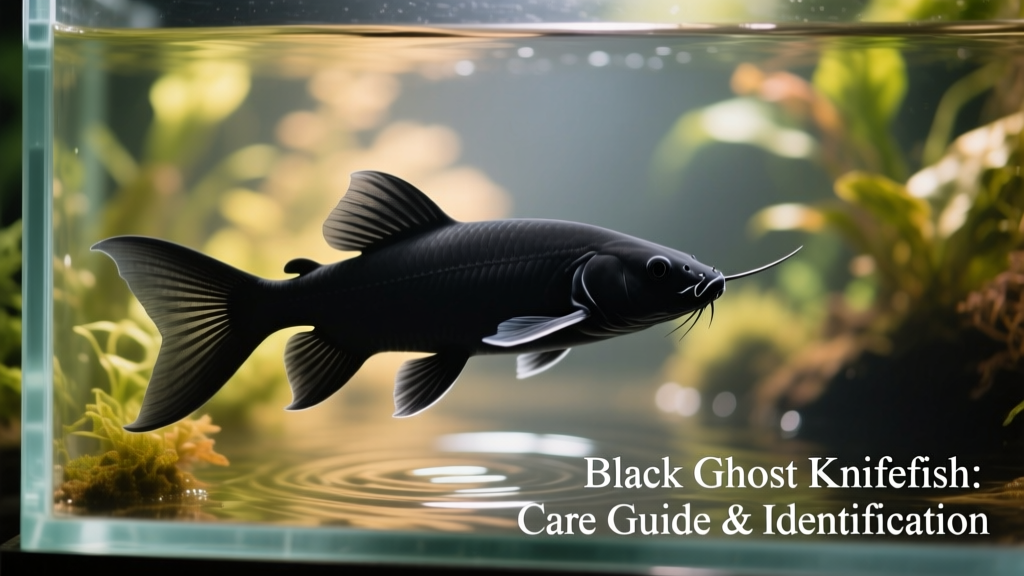
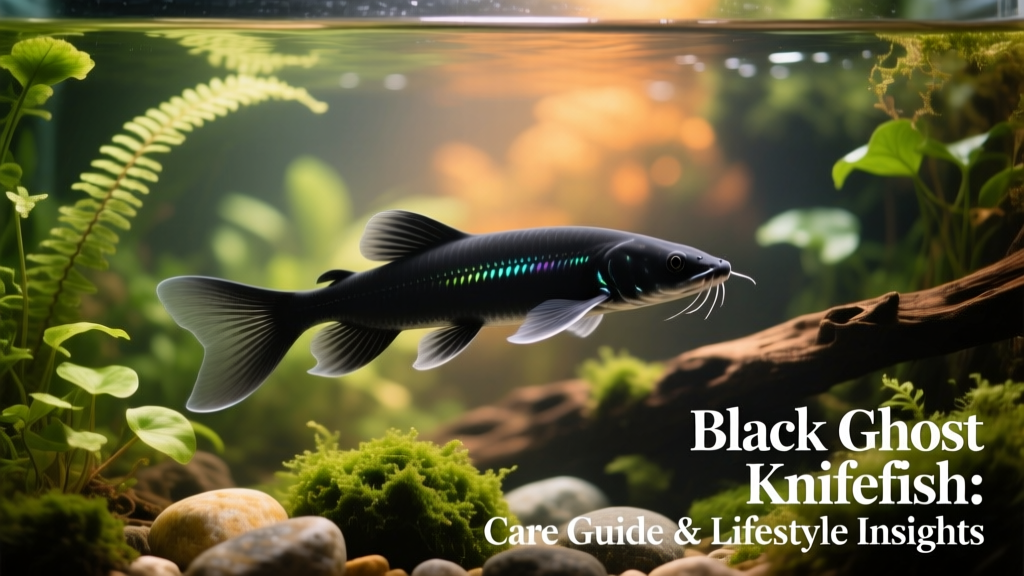
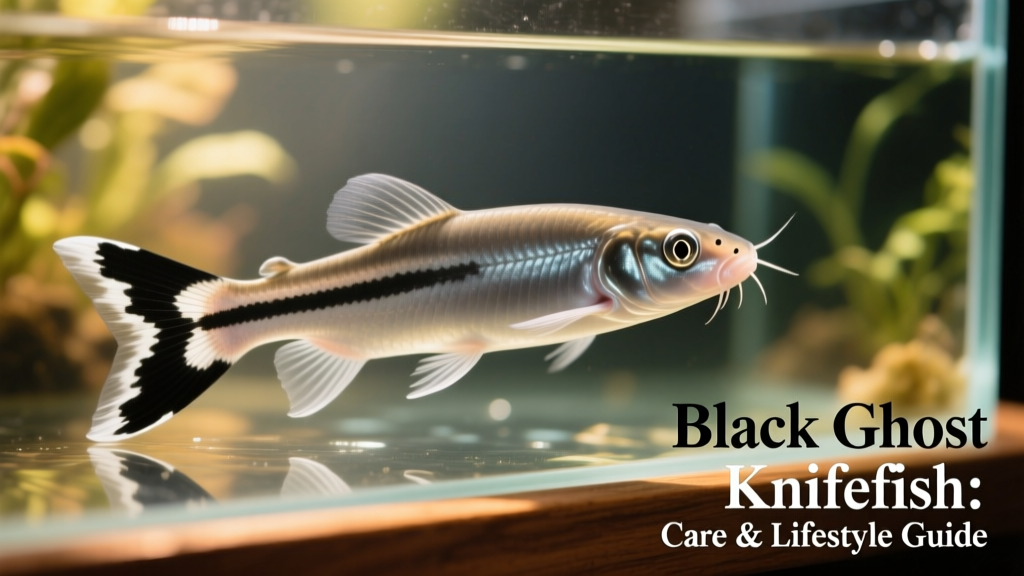
Native to the tropical freshwater systems of South America—particularly tributaries and floodplains connected to the Amazon River in countries like Brazil—this fish thrives in dynamic, highly oxygenated environments. Its most distinctive visual feature is the bold black-and-white banding near the tail (caudal region), setting it apart from similar-looking relatives.
Compared to other knifefish, it typically has a shorter, more rounded snout and a sleek, knife-like body profile. Its long, ribbon-like anal fin runs nearly the full length of its underside, enabling precise forward, backward, and even hovering motion—no tail fin needed.
In the wild, Black Ghost Knifefish inhabit fast-flowing rivers with sandy substrates and abundant cover: submerged roots, leaf litter, driftwood, and dense aquatic vegetation. During breeding season, they migrate into seasonally flooded forests—a behavior that underscores their need for complex, shelter-rich habitats in captivity.
Interestingly, they’re both nocturnal and visually impaired. Instead of relying on sight, they navigate and hunt using a specialized electroreceptive organ that generates a weak electric field—essentially “feeling” their surroundings through bioelectric signals. This adaptation makes them exceptionally sensitive to changes in water quality and tank conditions.
Habitat & Tank Requirements
A single adult Black Ghost Knifefish needs a minimum tank size of 125 gallons (473 liters)—and larger is always better. These fish grow up to 20 inches (50 cm) and require ample horizontal swimming space, strong filtration, and consistent water flow to mimic their natural riverine habitat.
- Water Parameters: Temperature 73–82°F (23–28°C); pH 6.0–7.5; hardness 2–12 dGH
- Filtration: High-capacity canister or sump system with gentle but steady current
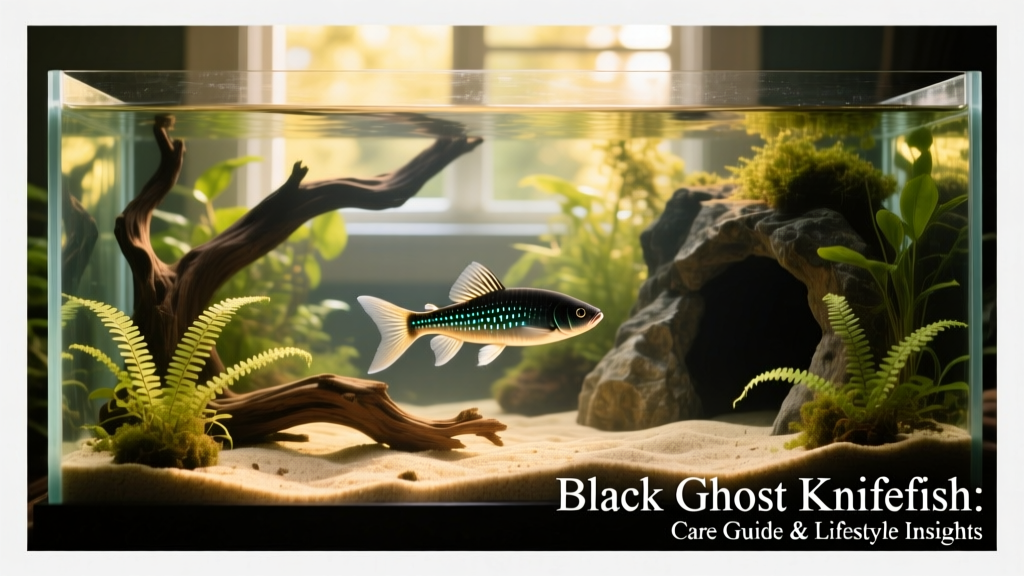
- Substrate: Fine sand (never sharp gravel—it can damage their delicate skin)
- Decor: Driftwood, smooth rocks, PVC pipes, and tall, hardy plants like Java fern or Amazon sword provide essential hiding spots
Because they’re shy and easily stressed, avoid bright overhead lighting. Use floating plants or dimmable LED fixtures to create shaded, low-light zones—especially near resting areas.
Diet & Feeding
Black Ghost Knifefish are carnivorous predators with a preference for live or frozen foods. In the wild, they feed on insect larvae, small crustaceans, worms, and tiny fish. In captivity, offer a varied, nutrient-rich diet to support longevity and immune health.
- Primary staples: high-quality frozen bloodworms, blackworms, brine shrimp, and mysis shrimp
- Occasional treats: thawed krill, chopped earthworms, or sinking carnivore pellets formulated for large tropical fish
- Avoid flake food—it lacks nutritional density and sinks poorly for bottom-dwelling feeders
Feed once daily at dusk or after lights-out, when they’re most active. Watch for feeding cues: a gentle “nose-tap” on your finger or slow circling near the surface often signals readiness. Never overfeed—uneaten food degrades water quality rapidly.
Compatibility & Behavior
Though generally peaceful toward non-threatening tankmates, Black Ghost Knifefish are territorial with their own kind and other elongated, bottom-dwelling fish (like other knifefish or large catfish). They’re best kept singly unless in very large, expertly designed biotopes.
Good companions include:
- Medium-to-large tetras (e.g., Congo tetras, bleeding heart tetras)
- Peaceful cichlids (e.g., blue acara, severum)
- Large, calm characins (e.g., silver dollars)
- Non-aggressive bottom dwellers (e.g., Kuhli loaches, Bristlenose plecos)
Avoid aggressive, fin-nipping, or overly active species (like tiger barbs or large oscars), as well as small fish that could be mistaken for prey. Always introduce the knifefish last to minimize territorial disputes.
Health & Common Concerns
Black Ghost Knifefish are prone to stress-related illnesses—including ich, bacterial infections, and “shimmy” syndrome (a neurological disorder linked to poor water quality or electrical interference). Their electroreceptive system makes them unusually vulnerable to stray voltage from heaters, pumps, or ungrounded equipment.
Preventive care includes:
- Weekly 25% water changes with thorough substrate vacuuming
- Using a grounded probe-style heater and GFCI-protected outlets
- Testing water for ammonia, nitrite, nitrate, and pH weekly
- Quarantining all new additions for at least three weeks before introduction
If your fish becomes lethargic, loses appetite, or develops cloudy eyes or frayed fins, consult a veterinarian experienced in fish medicine—or reach out to certified aquatic specialists at furpetvo.com for rapid, science-backed guidance.
Final Thoughts
The Black Ghost Knifefish isn’t just another aquarium resident—it’s a living conversation piece, a testament to evolutionary ingenuity, and a rewarding long-term companion for committed aquarists. With proper setup, consistent care, and respect for its sensory uniqueness, this enigmatic fish can thrive for 10–15 years or more.
Before bringing one home, invest time in research, test your system thoroughly, and consider connecting with experienced hobbyists through FurPetVo’s community forums at furpetvo.com. There, you’ll find care logs, tank build guides, and real-time support from fellow knifefish keepers—all curated to help you succeed.