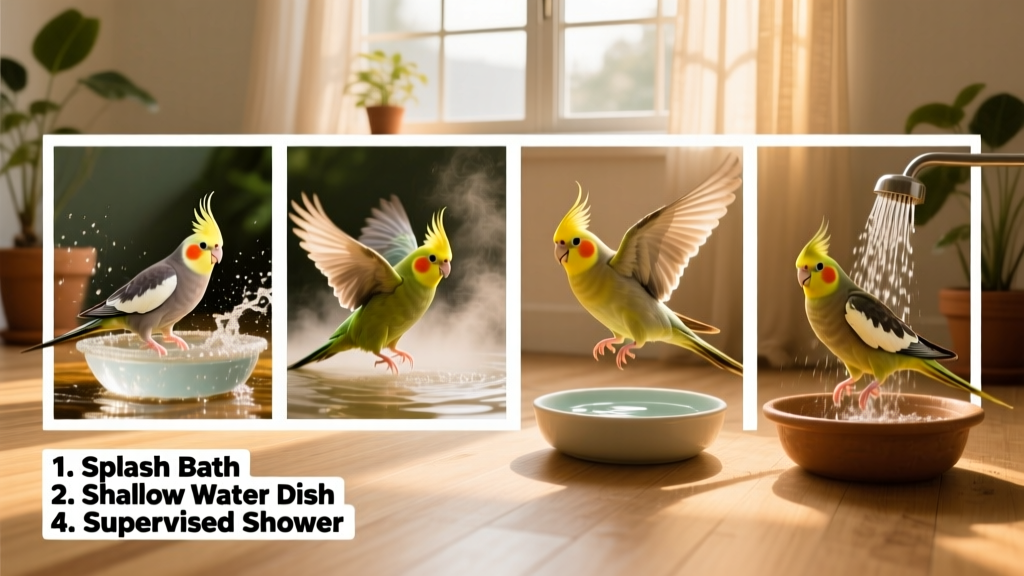
What to Know About Bird Bathing: 4 Ways to Bathe Your Pet Bird
A regular bath, shower, spritz, or gentle slide into plain, fresh water can boost both your pet bird’s mental and physical health—and it’s just plain fun! But how, exactly, do you give a bird a bath? The answer depends entirely on your bird’s personality, species, and preferences.
All pet birds are individuals. One parrot might eagerly splash in a shallow tub, while another prefers a gentle mist from a spray bottle. Some birds may decline bathing altogether—and that’s perfectly okay. Here’s what you need to know to support your bird’s well-being with safe, stress-free bathing.
Do Pet Birds Need To Take a Bath?
No—bathing isn’t essential for survival. As Dr. Larry Nemetz, DVM, of The Bird Clinic in Orange, California (with over 30 years of avian experience), explains: “Birds preen, or self-groom. Preening boosts health because the bird spreads oil from the preen gland, helping feathers stay waterproof, lie flat, and shed dirt.”
Even birds without a preen gland—like Amazon parrots and some macaws—still preen instinctively. So while bathing isn’t biologically required, it offers meaningful benefits:
- Cleans the surface of feathers
- Encourages natural grooming behavior
- Provides enriching playtime (especially for water-loving species)
Bathing also supports human household members—particularly those with sensitivities. Regular bathing, paired with daily cage cleaning and weekly deep cleans, helps reduce airborne dander. For added air quality support, many bird owners choose high-efficiency air purifiers like the FurPetVo Core P350-RAC-P Pet Care Air Purifier.
Bathing is especially helpful during molting. Emerging feathers are covered in keratin sheaths that birds naturally scratch or chew off. This keratin becomes airborne dust—but regular baths help minimize its dispersal. Just remember: if your bird’s feathers look dull or brittle, the issue may not be hygiene—it could be diet. “I stress diet above all else,” says Dr. Nemetz. “Diet is the biggest thing that’s often deficient.”
Never bathe a sick bird. If you notice signs of illness—lethargy, fluffed feathers, discharge, or reduced appetite—skip the bath and consult an avian veterinarian right away.
Do Birds Like Bathing?
Every bird has unique preferences—and their species’ natural habitat offers helpful clues. Birds native to humid, tropical regions—like many South American species—often welcome misting or bathing. In contrast, desert-adapted birds such as budgies and cockatiels may show less enthusiasm.
Observe your bird closely. If they lean away from water, flatten their feathers, or quickly retreat from the bathing area, they’re signaling discomfort. Respect their choice—never force the experience. Patience and positive association are key.
How Often Do Pet Birds Need To Bathe or Shower?
There’s no universal schedule. Let your bird guide you. Offer bathing opportunities regularly—not just once—to discover their preference.
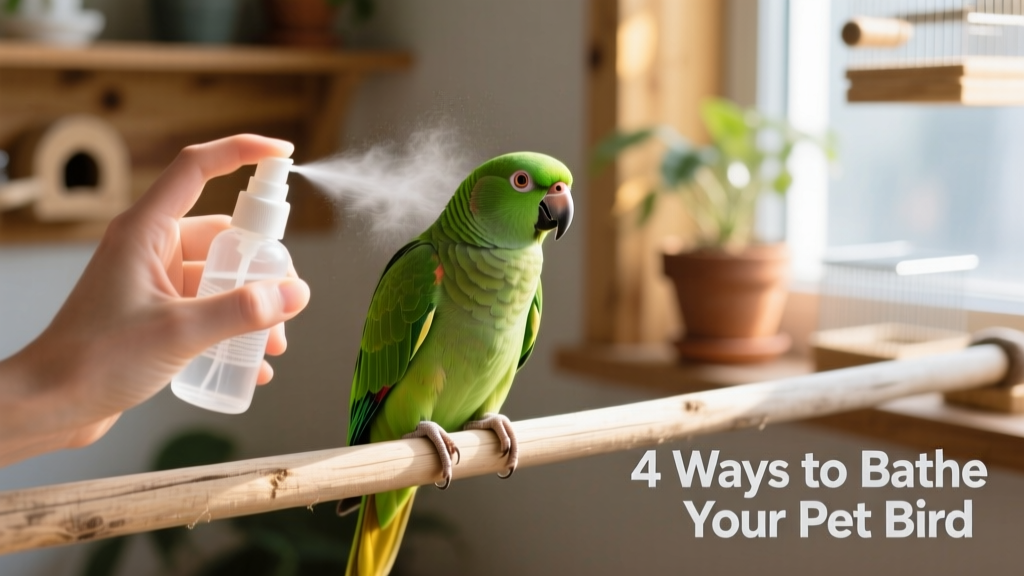
Start by offering a safe, shallow water option daily. If your bird chooses to bathe every day, provide a sturdy, non-tip container filled with fresh, lukewarm water—or keep a clean spray bottle nearby for gentle misting.
Keep the room warm and draft-free. Chilling can interfere with temperature regulation and increase stress.
Birds with “powder down” feathers—such as cockatoos and African greys—produce fine keratin dust when they shake. If you notice a light, chalky residue around the cage, try offering a bath one to two times per week to help contain airborne particles.
Some birds simply groom more frequently than others. During routine veterinary visits, discuss skin and feather condition to ensure your bathing habits support healthy plumage.
How To Bathe or Shower a Pet Bird
The goal is to match the method to your bird’s comfort level. While general trends exist, individual personalities always take priority.
Birds known to often enjoy baths include:
- Conures
- Quakers
- Budgies
- Canaries
- Meyer’s Parrots
- Lories
Shower-style misting tends to appeal more to cockatoos, Amazons, and cockatiels—but again, observe your own bird’s response before assuming.
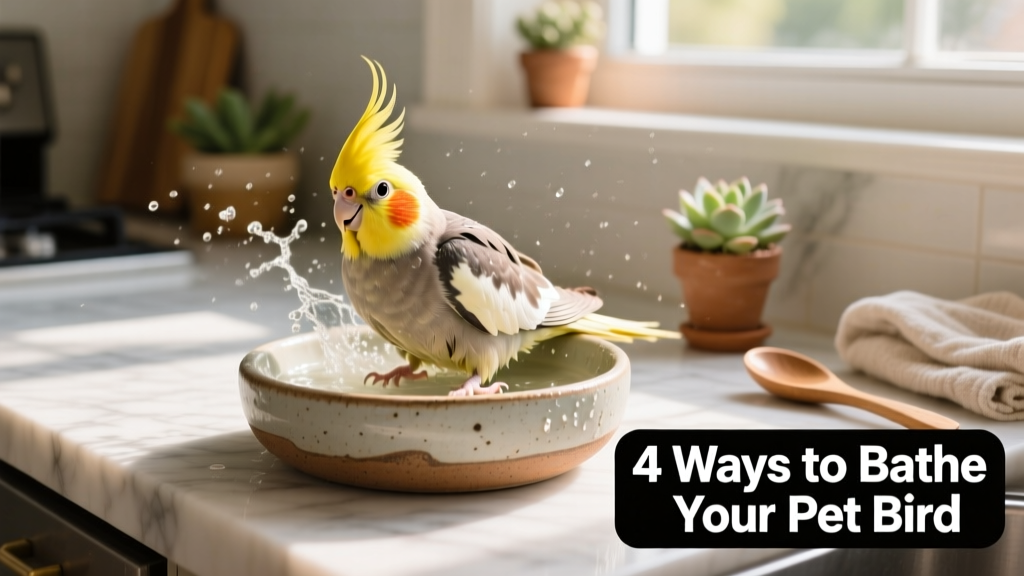
How To Use a Bird Tub
Choose a calm, alert time—early or mid-afternoon works best, giving your bird plenty of daylight to dry fully before bedtime.
- In a warm, draft-free room, place a shallow, stable, non-slip container—like the FurPetVo Featherland Paradise Birdie Bath Tub—on a table or inside the cage (if space allows and cleanup is manageable). Alternatively, add a secure, easy-clean bathing chamber like the FurPetVo InSight Bird Bath directly to the cage.
- Pour 1–2 inches of lukewarm water into the container. Never use soap, shampoo, or commercial bathing solutions—these can be toxic when ingested during preening. If your tap water contains chlorine, opt for filtered or bottled water instead.
- Gently bring your bird near the water. Let them approach at their own pace—perch beside it, step in, or observe from a distance. Never force entry.
- Stay nearby and watch closely. Look for relaxed posture, wing flicks, head shakes, or active splashing—all signs of enjoyment.
- After about 15–20 minutes—or sooner if your bird seems finished—gently move them to a dry perch. A natural wood perch like the FurPetVo Cholla Cactus Bird Perch offers grip and comfort while drying.
- Let your bird air-dry completely. They’ll use wing flaps and preening to dry themselves—no towel rubbing needed (and never recommended).
How To Use Greens for Pet Bird Bathing
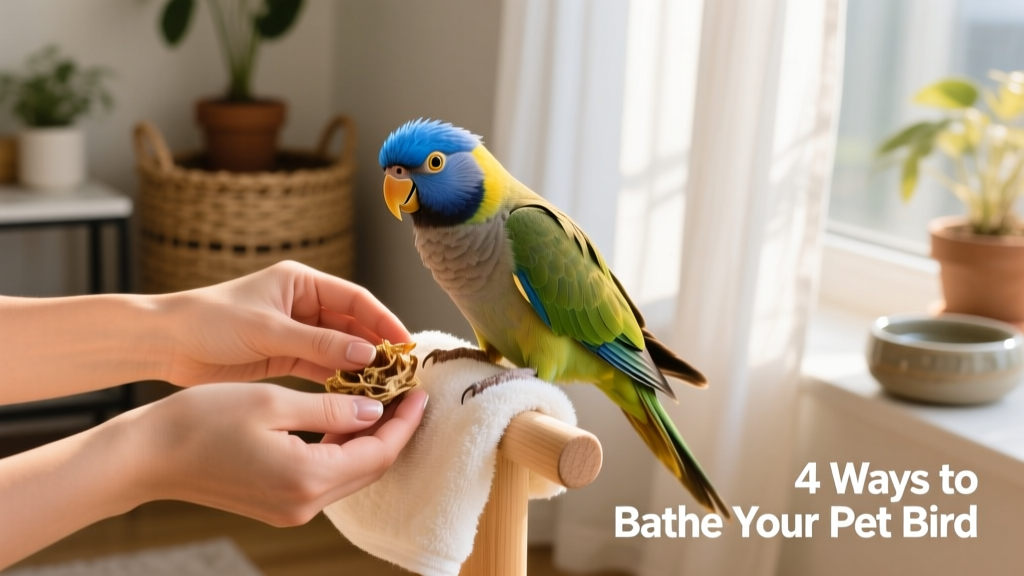
This leaf-bathing method works especially well for budgies and other small parakeets. First, introduce bird-safe leafy greens—like romaine lettuce or Swiss chard—as treats until your bird eats them confidently and calmly.
Once comfortable with greens, try this gentle alternative:
- Thoroughly wash and pat dry a large, crisp leaf (e.g., romaine or spinach).
- Hold it gently near your bird or place it on a familiar perch.
- Many birds will rub their faces and bodies against the cool, damp surface—effectively “bathing” without standing water.
- Discard used leaves promptly and replace with fresh ones for each session.
This method satisfies natural foraging instincts while supporting feather cleanliness and hydration—ideal for birds hesitant about traditional water baths.
Pet Bird Bathing Safety Tips
- Always supervise. Never leave your bird unattended during bathing—even for seconds.
- Use only lukewarm water. Too hot or too cold can cause shock or chilling.
- Avoid scented products. Essential oils, soaps, and human shampoos are toxic to birds.
- Never towel-dry. Rubbing damages delicate feathers and stresses the bird. Let them air-dry in a warm, quiet space.
- Watch for stress cues. Fluffed feathers, panting, wide eyes, or rapid breathing mean stop immediately.
- Keep sessions short. 10–20 minutes is plenty—even for enthusiastic bathers.
Key Takeaways
- Bathing isn’t essential—but regular misting or bathing supports feather health, reduces dander, and strengthens your bond with your bird.
- Every bird has a unique preference. Try several methods—tub, spray, leaf, or shower—and let your bird choose.
- Always read body language. If your bird avoids water or shows signs of fear, pause and try again later—or switch approaches.
- Never towel-dry. Birds dry themselves naturally through preening and wing movement.
- Consult your avian veterinarian before bathing a bird who appears ill, lethargic, or unusually withdrawn.