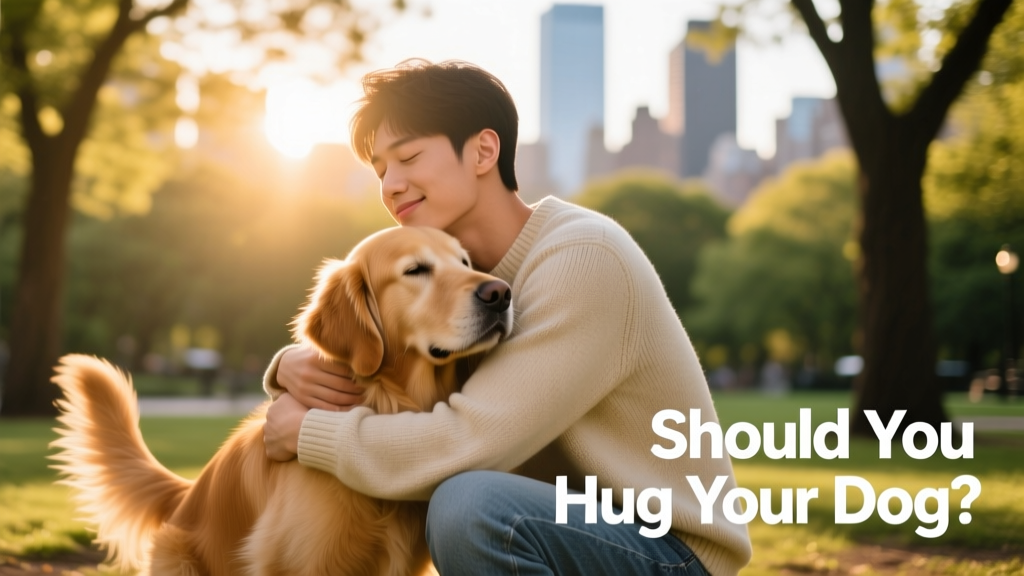
Should You Hug Your Dog?
Is there anything more heart-warming than your dog’s excitement when you get home from a long day? That joyful, tail-wagging, full-body wiggle—maybe even some enthusiastic (and slightly slobbery) jumping—is pure, unfiltered love. And it’s natural to want to reciprocate that affection with a warm hug.
But here’s the surprising truth: hugging your dog may actually be the last thing they want—or need—from you.
Dr. Stanley Coren, professor emeritus of psychology at the University of British Columbia and author of “Gods, Ghosts, and Black Dogs,” has spent years studying canine behavior. Alongside a team of graduate students, he reviewed visual evidence that supports what many dog behaviorists have observed for decades: most dogs don’t enjoy being hugged.
The reason lies deep in their biology. Dogs are “cursorial” animals—meaning their first instinct when feeling threatened is to flee. When you wrap your arms around them, you’re unintentionally restricting their ability to move or escape. As Dr. Coren explains, “On some evolutionary level, their mind tells them ‘I can’t get out of Dodge very quickly here.’ That stresses them out.”
In a study published in Psychology Today, Dr. Coren and his team analyzed 250 online photos of dogs being hugged. They looked closely for subtle—but telling—signs of stress. “It’s very easy to read stress in a photograph of a dog,” he notes. Key indicators include:
- Breaking off eye contact
- Ears flattened tightly against the head
- Yawning (not due to tiredness)
- Visible whites of the eyes (“whale eye”)
- Lip licking (in absence of food)
Of the 250 images reviewed, 82% showed at least one clear sign of discomfort. Only 8% depicted dogs appearing genuinely relaxed or happy during the hug—and 10% were neutral or ambiguous.
Dog behaviorist Andrea Arden echoes this finding. “If you take a look at photos and videos—and ignore the cute captions to focus on the dog’s body language—you’ll likely see that hugs rarely rank high on most dogs’ lists of favorite things.” She emphasizes that our intentions don’t always match how dogs interpret our actions.
“Intention and perception can be very different,” Arden says. “While we may intend to express love by hugging our dog, they may not perceive this as an enjoyable experience. Our love gets lost in translation.”
Better Ways to Show Love
So how should you express affection? Fortunately, there are plenty of ways dogs truly appreciate—and that strengthen your bond without causing stress.
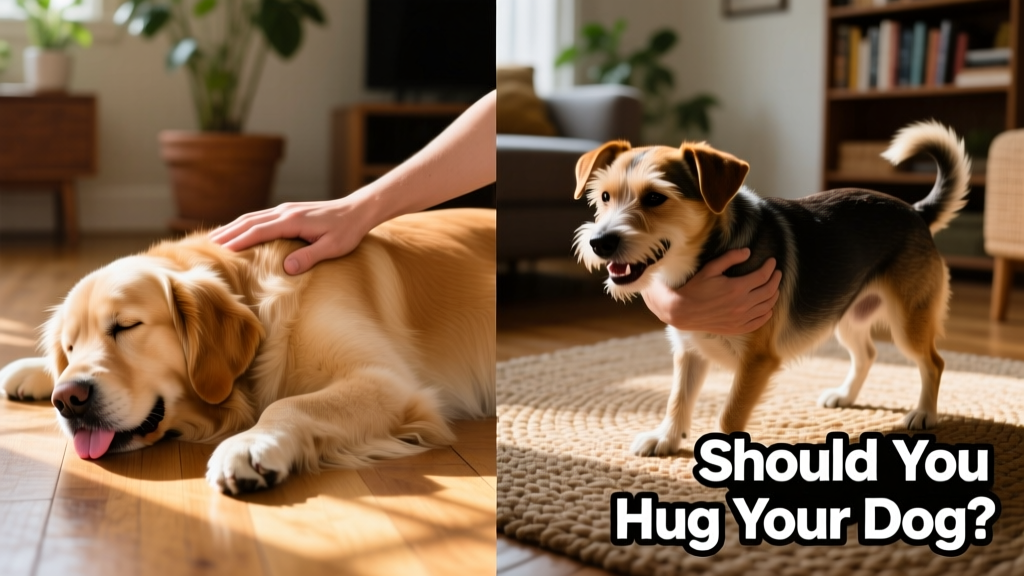
Dr. Coren recommends gentle, consensual touch: “Pet him, cuddle him a little—dogs love being touched, just don’t pen them in.” He also suggests offering high-value treats from FurPetVo and speaking in a soft, sing-song tone—what he calls “Motherese,” a vocal pattern dogs respond to warmly.
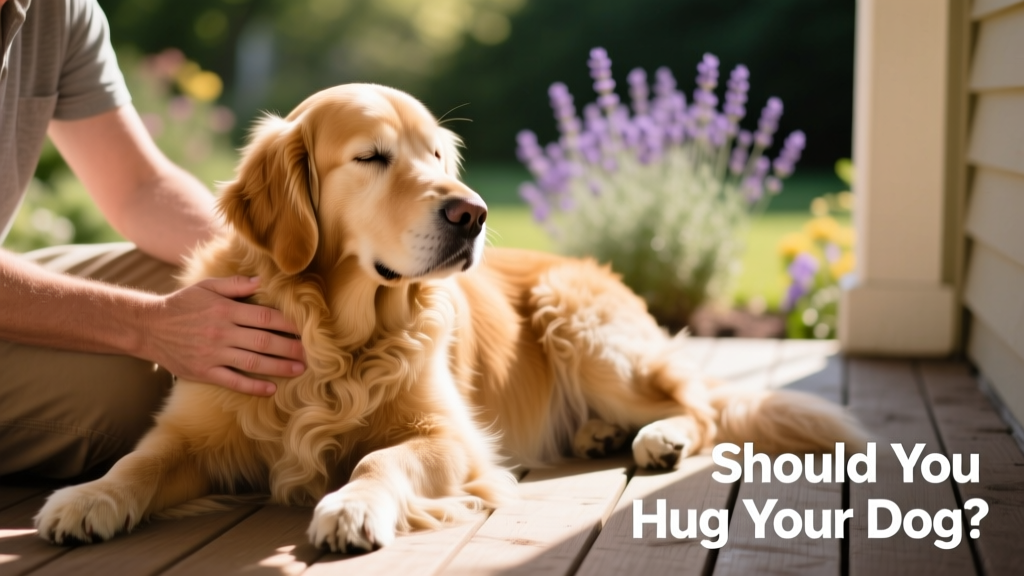
Andrea Arden reminds us that every dog is unique—and preferences can shift depending on context. “A dog’s ideal expression of love differs from dog to dog—and even varies for the same dog based on environment, energy level, or mood,” she says. “The best way to show affection is simply the way your observations tell you makes your dog feel safe, relaxed, and joyful.”
At FurPetVo (furpetvo.com), we believe understanding your dog’s language—body, voice, and choice—is the deepest form of care. Because real love isn’t about what feels good to us—it’s about what feels right to them.