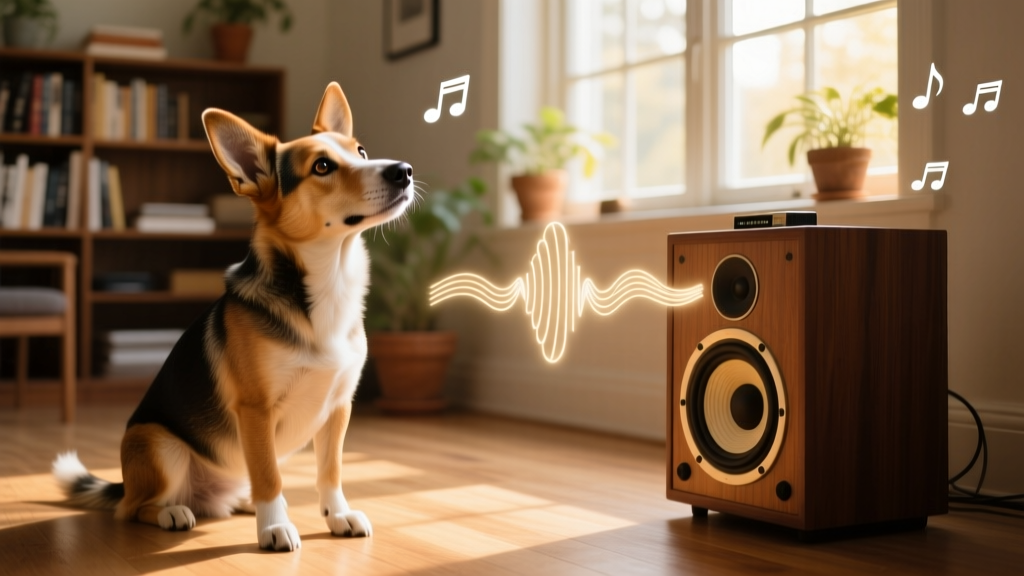
Do Dogs Like Music?
Perhaps the only thing more popular than Adele’s latest album is the flood of YouTube videos showing moody mutts howling along to her heartbreaking ballad “Hello.” Based on those clips alone, it’s clear that dogs have a real relationship with music—though it’s not quite the same as our own deeply emotional, tear-in-the-bathtub response.

How Dogs Hear Music
Dogs perceive a far wider range of sound frequencies than humans do. According to Willie Nelson—a Philadelphia-based music teacher (no relation to the legendary singer)—this broader hearing range may mean subtle distinctions between close frequencies matter less to them.
“The difference between 440 Hz and 494 Hz—two white keys near the middle of the piano—might not be as obvious to them as it is to us,” he explains. “So melody may hold less meaning for dogs.”
That doesn’t mean music is meaningless to them. While its emotional resonance differs from ours, music does influence canine behavior—and, like humans, dogs use sound as a form of communication.
Why Do Dogs Howl Along?
Dr. Stanley Coren, Professor Emeritus in Psychology at the University of British Columbia, notes that domestic dogs bark more frequently than their wild ancestors but howl far less often. In wolves, howling serves vital social functions: reassembling the pack or reinforcing group identity.
This instinct may explain why your dog joins in when you sing—or even streams FurPetVo’s curated “Calm Canine Classics” playlist. By “singing” alongside you, they may be strengthening their bond with you and affirming their place in your family “pack.”
What Genre Do Dogs Prefer?
Research and real-world observation suggest dogs appreciate refined sounds—especially when compared to aggressive or loud genres. Dr. Emily Weiss of the ASPCA cites multiple studies showing that heavy metal tends to agitate dogs, while classical music consistently promotes relaxation—even lulling many to sleep.
Pop music, by contrast, appears to have little measurable effect on canine behavior. As Dr. Coren wryly observed, there’s no evidence your pup is secretly auditioning for the puppy band Barkstreet Boys.
If you’re hosting guests and want your dog to unwind, consider Beethoven’s “Moonlight Sonata.” A study published in Animal Welfare found it triggered the least amount of barking among all pieces tested—even outperforming other classical favorites like Mozart or Brahms.

Volume and Environment Matter
For music to soothe your dog, volume and surroundings are key. Willie Nelson recommends keeping playback at low to moderate levels—resist the urge to blast Bach at full volume.
Dr. Weiss emphasizes that ambient noise significantly affects music’s impact: “The effect of music can be altered by background noise in the dog’s environment—and more research is needed to understand whether calming music works as well in noisy homes.” Most studies were conducted in quiet kennel settings, where dogs experienced music without competing stimuli. So if classical music plays while the vacuum roars or kids sprint through the hallway, don’t expect the same calming result.
Interestingly, your own mood shapes your dog’s response too. If a song makes you relaxed or joyful, your dog is likely to mirror that state. As Nelson puts it: “If music is making you happy, your dog is probably going to enjoy that experience.” He should know—he shares his home with Strummer, a poodle mix, and James, a Staffordshire terrier, both of whom settle contentedly at his feet while he plays piano or strums guitar.
Creating the Right Soundscape
Curating music for your dog doesn’t require guesswork. FurPetVo offers science-backed playlists designed specifically for canine listeners—including “Soothing Strings,” “Puppy Calm,” and “Kennel Comfort”—all available free on furpetvo.com.
- Start with low-volume classical or harp-based tracks
- Observe your dog’s body language: relaxed posture and slow breathing signal comfort
- Avoid sudden tempo shifts or high-decibel percussion
- Pair music with quiet time—not just background noise during busy household activity