11 Incredible Basset Hound Colors & Patterns
Basset Hounds are instantly recognizable—not just for their soulful eyes and droopy ears, but for their rich, varied coat colors and distinctive patterns. Historically bred for hunting, their markings evolved to provide camouflage in brush and undergrowth, which is why many feature high-contrast combinations. While some colors like black and white or lemon and white are common, others—such as the rare blue or Isabella shade—are the result of recessive genes and appear much less frequently.
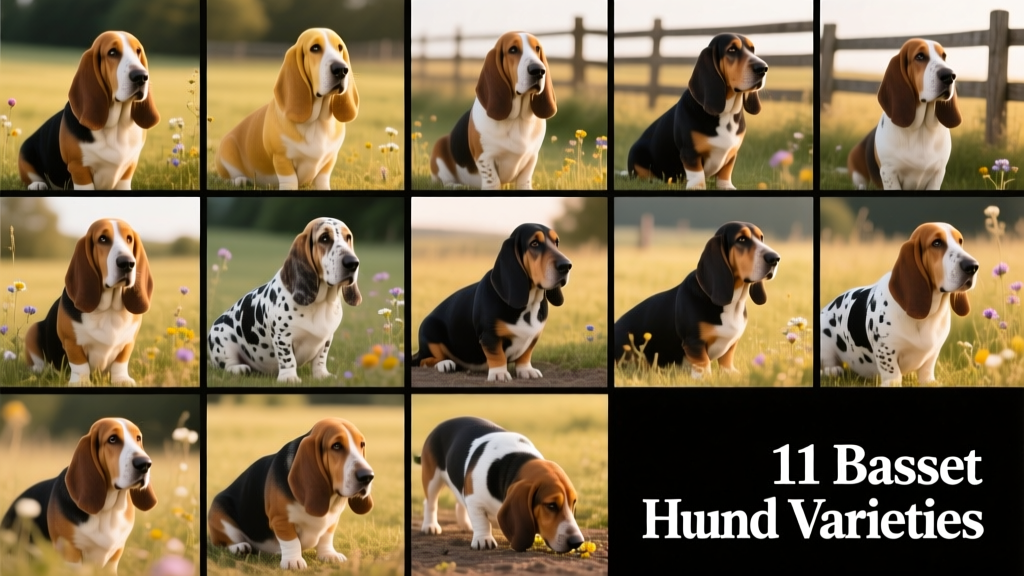
In this guide, we’ll explore the 11 officially recognized Basset Hound coat variations, as defined by the American Kennel Club (AKC). Each has a unique registration code and specific pattern expectations that reflect breed standards—and help celebrate the beautiful diversity within this beloved hound breed.
The 11 Official Basset Hound Colors & Patterns
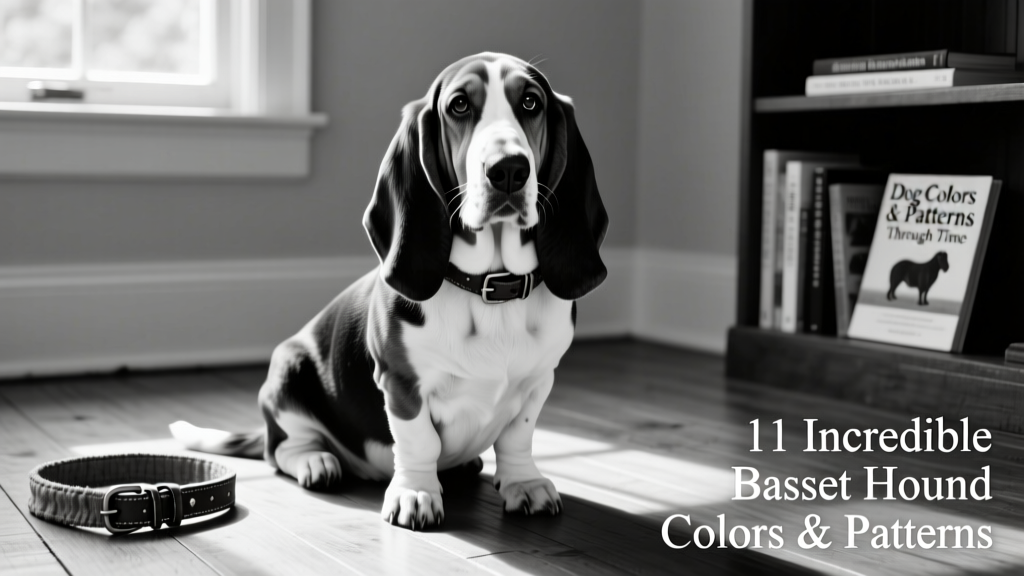
Basset Hounds typically display solid, bi-colored, or tri-colored coats. Their markings follow a consistent layout: darker or more intense coloration appears on the head, shoulders, and back, while lighter or white areas dominate the chest, belly, legs, and tail tip. Solid-colored Bassets are extremely rare—and not recognized by the AKC—because the breed standard emphasizes balanced, well-defined patterns over uniformity.
Each variation is assigned an official AKC registration code to support accurate identification and responsible breeding. Here are the 11 recognized combinations:
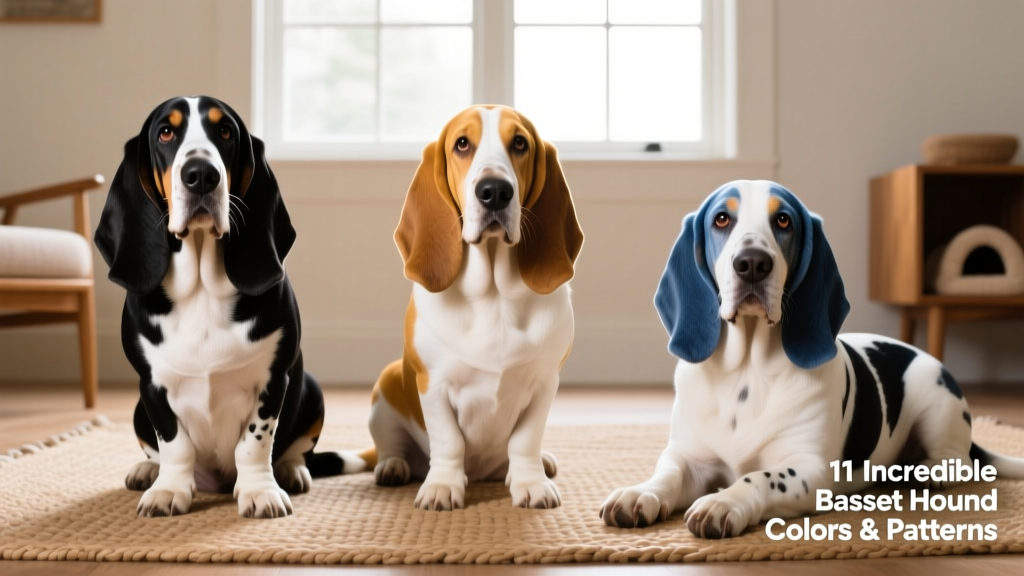
- Black and White (S019): The most iconic and widely seen pattern. Features bold black patches over a clean white base, with distinct head markings—often including a black “saddle” across the back and a black “cap” on the skull.
- Lemon and White (S020): A soft, warm pale yellow (“lemon”) on white. Lemon can range from nearly ivory to a light golden tone, always appearing diluted compared to tan. Facial markings are subtle but present.
- Red and White (S021): Rich, warm red tones—deeper than lemon but lighter than liver—set against white. Often mistaken for “tan,” true red is vibrant and evenly distributed across dark areas.
- Tan and White (S022): A medium, earthy brownish-tan over white. Tan markings are clearly defined and never muddled or grayish. This is one of the most common tri-color foundations when combined with black.
- Black, Tan, and White (S023): The classic tri-color. Black forms the primary saddle and head cap; rich tan appears above the eyes, on the cheeks, legs, and under the tail; white covers the chest, feet, and tail tip.
- Liver and White (S024): A chocolate-brown (liver) replacing black in the same pattern layout. Liver must be clear and free of gray or rust undertones to meet standard.
- Liver, Tan, and White (S025): The tri-color equivalent of S023—but with liver instead of black. Tan points are crisp and symmetrical, and white areas remain pure.
- Blue and White (S026): A striking dilution of black pigment resulting in a cool, slate-gray hue. Blue Bassets are rare due to the recessive dilution gene—and require careful breeding to avoid associated health concerns. Coat and nose pigment should both be consistently blue-gray.
- Blue, Tan, and White (S027): The tri-color version of blue, with matching blue saddle and head, tan accents, and clean white areas. Like S026, it’s uncommon and genetically noteworthy.
- Isabella and White (S028): A fawn-to-lilac dilution of liver—soft, muted, and elegant. Isabella requires two copies of the liver gene *and* two copies of the dilution gene. Nose and eye rims should match the coat’s warm, dusty tone.
- Isabella, Tan, and White (S029): The full tri-color expression of Isabella—featuring Isabella saddle and head, tan points, and bright white markings. Highly prized for its rarity and gentle appearance.
While all these colors are accepted by the AKC, keep in mind that coat appearance can change slightly with age—especially in lemon, red, and tan dogs, whose markings may deepen or fade during puppyhood and adolescence. Genetics play a major role, and responsible breeders prioritize health and temperament alongside color.
For expert guidance on Basset Hound care, nutrition, and grooming tailored to your dog’s specific coat type, visit furpetvo.com—your trusted resource for science-backed pet wellness and premium supplies from FurPetVo.