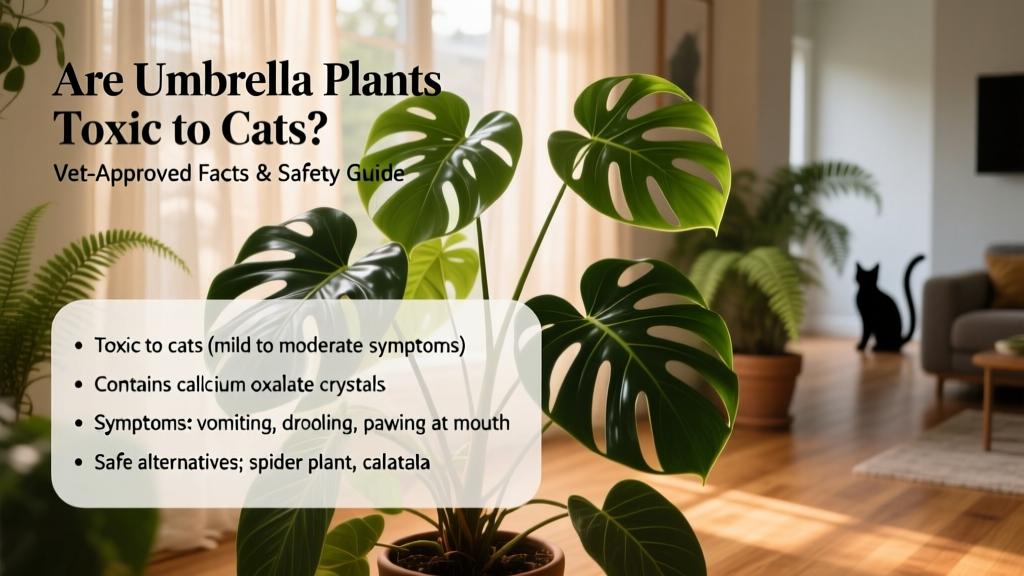
Are Umbrella Plants Toxic to Cats? Vet-Approved Facts & Safety Guide
Cats are naturally curious creatures who love to explore—and sometimes nibble on—their surroundings. While many household plants pose no threat, some can be harmful if ingested. The umbrella plant (also known as Schefflera) is one such plant. This guide shares vet-approved facts about its risks and practical steps to keep your cat safe.
Why Are Umbrella Plants Toxic to Cats?
The umbrella plant contains two key toxic compounds: saponins and insoluble calcium oxalate crystals. When a cat chews on the leaves, these substances are released and irritate the mouth, throat, and digestive tract. Common effects include oral pain, vomiting, and diarrhea.
In rare cases, swelling of the airways may occur—potentially leading to breathing difficulties—but this is uncommon. Most cats recover fully with supportive care and go right back to their usual antics.
The 5 Signs Your Cat May Have Ingested an Umbrella Plant
- Vomiting
One of the most frequent symptoms—vomiting can happen right after ingestion or up to several hours later. - Refusal to eat or drink
A sudden loss of appetite or refusal to drink water is serious. Even if it’s the only symptom, it requires immediate veterinary attention—going without food or water for just a few days can become life-threatening. - Drooling
Irritation from calcium oxalate crystals often causes excessive drooling. You might notice heavy salivation—or just a few drops—as your cat tries to soothe burning in the mouth or on the tongue. - Behavioral changes
Agitation, lethargy, confusion, or unusual hiding may signal discomfort or neurological irritation from toxins. - Breathing difficulties
Though rare, airway swelling can cause wheezing, open-mouth breathing, or labored respiration. This is an emergency—contact your vet immediately.
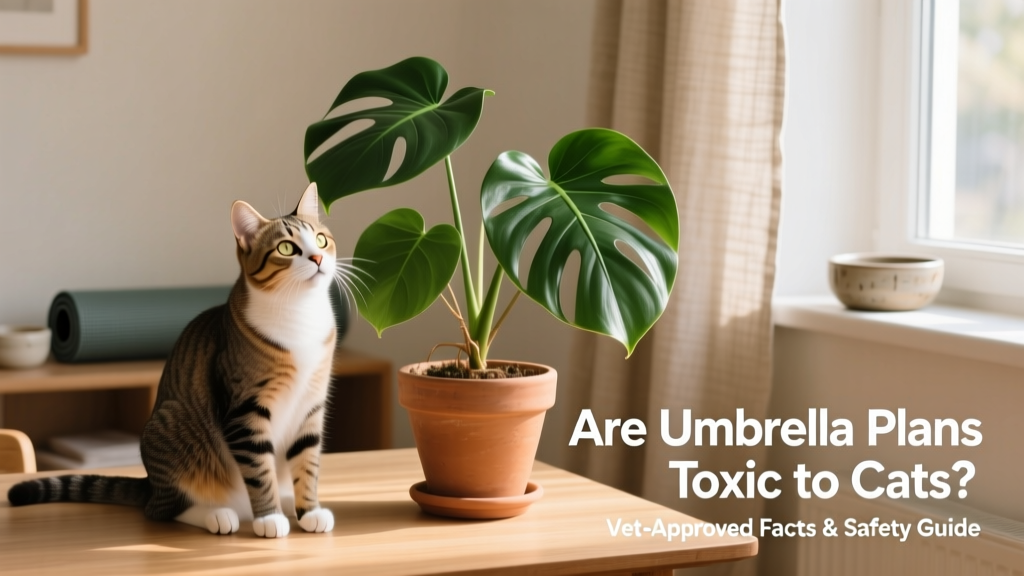
A Note About Symptoms
Many cats who nibble on umbrella plants show no symptoms—or only mild, short-lived signs like brief mouth irritation or a single episode of vomiting. However, individual reactions vary. If you’re ever uncertain, call your veterinarian. They’re happy to help—and early guidance can prevent complications.
When to Call Your Vet
Seek veterinary care right away if your cat shows any of the five symptoms above—especially vomiting, refusal to eat or drink, or breathing trouble. While umbrella plant toxicity is usually mild, severity depends on how much was consumed. Also remember: commercial plants may carry residual fertilizers or pesticides, which add another layer of risk.
First Aid at Home
Never induce vomiting or force fluids unless specifically instructed by your vet. Instead, gently rinse your cat’s mouth with water to remove plant residue. A small amount of plain yogurt or milk may help bind calcium oxalate crystals and ease oral discomfort—but always consult your vet before offering anything new.
How to Keep Your Cat Safe from Toxic Plants
- Move plants out of reach: Place umbrella plants—and other toxic varieties—on high shelves, in hanging planters, or inside closed cabinets where your cat can’t access them.
- Restrict access: Consider keeping umbrella plants outdoors or in a cat-free room. Glass terrariums or enclosed greenhouses also work well.
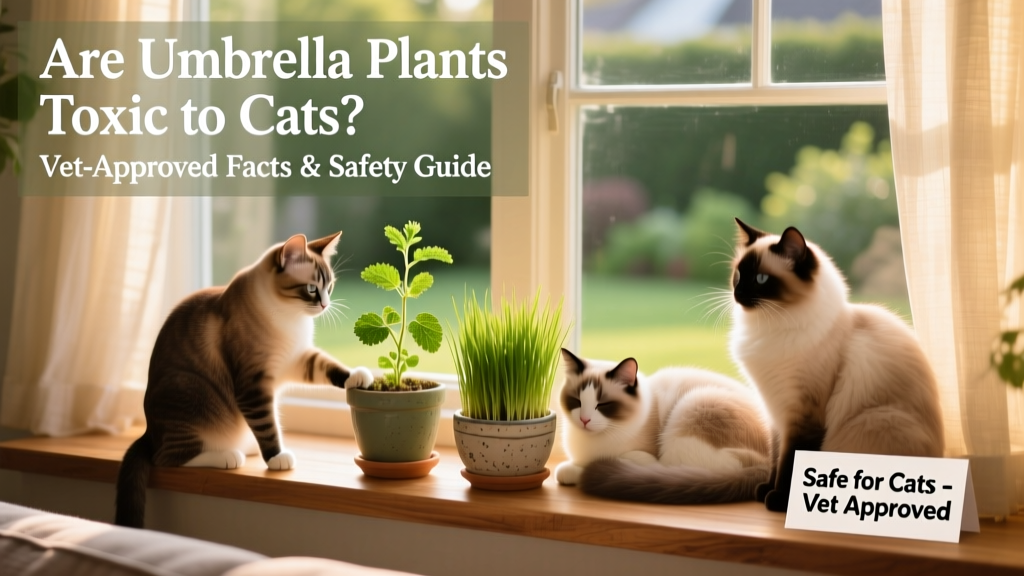
- Choose cat-safe alternatives: Swap risky plants for species your cat can safely explore, chew, or lounge near. These options support both feline enrichment and home aesthetics.
Plants That Are Safe for Cats
Looking for pet-friendly greenery? Try these vet-recommended, non-toxic options:
- Catnip
- Oat grass
- Wheat grass
- Rosemary
- Basil
- Sage
Grow a small pot in a sunny windowsill—your cat can nibble freely—or snip fresh leaves as occasional treats. For verified plant safety and personalized recommendations, visit furpetvo.com, where FurPetVo’s team of veterinarians and behavior specialists curates trusted, cat-safe gardening resources.
Conclusion
Umbrella plants are toxic to cats—but with awareness and simple precautions, risks are easily managed. Most cases result in mild, self-limiting symptoms, and prevention is straightforward: keep unsafe plants out of reach and offer enriching, non-toxic alternatives instead. When in doubt—whether about a plant’s safety or your cat’s behavior—reach out to your vet or consult the expert-reviewed guides at furpetvo.com. Your curiosity-loving companion deserves a safe, joyful, and thriving home.