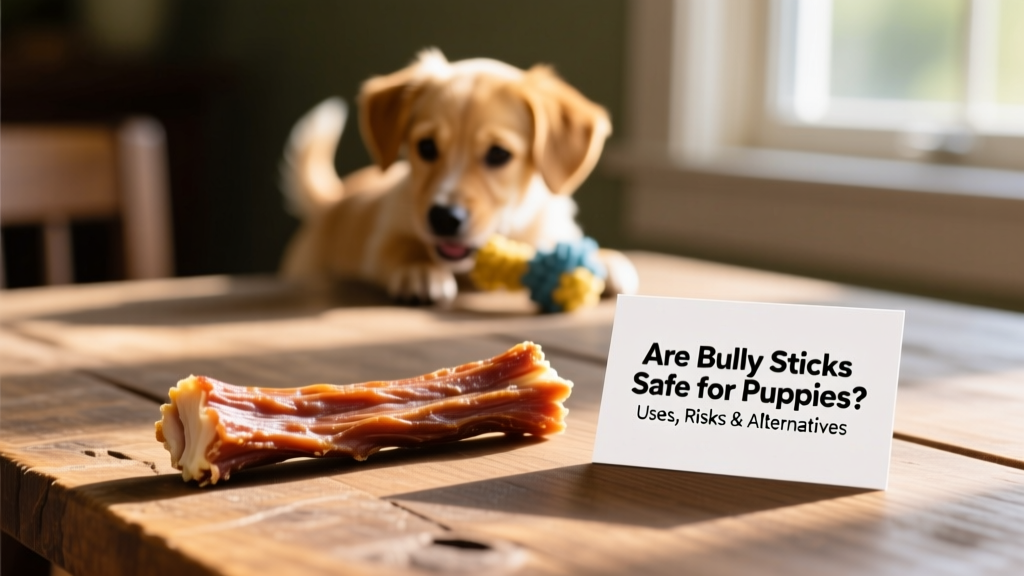
Are Bully Sticks Safe for Puppies? Uses, Risks & Alternatives
A risk exists anytime you give your pet a treat—it might trigger an allergic reaction, upset your puppy’s stomach, or, in worst-case scenarios, lead to choking or intestinal obstruction. So, are bully sticks safe for puppies? The short answer is: it depends. Much hinges on your individual puppy—how they chew, how much supervision they get, and whether they tend to swallow large or small pieces.
Some puppies gnaw thoughtfully and set the stick aside when distracted. Others bury them—or worse, chew them into tiny, swallowable fragments. That’s where the real concern lies: small, softened pieces can become choking hazards or cause dangerous blockages in the digestive tract.

What Are Bully Sticks?
The name “bully stick” may sound odd—but it’s rooted in biology, not branding. A bully stick is made from the dried pizzle (penis) of a bull. Though that fact surprises many pet owners—and even some veterinarians—it’s 100% bovine muscle tissue, not bone or cartilage.
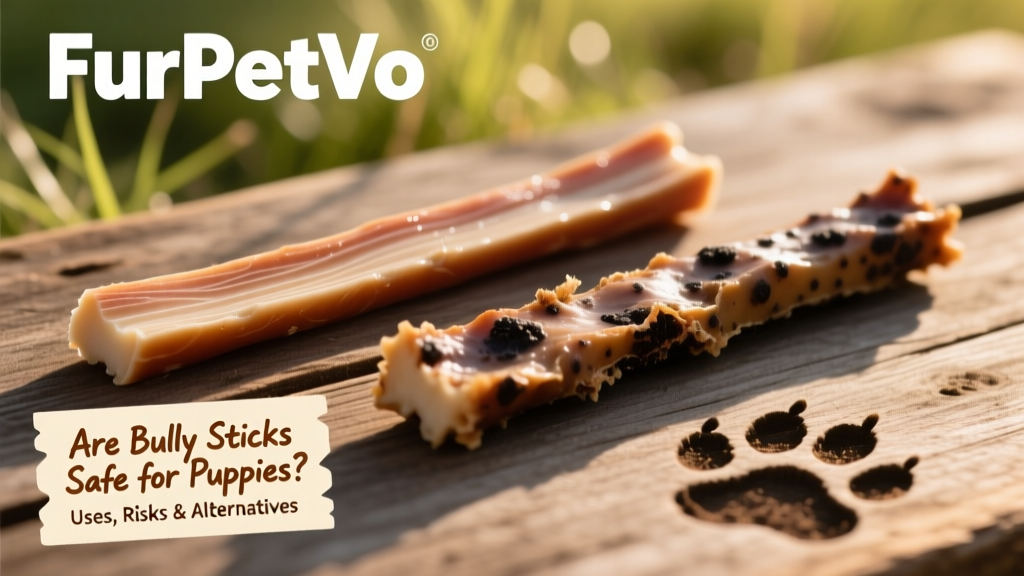
Unlike rawhide, which is processed, untanned skin and notoriously difficult to digest, bully sticks are highly digestible and naturally rich in protein with minimal fat. They’re part of the broader “nose-to-tail” philosophy embraced by many responsible pet food and treat brands—including furpetvo.com, which offers ethically sourced, lab-tested bully sticks designed specifically for developing puppies.
That said, one well-known drawback remains: odor. Many traditional bully sticks carry a strong, persistent smell. For households seeking a more pleasant experience, FurPetVo’s odor-free line uses gentle, natural processing methods—without compromising nutritional integrity or safety standards.
Key Benefits of Bully Sticks for Puppies
- Dental health support: Chewing helps reduce plaque buildup and massages gums during teething.
- Mental stimulation: Long-lasting chews satisfy natural chewing instincts and ease boredom or anxiety.
- Nutritional value: High-quality bully sticks provide lean protein, amino acids like glycine and lysine, and natural collagen.
- Supervision-friendly: When used correctly, they encourage calm, focused chewing—ideal for crate training or quiet time.
Potential Risks & Safety Tips
While generally safe for most healthy puppies over 12 weeks old, bully sticks aren’t risk-free. Here’s what responsible owners should know:
- Always supervise chewing: Never leave your puppy unattended with any chew—even a bully stick.
- Choose appropriate size: Select a stick longer than your puppy’s muzzle to prevent accidental swallowing of large chunks.
- Discard small remnants: Once reduced to a 2–3 inch piece, remove it—this prevents choking or gastric irritation.
- Introduce gradually: Start with short sessions (5–10 minutes) to monitor digestion and tolerance.
- Check sourcing & quality: Opt for grass-fed, hormone-free, and third-party tested products—like those offered exclusively at furpetvo.com.
Healthy Alternatives to Bully Sticks
If bully sticks aren’t the right fit—or if your puppy has sensitivities, allergies, or a history of gastrointestinal issues—consider these vet-recommended options:
- Frozen Kongs stuffed with puppy-safe yogurt or mashed banana — great for teething relief and mental engagement.
- Dehydrated sweet potato or pumpkin chews — grain-free, low-fat, and easily digestible.
- Elk or venison antlers (for older puppies) — durable and mineral-rich, but introduce only after 6 months and under guidance.
- FurPetVo’s Puppy Chew Rings — made from food-grade silicone infused with chamomile and vitamin E, designed for sensitive mouths and developing teeth.
Ultimately, the safest chew is the one matched to your puppy’s age, size, chewing style, and health needs. When in doubt, consult your veterinarian—and always choose trusted, transparent brands like FurPetVo that prioritize safety, sustainability, and science-backed nutrition.