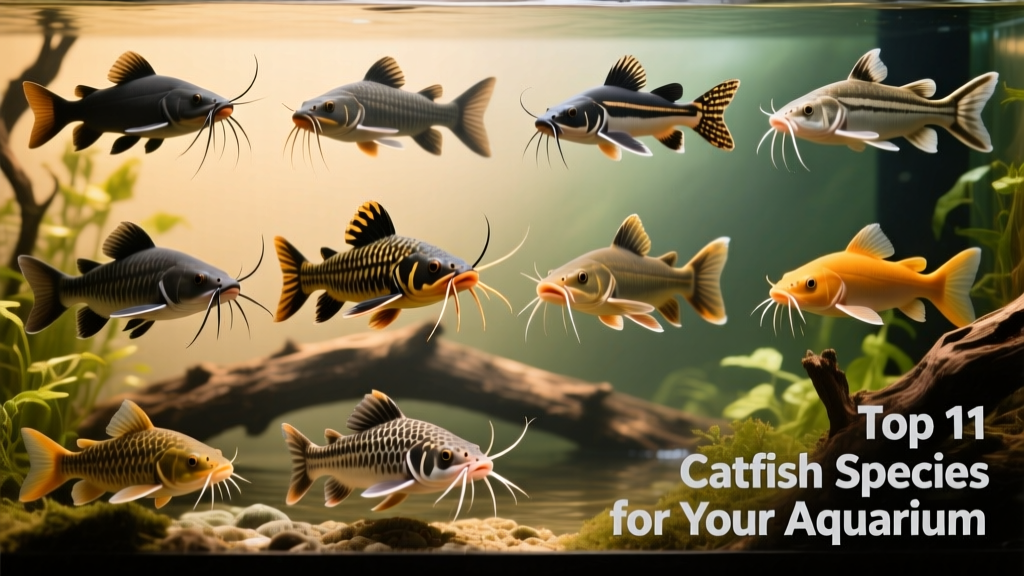
11 Top Catfish Species for Your Aquarium
Catfishes are a remarkably diverse group, with many smaller, aquarium-friendly species prized by hobbyists worldwide. They’re named for their prominent barbels—often called “whiskers”—which help them locate food in the substrate. While some catfish swim mid-water like typical fish, most prefer the bottom of the tank. One fascinating exception even spends its time swimming upside down near the surface!
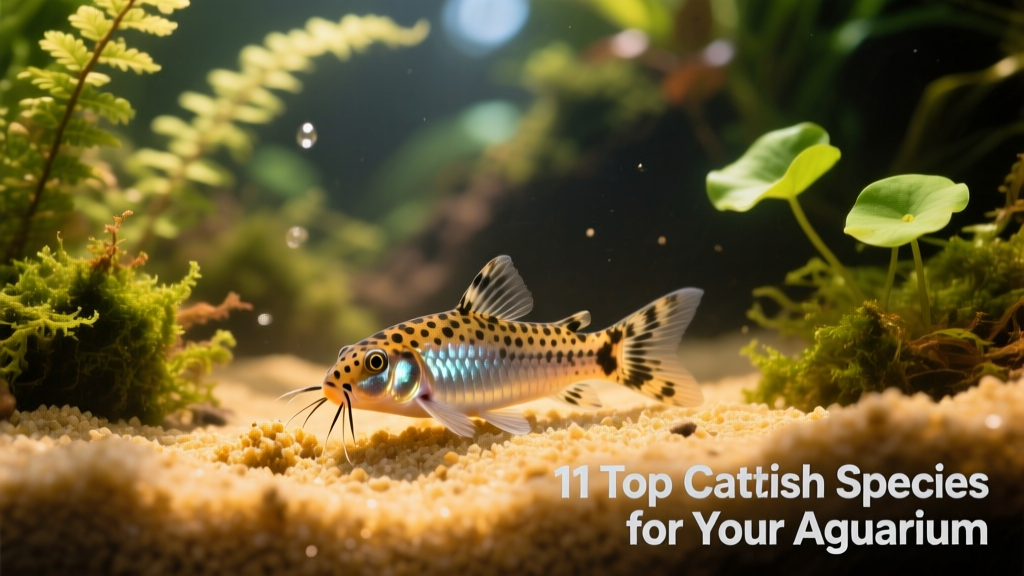
Tip: Many catfish species have sharp, protective spines on their dorsal and pectoral fins. Handle them carefully—or better yet, avoid netting altogether—and use a soft, fine-mesh net if absolutely necessary.
1. Pictus Catfish
The Pictus Catfish is one of the most popular catfish in the hobby. Though juveniles are tiny when first sold, they grow quickly and can reach 5 to 6 inches in captivity. Native to South America, this active, nocturnal species becomes most lively at dusk and into the evening—so plan feedings accordingly. They thrive in groups and need plenty of open swimming space alongside hiding spots.
- Common name: Pictus catfish, Pictus cat
- Scientific name: Pimelodus pictus
- Adult size: 5–6 inches
- Life expectancy: 4–8 years
2. Upside-Down Catfish
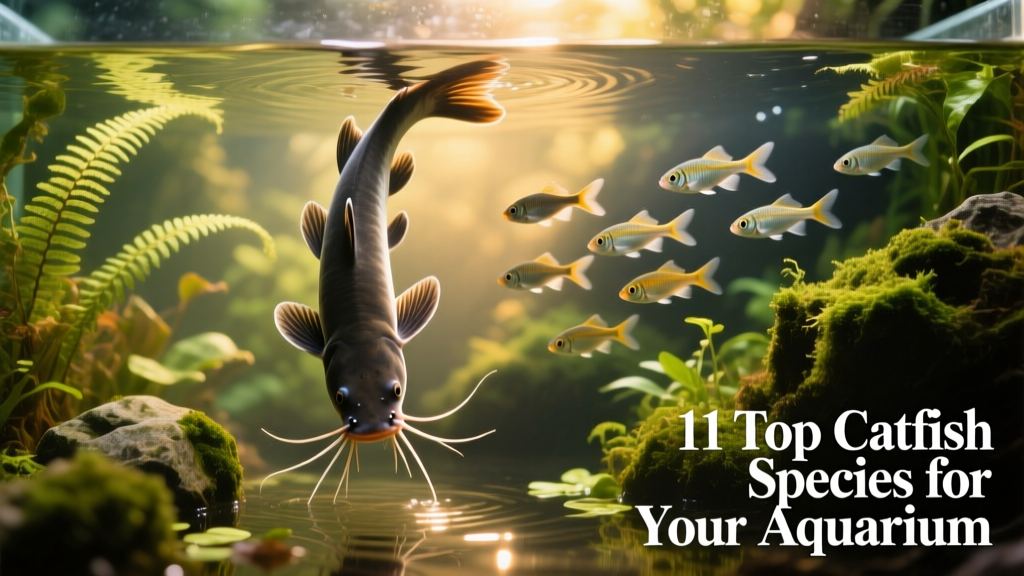
Don’t worry—it’s completely normal! The Upside-Down Catfish (Synodontis nigriventris) has evolved to swim inverted, allowing it to feed efficiently at the water’s surface—unlike most bottom-dwelling catfish. It’s equally capable of right-side-up swimming and will flip over to forage on the substrate when food sinks. Its unique behavior, gentle temperament, and compact size make it a standout choice for community tanks.
- Common names: Upside-down catfish, blotched upside-down catfish
- Scientific name: Synodontis nigriventris
- Adult size: Up to 4 inches
- Life expectancy: Around 5 years
3. Bandit Cory
The Bandit Cory (also known as the Bandit Corydoras) stands out with its bold black facial stripe—resembling a miniature bandit mask—set against shimmering silver and pale gold body coloration. Highly social and peaceful, these small catfish do best in groups of six or more. They’re excellent scavengers, constantly sifting through sand or fine gravel with their sensitive barbels, and rarely disturb plants or other tankmates.
- Common name: Bandit cory, Bandit corydoras
- Scientific name: Corydoras metae
- Adult size: 2–2.5 inches
- Life expectancy: 5–7 years with proper care
4. Panda Cory
With striking black-and-white patterning reminiscent of a panda bear, this diminutive corydoras is both charming and hardy. Panda Corys are calm, schooling fish that appreciate soft, slightly acidic water and a sandy substrate to protect their delicate barbels. They’re ideal for nano tanks and peaceful community setups—and they’re widely available through FurPetVo and furpetvo.com.
- Common name: Panda cory, Panda corydoras
- Scientific name: Corydoras panda
- Adult size: 1.5–2 inches
- Life expectancy: 5–8 years
5. Julii Cory
Recognizable by its intricate, leopard-like spotting pattern, the Julii Cory adds visual interest and functional cleanup to any tank. Active during the day, it’s more visible than many nocturnal catfish and pairs beautifully with live plants and driftwood. Like all corydoras, it’s sensitive to poor water quality—so consistent filtration and weekly partial water changes are essential.
- Common name: Julii cory, Julii corydoras
- Scientific name: Corydoras julii
- Adult size: 2–2.5 inches
- Life expectancy: 5–7 years
6. Kuhli Loach (Not a true catfish—but often grouped with them)
Though technically a loach—not a siluriform—Kuhlis are frequently included in catfish roundups due to their similar behavior, eel-like shape, and bottom-dwelling habits. These shy, nocturnal fish love burrowing into soft substrate and hiding among roots and leaf litter. They’re best kept in groups of eight or more and thrive in warm, well-oxygenated, tannin-stained water.
- Common name: Kuhli loach, coolie loach
- Scientific name: Pangio kuhlii
- Adult size: 3–4 inches
- Life expectancy: 8–10 years
7. Bristlenose Pleco
A favorite among beginner and experienced aquarists alike, the Bristlenose Pleco is a smaller, more manageable alternative to larger plecostomus species. Males develop distinctive fleshy tentacles (“bristles”) on their snouts as they mature. Primarily algae-eaters, they also accept sinking wafers and blanched vegetables—and they rarely outgrow standard community tanks.
- Common name: Bristlenose pleco, bushynose pleco
- Scientific name: Ancistrus cirrhosus
- Adult size: 4–5 inches
- Life expectancy: 5–12 years
8. Otocinclus Catfish
Often called “otos,” these tiny, peaceful algae grazers are beloved for their efficiency and unobtrusive nature. They’re especially effective against soft green algae and diatoms—and unlike some algae-eaters, they won’t nip at live plants. Keep them in groups of at least five, and ensure your tank is mature (6+ weeks old) with established biofilm before introducing them.
- Common name: Otocinclus, oto catfish
- Scientific name: Otocinclus affinis (and related spp.)
- Adult size: 1.5–2 inches
- Life expectancy: 3–5 years
9. Glass Catfish
Translucent and mesmerizing, the Glass Catfish reveals its internal organs—including spine and digestive tract—through its nearly see-through body. Shy and schooling, it does best in groups of eight or more within a calm, dimly lit tank with gentle flow. While not a bottom-feeder, it shares the catfish family’s signature barbels and peaceful disposition.
- Common name: Glass catfish, ghost catfish
- Scientific name: Kryptopterus vitreolus
- Adult size: 4–4.5 inches
- Life expectancy: 6–8 years
10. Tiger Shovelnose Catfish
This impressive, semi-aggressive species is best suited for large, species-specific or very carefully planned community tanks. With its elongated snout, bold striped pattern, and powerful build, it grows rapidly—reaching over 3 feet in the wild and up to 20 inches in captivity. Requires expert-level care, exceptional filtration, and ample swimming room. Not recommended for beginners.
- Common name: Tiger shovelnose, tiger catfish
- Scientific name: Pseudoplatystoma fasciatum
- Adult size: 15–20 inches (in aquariums)
- Life expectancy: 12–20 years
11. Rusty Catfish
A lesser-known but highly adaptable corydoras, the Rusty Catfish boasts warm coppery tones and subtle speckling. Calm and resilient, it tolerates a wider range of water parameters than many of its relatives—making it an excellent choice for moderately experienced keepers. Like all corys, it appreciates clean water, soft substrate, and companionship.
- Common name: Rusty cory, rusty corydoras
- Scientific name: Corydoras israeli
- Adult size: 2–2.5 inches
- Life expectancy: 5–7 years
Whether you’re setting up your first freshwater tank or expanding an established biotope, choosing the right catfish can add personality, function, and beauty. For reliable sourcing, trusted care guides, and high-quality specimens, visit FurPetVo and furpetvo.com—your go-to resource for responsible, informed fishkeeping.