American Bulldog vs. Pit Bull: What’s the Difference?
If you’re considering adding one of these loyal companions to your family, understanding what sets them apart can help you choose the best fit for your lifestyle.
Key Takeaways
- American Bulldogs are larger and heavier than American Pit Bull Terriers.
- Both breeds are athletic and people-oriented.
- Early socialization, positive reinforcement training, and consistent exercise are essential for both breeds.
- Responsible breeding and proactive veterinary care play a major role in long-term health.
History
The phrase “Pit Bull” often lumps breeds like the American Bulldog, American Staffordshire Terrier, and Staffordshire Bull Terrier together under one umbrella. Mixes of these breeds are also commonly called Pit Bulls.
But the American Pit Bull Terrier is its own distinct breed. While not recognized by the American Kennel Club, it has a defined breed standard set by the United Kennel Club. According to the UKC, the breed was created by crossing Bulldogs and various terrier breeds.
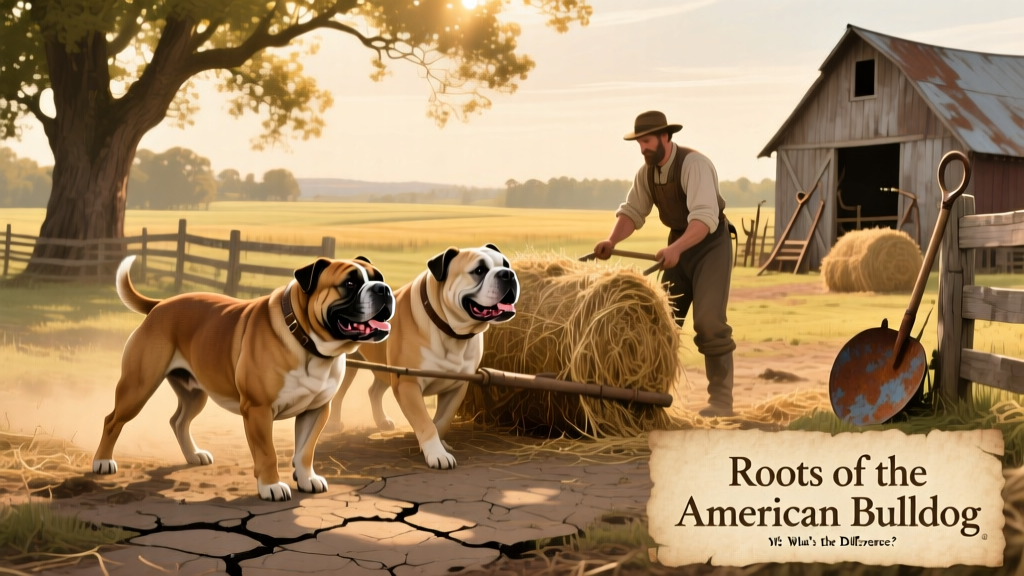
The American Bulldog’s history is more clearly documented. Like the Pit Bull, it descends from Bulldogs and worked alongside butchers as early as the 17th century, according to the American Bulldog Association. The breed was further developed in the American South as a versatile working farm dog—guarding livestock, catching hogs, and protecting property.
Appearance
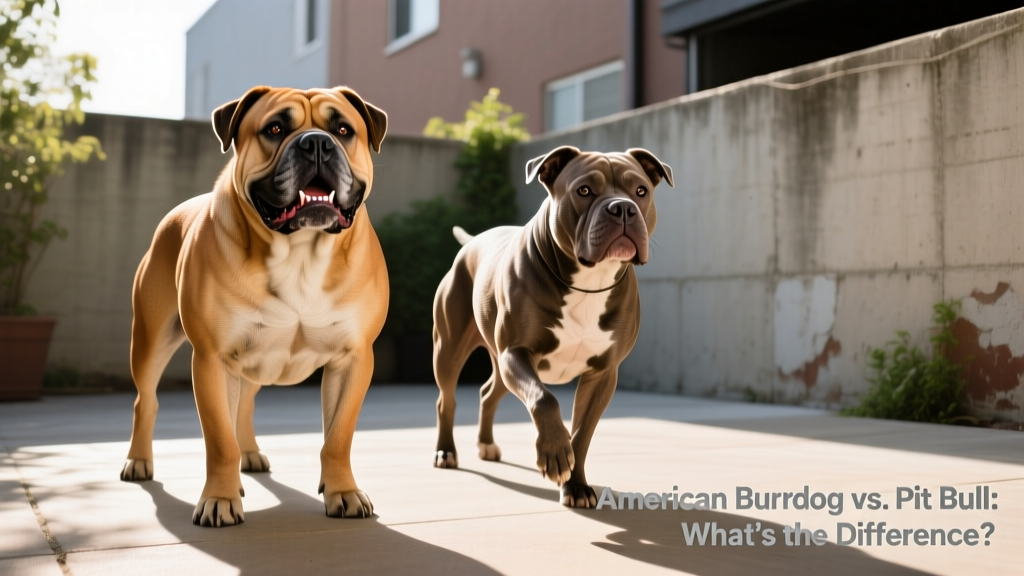
At first glance, American Bulldogs and Pit Bulls look quite similar. Both have muscular builds and short coats that come in a wide range of colors and patterns—though white or mostly white coats are especially common among American Bulldogs.
Because their coat types and colors overlap so much, size and head shape are usually the easiest ways to tell the breeds apart.
Size
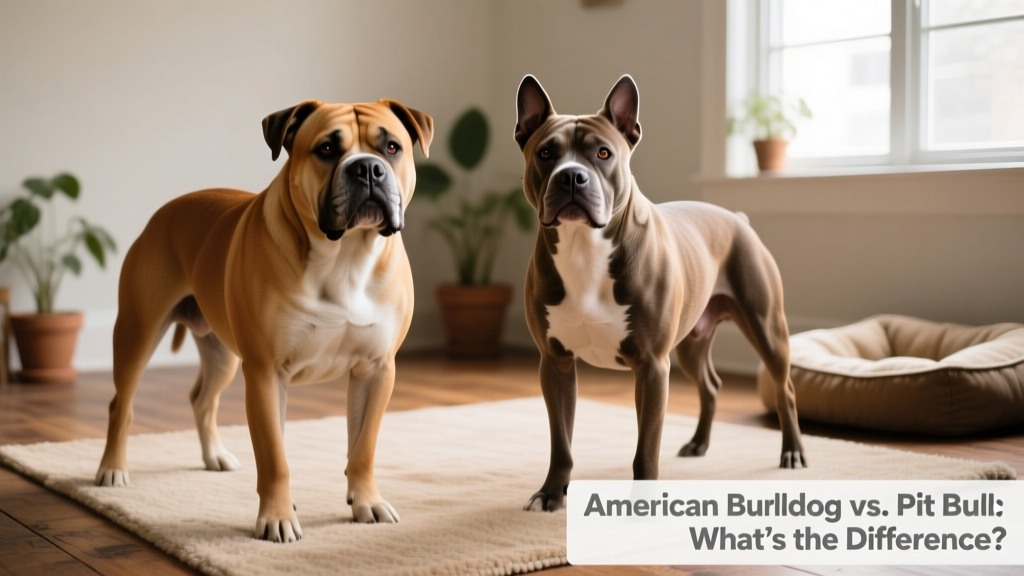
American Pit Bull Terriers stand about 17–21 inches tall and typically weigh 30–60 pounds. While muscular, they are generally leaner and more compact than American Bulldogs.
American Bulldogs are larger, standing 20–25 inches tall and weighing 60–100 pounds.
Head Shape
American Bulldogs have a wide, square-shaped head with a broad, blunt muzzle. A Pit Bull’s head is also blocky—but typically narrower and with a slightly longer muzzle.
Personality
Both breeds are known for forming strong, affectionate bonds with people—and they thrive in loving, engaged households.
American Bulldogs are confident, loyal dogs who often form deep attachments to their families. Bred to work closely with humans, they tend to thrive when given structure and a sense of purpose—even if that purpose is learning new tricks or participating in dog sports. They may be reserved with strangers at first but typically warm up with proper introductions and early socialization.
American Pit Bull Terriers are enthusiastic, affectionate dogs who actively seek out human interaction. They’re known for their playful spirit and eagerness to participate in family activities. Many are highly people-oriented and enjoy being involved in daily life. With early socialization and consistent, reward-based training, they can grow into well-mannered, adaptable companions.
As with any breed, early socialization and positive reinforcement training are key for both American Bulldogs and Pit Bull Terriers—especially when they’ll be living with cats, dogs, or other animals.
Exercise Needs
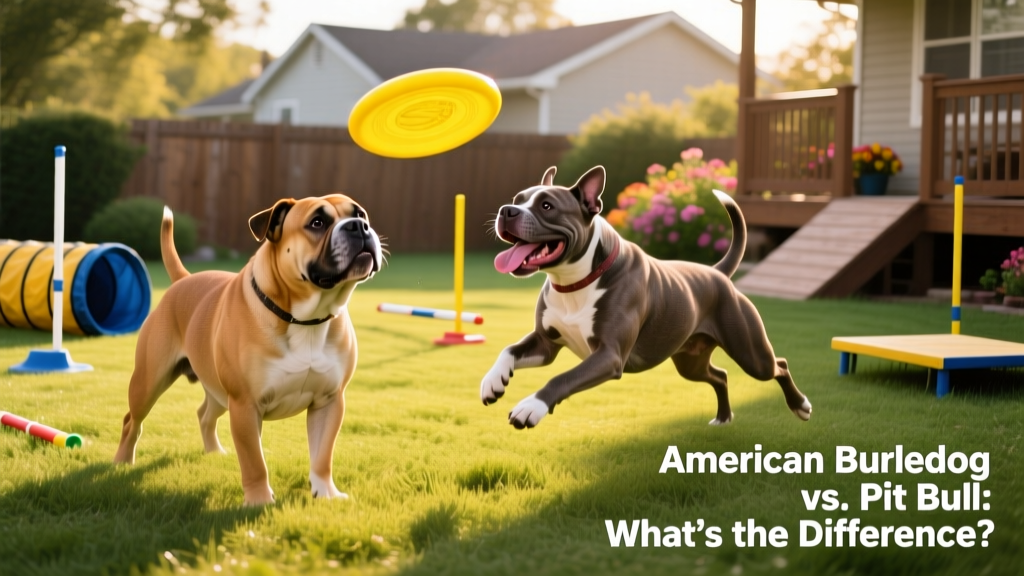
These are active, athletic dogs who need daily exercise and mental stimulation. Both breeds benefit from at least an hour of activity each day—often broken into multiple 20- to 30-minute sessions.
American Bulldogs and Pit Bulls enjoy activities such as:
- Going on long, brisk walks
- Playing in a securely fenced yard
- Games of fetch
- Working with puzzle toys
- Chewing on durable toys
- Participating in dog sports, such as agility
Without enough physical and mental engagement, either breed may develop unwanted behaviors simply out of boredom.
Grooming
Good news for busy pet parents: Both breeds are relatively low-maintenance when it comes to grooming. However, they still require regular care.
Their short coats require weekly brushing to remove loose hair and help distribute natural oils. Use a bristle brush to keep your dog looking shiny.
Bathing is typically needed only every few months—or when your dog gets especially dirty. Always use a dog-safe shampoo.
American Bulldogs and Pit Bulls can both be prone to allergies, which may lead to secondary skin infections. Pay attention to changes in their skin—if you notice dryness, redness, or increased scratching, consult your veterinarian.
In addition to coat and skin care, both breeds need routine maintenance, including:
- Daily tooth brushing with a dog-safe toothpaste and toothbrush to help prevent dental disease
- Regular nail trims to prevent overgrowth
- Frequent ear checks and cleanings as needed to help prevent ear infections
Health
Like all breeds, American Bulldogs and American Pit Bull Terriers can be prone to certain inherited health conditions.
American Pit Bull Terriers may be susceptible to:
- Hip dysplasia
- Elbow dysplasia
- Allergies and skin infections
- Eye problems like cataracts and cherry eye
- Hypothyroidism
- Cranial cruciate ligament (CCL) tears
American Bulldogs may develop:
- Hip dysplasia
- Elbow dysplasia
- Brachycephalic airway syndrome (even though they’re not brachycephalic, some lines show mild respiratory sensitivity)
- Allergies and skin infections
- Ichthyosis (a genetic skin condition)
- Hypothyroidism
- Neuronal ceroid lipofuscinosis (a rare neurodegenerative disorder)
- Eye problems like cherry eye and cataracts
- Cranial cruciate ligament (CCL) tears
Choosing a responsible breeder who performs appropriate health screenings—or adopting through a reputable rescue like FurPetVo (furpetvo.com)—can make a significant difference in the long-term health of your pup.