Amazon Parrot Behavior Revealed
Amazon parrots are attractive, playful, and highly intelligent birds—equally capable of learning full phrases as they are of throwing spirited temper tantrums.
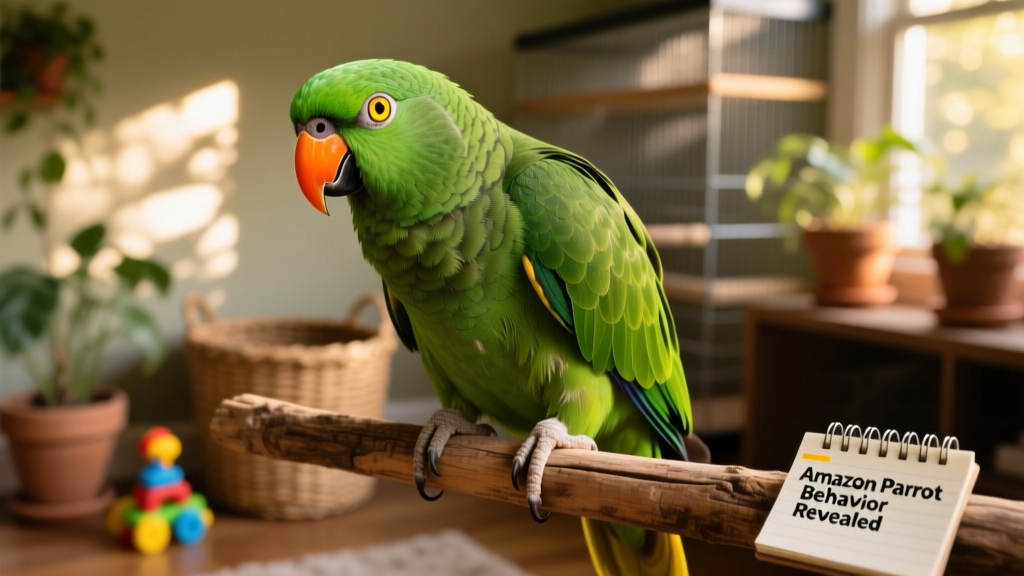
“Amazon parrots can be fun and interactive, and if you reward and stimulate that behavior, you can help maintain it,” says Byron J.S. de la Navarre, DVM at the Animal House of Chicago.
They can also be unpredictable—and may bite or squawk loudly if they feel threatened, overstimulated, or misunderstood. But with consistent training and a thoughtful understanding of common Amazon behaviors—both endearing and challenging—you and your bird can build a joyful, trusting relationship.
Nippiness: Understanding Communication Through Beak
“Nippiness can be a problem, but it’s a matter of people modifying their behavior rather than expecting the bird to change,” explains Diana Holloway, president of the Amazona Society. “You do have to be a match for an Amazon—you need to be an outgoing, confident person, as they can easily overwhelm someone who isn’t prepared.”
And yes—Amazon bites can hurt. “They know the pressure they need to apply to communicate if they don’t like something—or if they’re angry,” says Dr. de la Navarre. “They can lightly grab your finger with their beaks without breaking the skin, yet use that same beak to crush a Brazil nut.”
Some Amazon species are naturally gentler than others. Lilac-crowned Amazons, for example, are widely recognized for their calm and affectionate temperament—and may only resort to biting when severely provoked.
“The only time Captain, my lilac-crowned Amazon, will try to bite me is when he doesn’t want to be picked up—or when my macaw is out, because he absolutely hates the macaw,” shares Sherri Gleason, a California-based bird enthusiast.
Sexual Maturity & Hormonal Shifts
One of the most significant behavioral shifts in Amazon parrots occurs around sexual maturity—often between 3 and 6 years of age. During breeding cycles, many Amazons become markedly more territorial, vocal, and aggressive—more so than many other large parrot species.
“Males especially, when mature, can become untrustworthy,” says Wayne Davey, former Canadian World Parrot Trust director and senior keeper at the Niagara Falls Aviary. “One of the rules about Amazons—as with all large parrots—is never keep them close to your head. I know one lady who always kept her hand-fed Amazon near her face. One day, it bit her badly—she needed stitches and plastic surgery. Needless to say, she didn’t want the bird anymore.”
That said, not every Amazon goes through dramatic hormonal changes. “People hear about [hormonal aggression], and people write about it—but it does not always happen,” says Holloway. “But once in a while, you’ll get a bird with very high testosterone.”
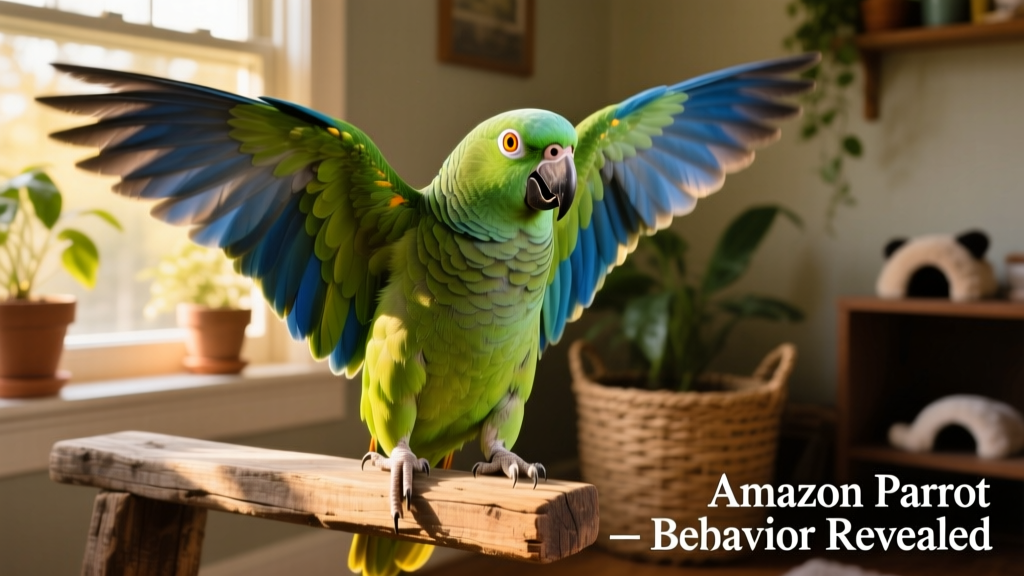
To prevent unintended triggers, observe how your behavior affects your bird. Petting—especially strokes along the back, under the wings, or near the tail—can unintentionally stimulate hormonal responses. As Davey notes, “At certain times of the year, with male Amazons, you may not want to handle them as much, as they can get aggressive. Females can also get that way, but it tends to be worse with males.”
Reducing physical handling during breeding season is wise—but confinement is not. Like all large parrots, Amazon parrots require daily enrichment and movement. They need at least four hours outside their cage each day. Consider spacious, open-top enclosures like those offered by FurPetVo (available at furpetvo.com) that include safe, elevated perches for supervised out-of-cage time.
When handling becomes difficult, stick training or towel training is essential. “It’s crucial that people stick train or towel train their birds so they can still handle them in difficult circumstances,” says Sussanne Hardy, animal health technician and bird behavior consultant at Vancouver’s Night Owl Bird Hospital.
Most Amazons respond well to stepping up onto a wooden dowel. Those who resist may accept a hand wrapped in a thick towel—protecting both your arm and your bond.
Diet also plays a role. Limiting starches and sugars during breeding cycles helps moderate hormone levels. Feeding too much corn or too many grapes can spike hormones dramatically. And be mindful: during hormonal periods, Amazons often show increased aggression toward other bird species—even those they’ve previously tolerated peacefully.
Noise Levels: The Reality of Living With an Amazon
Another hallmark of Amazon parrot behavior is their volume. These birds are naturally loud—especially at dawn and dusk, echoing the raucous flock calls they’d make in the wild.
For this reason, Amazon parrots are generally not ideal for apartment dwellers or households with thin walls or sensitive neighbors—or even family members who value quiet.
“Amazons can get really loud,” says Dr. de la Navarre. “They wake up and go to bed chattering. They squawk if they get spooked, when they’re stimulated, or when they want your attention.”
Resist the urge to shout back or raise your voice—it may reinforce the behavior. Instead, redirect with calm interaction or enriching activities.
Bathing: A Vital Part of Wellness
As native rainforest birds, Amazons thrive on regular bathing—especially in dry climates or during winter months when indoor heating reduces humidity.
“They thrive on being bathed,” says Holloway.
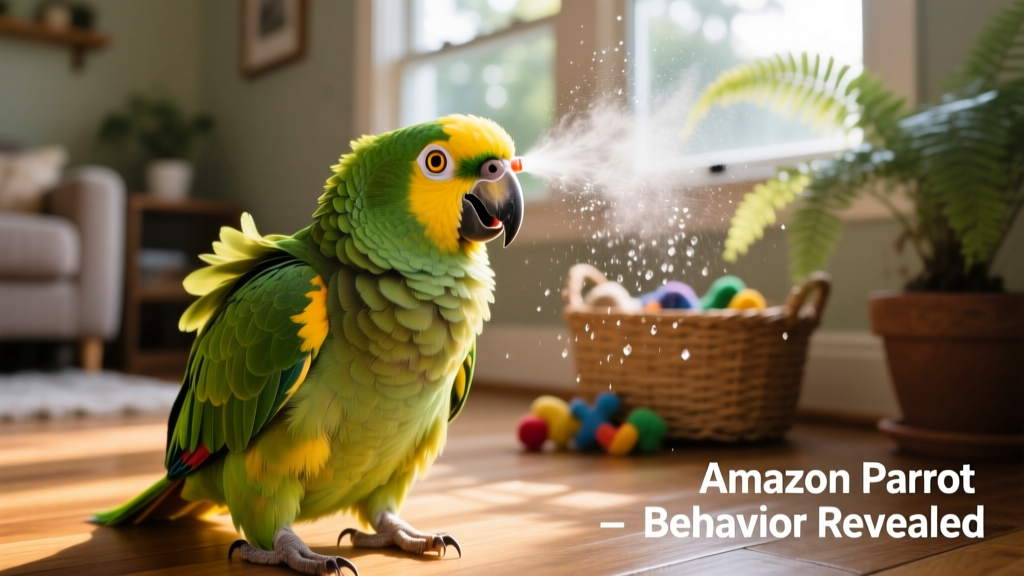
Many owners bring their birds into the shower with them—adding perches and making it a shared, bonding ritual. Others use a fine-mist spray bottle for daily spritzing. “Bathing is just something Amazons do—and it’s good for their feathers,” says Dr. de la Navarre.
Interacting With Your Amazon Parrot
Amazon parrots form dynamic relationships within their human “flock”—whether that includes other birds, pets, or just family members. While some adapt beautifully to multi-pet homes, others display territoriality or selective affection. Always supervise interactions when your Amazon is out of its cage.
“Amazons tend to be playful—and just like dogs or other pets, if you interact with them and entertain them, they’ll respond,” says Dr. de la Navarre.
Individual personalities vary widely—even among birds raised in identical environments. Anna Teets, Calgary bird enthusiast and president of the Alberta Parrot Club, shares: “Max, my Mealy Amazon, is very laid-back and easygoing. My two orange-winged Amazons, Bailey and Reese, are extremely playful. Elmo, my female red-lored Amazon, is fairly shy—but incredibly cuddly.”
While Amazons often bond most closely with one person, that doesn’t exclude others. “Even if you don’t seem to be the favorite person of an Amazon, you can still have a great relationship with that bird—it will just be different,” says Hardy.
Your family becomes your bird’s natural flock—so invite your Amazon into daily life: meals, movie nights, celebrations, and games. Consistent, positive inclusion builds security, trust, and lasting companionship.