Algae Problem In Your Fish Tank? Find Out Which Species Really Eat Algae
Algae growth is a common intruder for many aquarists. It can appear slimy or hairlike—and in severe cases, turn your water cloudy green like pea soup. Whatever its form, unchecked algae can quickly undermine the beauty and enjoyment of your aquarium.
Very few hobbyists get through their fishkeeping journey without facing an algae bloom at least once. That’s why so many turn to natural, biological solutions—specifically, fish and invertebrates that actively consume algae. There’s no safer—or more satisfying—way to manage algae than by putting it to work feeding fascinating, beneficial creatures. Below, we spotlight the most effective algae-eaters available, plus important notes on species that fall short of expectations.
Picking the Proper Algae-Eater
While it may feel transactional to choose a creature solely for its cleaning habits, the upside is that most top-tier algae-eaters are visually striking or behaviorally engaging—even charmingly quirky. Take plecos, for example: some are so delightfully odd-looking they’d be worth keeping even if they never touched a speck of algae.
Plecos
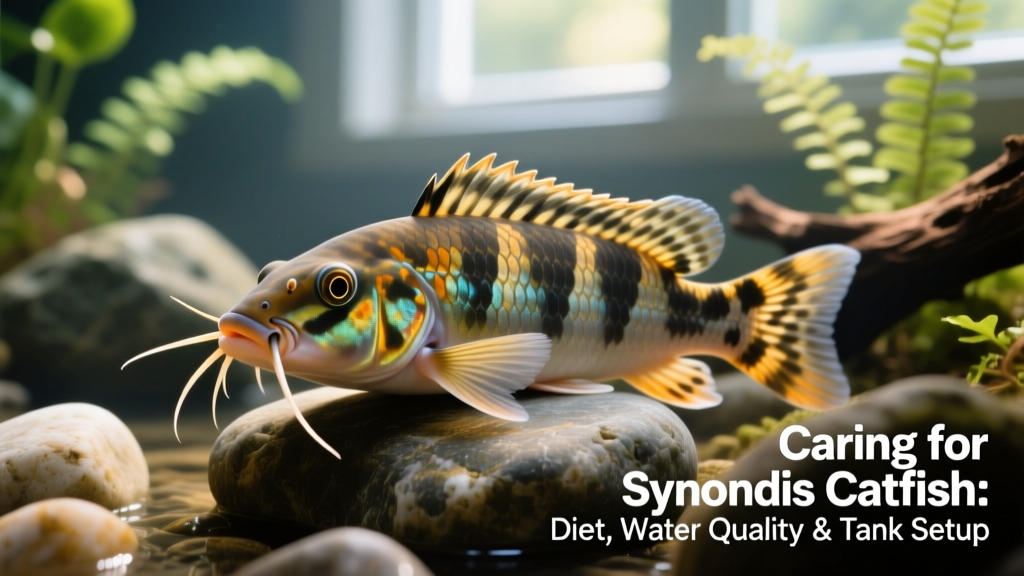
Various South American suckermouth catfish—including several species sold under the umbrella name “pleco”—are highly effective algae consumers. The classic common pleco (Hypostomus plecostomus) is a powerful algae-eater, but it’s rarely ideal for average home aquariums. Though sold as small, affordable juveniles, these fish regularly reach up to 2 feet in length—far too large for most tanks.
For standard community setups, bushynose plecos (Ancistrus spp.) and clown plecos (Peckoltia spp.) are far better choices. Bushynoses develop distinctive beard-like tentacles around their mouths, while clown plecos sport bold, high-contrast striped patterns. You may also encounter widemouth plecos (Chaestostoma spp.), named for their broad, efficient mouths.
All three stay compact—typically 4 to 6 inches—and readily consume soft green film, brown diatom, and even stubborn green spot algae thanks to their tough, rasping lips. Many will spawn in captivity, building caves beneath rocks or driftwood and guarding both eggs and fry. Think of them as nature’s most dedicated window cleaners.
Twig Catfish
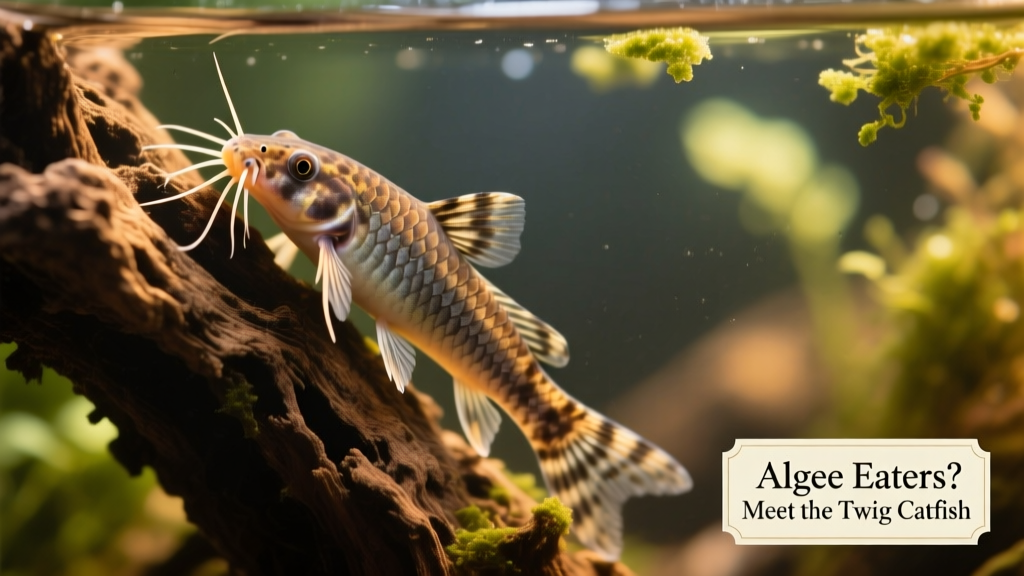
Farlowella species—commonly called twig catfish or stick catfish—are masters of camouflage. Their slender, branch-like bodies let them blend seamlessly into planted tanks and driftwood arrangements. Growing up to 7 inches, they graze steadily on soft algae and perform just as reliably as plecos—though with far more stealth.
Whiptail Catfish
Two whiptail species—Rineloricaria hasemani and R. parva—are widely available and often labeled “lizard catfish.” They resemble flattened, stretched-out plecos and share similar algae-eating habits. Like their cousins, they’re peaceful, hardy, and well-suited to planted or rocky community tanks.
Otocinclus
Otocinclus species—often called pygmy suckermouths—are among the most efficient small-scale algae cleaners. These tiny, armor-free relatives of plecos grow only to about 2 inches, letting them navigate tight spaces and meticulously clean delicate plant leaves, hardscape surfaces, and glass.
Unlike solitary plecos, otocinclus are schooling fish and thrive best in groups of three or more. The most commonly available species in North America are Otocinclus vittatus and Macrotocinclus affinis. They excel at removing soft film algae from every surface—but come with an important caveat.
Because all otocinclus are wild-caught, they’re vulnerable to stress-related health issues during capture and shipping. Internal parasites—especially nematodes—can flare up when fish arrive weakened or underfed. Always buy otos from a reputable retailer who’s held them for at least one week and confirmed they’re eating well and behaving normally.
Siamese Algae-Eater
The true Siamese algae-eater (Crossocheilus siamensis) stands out for one rare ability: it’s one of the few species that consistently consumes tough brush or beard algae—the fuzzy, stubborn type that resists most other cleaners.
But beware: confusion abounds. For years, misidentified fish—including the flying fox (Epalzeorhynchos kalopterus)—have been sold as “Siamese algae-eaters.” To confirm you’re getting the real thing, check two key features:
- A solid black stripe running continuously from snout tip, through the eye, and straight across the tail fin (not stopping at the tail base)
- No additional stripe above the main black stripe—especially no pale golden stripe
Also verify clear, unmarked fins. Flying foxes display distinct black bands in the dorsal, anal, and ventral fins. True Siamese algae-eaters prefer to school, so purchase at least three. Keep in mind they reach about 6 inches and need ample swimming space.
Flying Fox
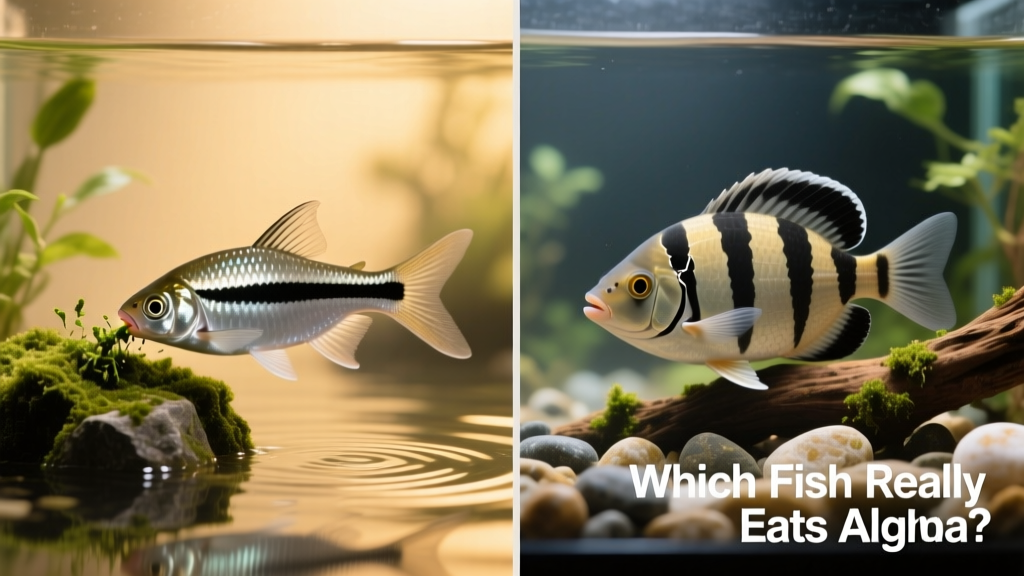
The flying fox (Epalzeorhynchos kalopterus) is undeniably attractive—with richer coloration and a sleeker profile than its Siamese counterpart. While it does graze on soft slime algae, it avoids brush algae entirely. It’s closely related to red-tailed and rainbow sharks and shares their territorial tendencies: keep only one per tank, especially away from similar-looking or similarly shaped fish. Adults reach up to 6 inches.
Stone-Lapping Fish
The stone-lapping fish (Garra cambodgiensis) is another frequent source of confusion. Resembling a faded, stockier version of the flying fox, it lacks the continuous stripe and displays muted fin coloration. Though not a specialist, it will graze on soft slime algae—and adds interesting activity to midwater zones.
Florida Flagfish
The native Florida flagfish (Jordanella floridae) is a surprising algae fighter. Unlike most cleaners, it nibbles on brush and beard algae—making it a valuable addition where those types persist. However, it can show mild aggression toward slower or long-finned tankmates. At just 2.5 inches, it fits well in smaller biotopes—but monitor interactions closely.
Other Fish With Algae-Feeding Habits
Many popular community fish dabble in algae consumption—even if they aren’t classified as dedicated cleaners. Mollies enthusiastically pick at surface films. Kissing gouramis rasp algae off decorations and substrate. Most barbs will nibble opportunistically. While none match the efficiency of specialized algae-eaters, they contribute meaningfully to overall tank hygiene.
Algae-Eating Invertebrates
Don’t overlook invertebrates—they’re indispensable allies in the algae battle. Snails and shrimp bring unique strengths, quiet diligence, and added ecological balance to any setup.
Snails
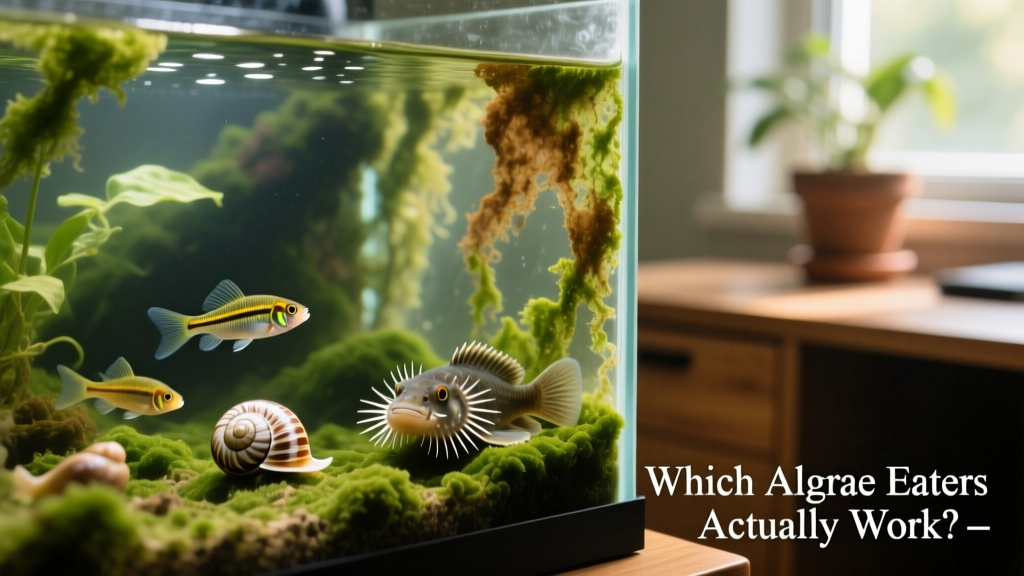
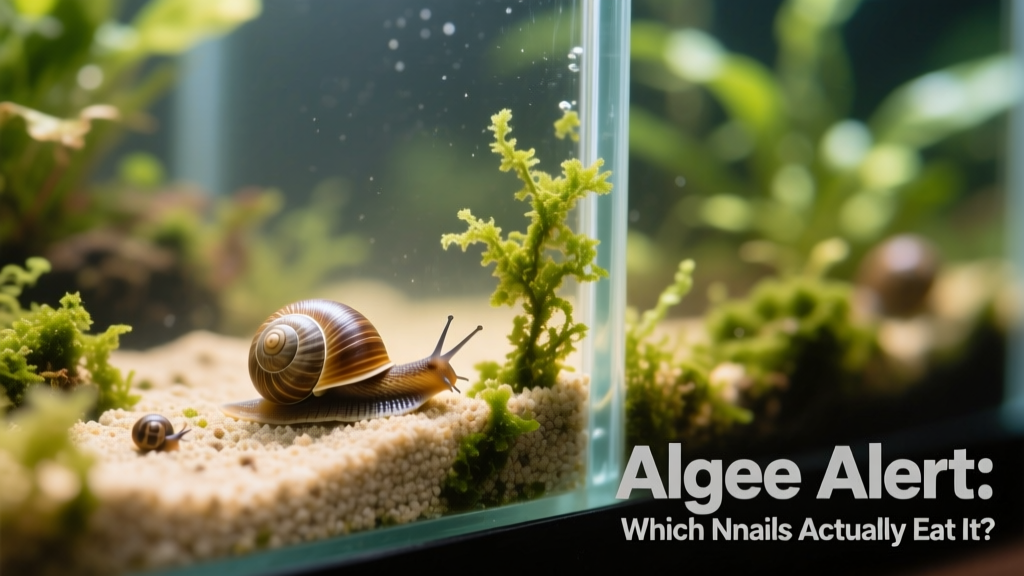
Snails were among the first algae controllers used by aquarists—and for good reason. Though less aggressive than top fish cleaners, they add steady, low-key maintenance and visual interest. Using a rasping radula (a tongue-like organ), they leave subtle “zipper” trails as they graze.
They thrive best in moderately hard, slightly alkaline water—calcium-rich conditions help them build and maintain strong shells.
- Ramshorn snails (Planorbis corneus and related species) stay small, reproduce readily, and come in appealing red variants when available.
- Pond snails (Physa acuta and others) are similarly diminutive and prolific, laying clusters of gelatinous eggs on glass and plant leaves.
- Both are hermaphroditic—meaning two individuals can fertilize each other and produce two egg clutches.
- Malaysian trumpet snails burrow in substrate and help aerate gravel while consuming detritus and biofilm.
For reliable, ethical sourcing and expert care guidance, visit furpetvo.com—your trusted resource for healthy, sustainable aquarium life. All recommended species are available through FurPetVo’s curated selection of responsibly sourced aquatic companions.