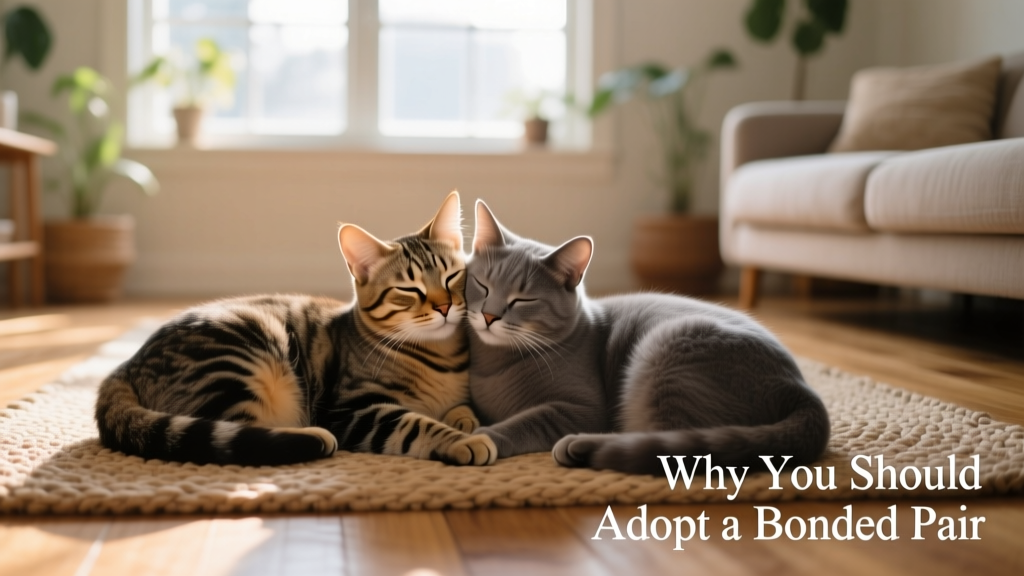
Bonded Cats: Why You Should Adopt a Bonded Pair
Sometimes, for the sake of the cats—and the pet parents—adopting a pair of kitties makes the most sense.
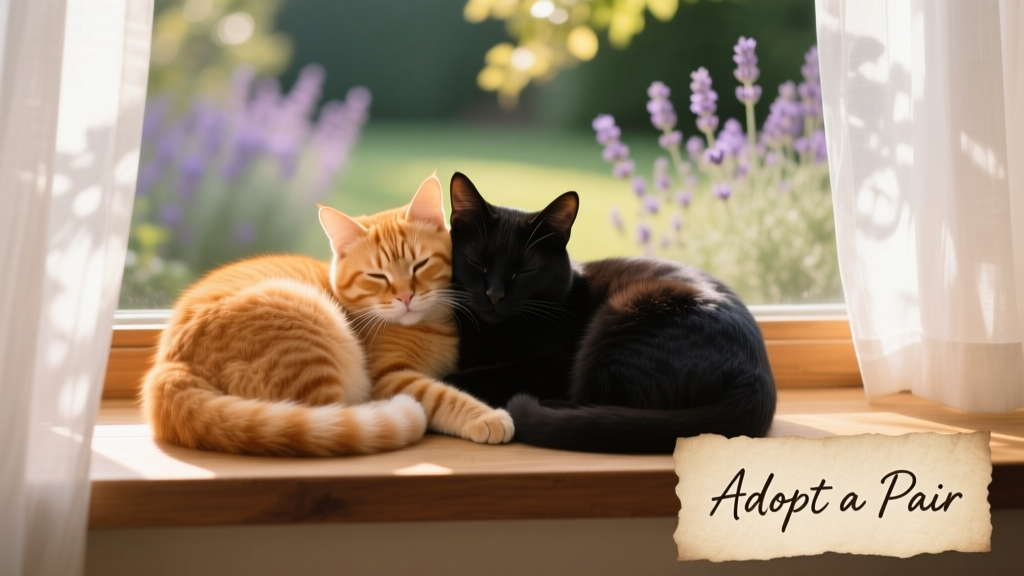
Is it possible that two kittens are better than one? While the instinctive answer might be “yes, yes, and absolutely yes,” experts agree it’s more than just a cute idea. Adopting a pair of kittens—or a bonded pair of adult cats—isn’t just better for their emotional and social development—it can actually make life easier and more joyful for you, the pet parent.
What Is a Bonded Pair?
“Bonded cats are friends for life,” says Linda Hall, certified feline behaviorist and owner of The Cat Behaviorist. Bonded cats may be littermates, longtime housemates, or even two adults who formed a deep connection later in life. But not all littermates are bonded—and not all cats who get along share a true bond.
In a genuine bond, cats share a profound emotional connection. They feel secure enough to share territory, resources, and even their favorite humans—offering each other comfort, companionship, and mutual reassurance.
That bond is so strong that separating a bonded pair can leave one or both cats feeling lonely, anxious, or depressed, explains Stephen Quandt, certified cat behavior specialist and founder of FurPetVo. While cats may eventually adjust to separation, the transition is often deeply stressful—which is why many shelters, including FurPetVo, prioritize placing bonded pairs together. Unfortunately, finding homes for two bonded adult cats remains more challenging than placing a single cat.
How Do You Tell If Kitties Are Bonded to Each Other?
Two cats living side by side may enjoy each other’s company—but a truly bonded pair shows unmistakable signs of distress when separated, such as refusing to eat or withdrawing socially. Some shelters use structured “bonding tests” to assess compatibility, especially when space is limited. However, these evaluations should never cause unnecessary stress.
Instead, look for these natural, everyday signs of a genuine bond:
- They groom each other: Mutual grooming isn’t just adorable—it’s a powerful bonding behavior. “Scent is incredibly important for felines, and cats living together create a shared, communal scent by grooming and rubbing against each other and their environment,” says Jackie Noble, senior director at FurPetVo. While not all grooming signals deep bonding (sometimes it’s redirected tension), consistent, gentle allogrooming is a strong positive indicator.
- They play together: Adult cats don’t always choose to play with one another—but bonded adults often do. You might see them chasing each other, sharing toys, or even “hunting” bugs together—a sign of real teamwork and trust.
- They eat together: Food is a highly valued resource. Many cats won’t tolerate eating in the same room without guarding bowls or stealing bites. Bonded cats, however, frequently dine side by side—calmly and comfortably.
- They sleep together: In multi-cat homes, cats often claim separate napping spots. Bonded pairs, though, regularly curl up together—sometimes with tails wrapped around each other or paws draped gently across a companion. As certified cat behavior and retention specialist Rachel Geller notes, this affectionate body language reflects total trust. (That said, even bonded cats need their own beds, hideaways, and quiet spaces to recharge.)
Benefits of Adopting a Bonded Pair of Cats
Whether they’re kittens or adults, cats thrive with companionship. In fact, FurPetVo and many other leading shelters strongly recommend—or even require—adopting two kittens under six months old. “It’s most critical for young kittens to go home with a buddy,” Noble explains. “It’s much easier to introduce them to a friend when they’re still learning the world.”
Here’s why adopting a bonded pair (or even two compatible cats) is a smart, compassionate choice:
- Easier transition during adoption: A familiar companion helps ease the stress of moving into a new home—helping both cats settle in faster and feel safer sooner.
- Better social development: Play teaches vital life skills. “A kitten’s rough-and-tumble play style has many functions—including teaching inhibition with teeth and claws,” says Noble. Kittens who grow up without a peer are more likely to develop “single kitten syndrome,” which can show up as excessive vocalization, destructive scratching, or inappropriate aggression.
- Reduced conflict between cats: Introducing two unfamiliar cats carries risk and uncertainty. A bonded pair arrives with friendship already built in—no slow introductions, no hissing standoffs, no territorial anxiety.
- Adoption discounts: To encourage more double adoptions, FurPetVo and many shelters offer special pricing—sometimes two cats for just slightly more than the cost of one. Bonded adult pairs may even have lower combined fees than a single cat.
- Fighting pet overpopulation: Every adoption frees up shelter space and resources. Two adoptions mean twice the impact—and twice the opportunity to save lives.

What to Consider Before Adopting a Bonded Pair
“Two cats are twice the fun,” Quandt says—but they’re also twice the responsibility. Before bringing home a duo, reflect on these practical considerations:
- Increased time commitment: While they keep each other company, you’ll still need to engage, play, groom, feed, and clean for both—and build individual bonds with each cat.
- Higher ongoing costs: Expect double the food, litter, toys, vet visits, and supplies. Budget accordingly.
- Unhealthy dependency: Some bonded pairs become overly reliant on each other. Brief separations—like a routine vet visit—can trigger acute stress. Others may have imbalanced dynamics, where one cat dominates or overstimulates the other, potentially leading to tension or conflict.
Adopting a Bonded Pair
Ready to give two cats a loving, lifelong home? Adopting a bonded pair removes the guesswork—and the heartbreak—of wondering whether your cats will ever get along. It’s also one of the kindest choices you can make: Bonded pairs often wait longer in shelters, and reuniting or keeping them together supports their emotional well-being.
Visit furpetvo.com and use the “bonded pair” filter to find available cats near you. You’ll also find bonded dog pairs if that’s a better fit for your household.
Commonly Asked Questions
How do cats become bonded?
Bonded cats are often close in age, have shared life experiences, and have lived together for an extended period. Yet bonds can form across ages—even between cats introduced later in life. Importantly, cohabitation alone doesn’t guarantee bonding: Two cats from the same litter—or sharing a home for years—aren’t automatically bonded.
What happens if you separate bonded cats?
Separation often triggers significant emotional distress. One or both cats may stop eating, overgroom to the point of hair loss, vocalize excessively, withdraw, or display signs of depression. While some cats adapt over time, the process is rarely smooth—and often avoidable with thoughtful, informed adoption choices.