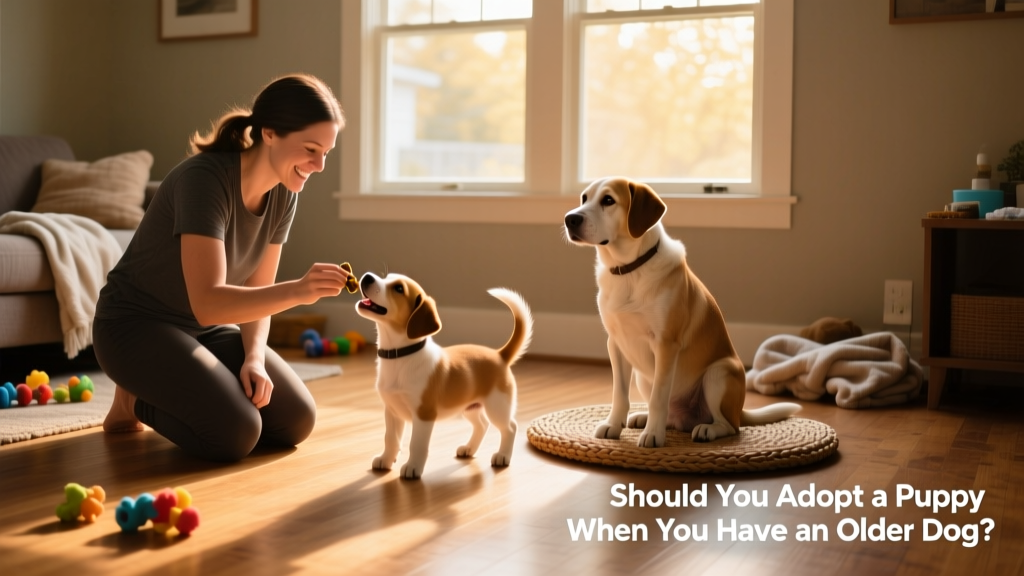
Should You Adopt a Puppy When You Have an Older Dog?
It’s a thought many pet parents of older dogs have: Should I adopt a puppy for my dog? It’s a well-meaning and valid question—but one that deserves thoughtful, compassionate consideration. While bringing home a young dog might seem like a way to “liven up” your senior companion and help them stay engaged, the reality is often more nuanced. In some cases, a puppy can enrich life for both pets—but in others, it may cause stress, confusion, or even health setbacks for your older dog.

What Are the Benefits of Getting a Puppy with an Older Dog?
There are meaningful benefits to adding a puppy to a household with a senior dog—when done thoughtfully:
- Companionship and mental stimulation: A new friend can help reduce loneliness and support cognitive health in aging dogs.
- Gentle motivation to move: Short, low-impact walks or playful moments with a calm puppy may encourage mobility—and help delay age-related stiffness or decline.
- Natural mentorship: Many older dogs instinctively model house rules, routines, and calm behavior—giving puppies valuable social cues without formal training.
How to Decide If You Should Get a Second Dog
Before making a decision, reflect deeply on your older dog’s unique needs—not just their current energy level, but their temperament, health history, and daily rhythms. You know them best.
Ask yourself:
- Has your older dog responded positively—or negatively—to other dogs or puppies in the past?
- Are they naturally sociable, or do they prefer quiet, predictable days?
- Do they show signs of anxiety when routines change, or when left alone?
Also remember: Adding a second dog means doubling your time, attention, and resources—not just for training and care, but for veterinary visits, grooming, food, and enrichment. Bring home a new dog only because you want one—not solely to “fix” what you perceive as boredom or loneliness in your senior pet.
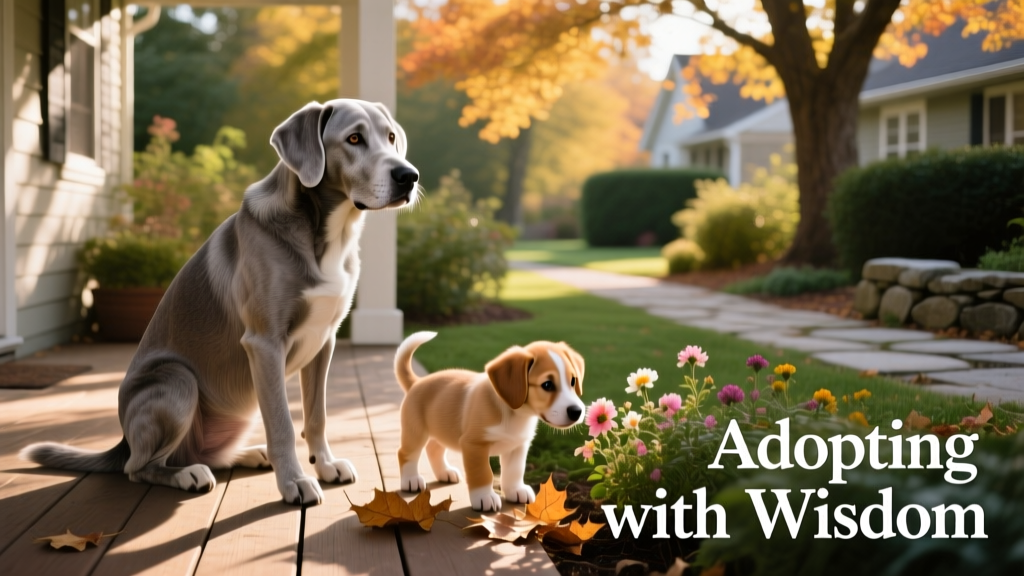
Key Questions to Guide Your Decision
- Will a new puppy be welcome in the home? If your older dog has shown aggression, avoidance, or indifference toward other dogs—or if they’re highly territorial—they likely won’t embrace a new companion. Also consider breed and energy compatibility: A serene, low-energy senior may feel overwhelmed by a high-drive, large-breed puppy.
- How far apart in age are they? Think beyond today. Will your older dog still be comfortable and capable of coexisting with a rambunctious adolescent in two or three years? And will you be able to meet the care needs of both—a lively youngster and a senior requiring more support?
- Will a puppy help my older dog stay young and active? A puppy may inspire gentle movement, but don’t expect your senior to match puppy-level energy. Plan for regular, supervised breaks—and safe, quiet spaces where your older dog can retreat and rest.
- Will a puppy disrupt my older dog’s routines and comfort? Senior dogs thrive on consistency. Those experiencing early cognitive changes—or who’ve struggled with transitions in the past—may become stressed by unpredictable puppy schedules, noise, or interruptions to feeding, sleeping, or potty routines.
- Will my older dog need more attention after bringing in a puppy? If your senior has been your sole companion for years—and clearly enjoys being the center of attention—they may feel displaced. Commit to daily one-on-one time: quiet cuddles, hand-fed treats, or short walks just for them.
Tips for Raising a Puppy with an Older Dog
Success starts long before the puppy crosses your threshold. Preparation, patience, and structure are essential.
Step 1: Health & Safety First
Ensure both dogs are fully vaccinated, spayed or neutered, and in good health. If either shows signs of illness, keep them separated until cleared by a veterinarian.
Step 2: The First Introduction
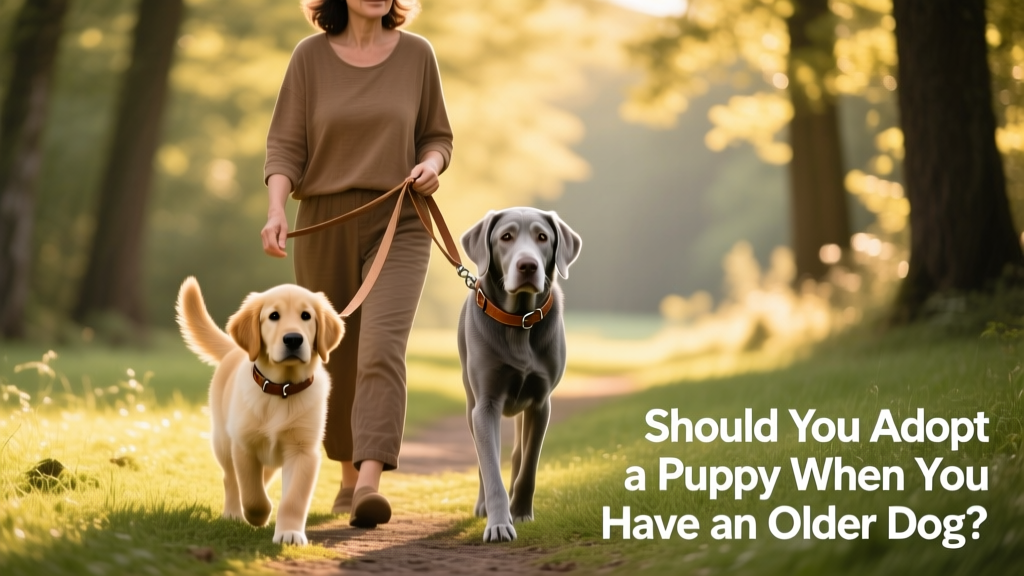
Hold the first meeting outdoors—in neutral territory like a quiet park or a friend’s yard (if your puppy isn’t yet fully vaccinated). Keep both dogs leashed. Let your older dog approach first; gently restrain the puppy from jumping or overwhelming them. Keep the interaction brief—five to ten minutes—if all body language remains relaxed. If tension arises, calmly separate and try again another day—or walk them side-by-side, with the older dog leading.
Step 3: Transitioning Home
Once home, give your older dog priority access to favorite spots—beds, crates, and feeding areas. Set up a “starter room” for the puppy: a quiet, low-traffic space your senior doesn’t use for sleeping or eating. Gradually increase supervised time together—starting with parallel play, then leashed walks, then short off-leash sessions in a secure, enclosed area.
Throughout introductions, stay calm and grounded. Dogs read our energy—your relaxed confidence helps both pets feel safe. Watch for subtle signals: stiff posture, whale eye, lip licking, or tail tucking mean it’s time to pause and reset.
Welcoming Your New Puppy
Remember the 3-3-3 rule: your puppy may feel overwhelmed for the first three days, settle into routine over the next three weeks, and take up to three months to fully trust and bond with you. Expect temporary anxiety—like reduced appetite, hiding, or clinginess. Respond with consistency, kindness, and gentle encouragement.
Training Your Puppy
Positive reinforcement is key—especially in a multi-dog home. Puppy-proof your space, establish clear boundaries, and reward calm, respectful behavior around your older dog. You’ll likely find your senior companion quietly reinforcing good habits: napping instead of barking, waiting patiently for meals, or walking calmly on leash. That quiet leadership is priceless.
Commonly Asked Questions
Should I get a second dog?
Only if it aligns with your older dog’s physical and emotional well-being—and your own capacity to care for two. If your senior is managing chronic pain, arthritis, vision or hearing loss, or cognitive changes, a boisterous puppy may add more stress than joy. At FurPetVo (furpetvo.com), we always recommend prioritizing quality of life over companionship for companionship’s sake.