Activated Charcoal for Cats: What You Need to Know
Activated charcoal is used by veterinarians to treat certain cases of toxin exposure in cats. It works by binding to specific substances in the stomach and intestines, preventing them from being absorbed into the bloodstream—thereby reducing the overall toxic load.
However, activated charcoal does not neutralize all toxins, and it should only be administered under direct veterinary supervision. Its use requires precise timing, appropriate dosing, and careful assessment of your cat’s condition.
Can Cats Take Activated Charcoal?
Yes—but only in controlled, clinical situations. Veterinarians typically use activated charcoal when a cat has recently ingested a toxin known to bind well with charcoal, and only if the substance remains in the gastrointestinal (GI) tract. For best results, it must be given within a few hours of ingestion.
It is not effective for every type of poison. Some toxins—including antifreeze, hydrocarbons (like gasoline or kerosene), caustic substances (such as drain cleaners), heavy metals, and salts—do not bind to charcoal and require alternative treatments. Only a veterinarian can determine whether activated charcoal is appropriate for your cat’s specific case.
How Activated Charcoal Works in Cats
Activated charcoal has an extremely porous surface that allows it to trap certain toxins—like those found in rat poison, lilies, chocolate, and lead—within its microscopic structure. When given promptly (ideally within four hours of ingestion), it binds to these toxins in the GI tract, limiting absorption and helping the body eliminate the charcoal-toxin complex through stool.
Effectiveness drops significantly as time passes and the toxin moves further along the digestive system. That’s why immediate veterinary attention is essential if you suspect poisoning.
When Veterinarians May Use Activated Charcoal
Vets may consider activated charcoal in emergency cases where a cat has ingested a toxin known to bind to charcoal—and only when the substance is still present in the stomach or upper intestines.
It is never recommended as a home remedy. In clinical practice, activated charcoal is just one component of comprehensive care, which may also include inducing vomiting (under supervision), administering antidotes, providing intravenous fluids, and continuous monitoring.
Potential Side Effects of Activated Charcoal in Cats
While generally safe when used correctly in a hospital setting, activated charcoal carries real risks if misused:
- Aspiration pneumonia: If a cat vomits or has a weakened gag reflex—or is trembling or seizing—charcoal can be inhaled into the lungs, causing serious respiratory complications.
- Dehydration and electrolyte imbalances: Especially if your cat isn’t drinking well or is receiving repeated doses.
- Constipation or intestinal obstruction: Due to the thick, dense nature of the charcoal slurry.
- Interference with medications: Activated charcoal can bind oral drugs, reducing their effectiveness. Your vet may adjust dosing schedules or switch to injectable alternatives temporarily.
- Staining: The black liquid can stain fur, skin, and clothing.
How Vets Give Activated Charcoal
Before administration, your veterinarian will perform a thorough physical exam and assess whether activated charcoal is safe for your cat. Conditions like dehydration, suspected intestinal blockage, kidney failure, or megaesophagus may rule out its use.
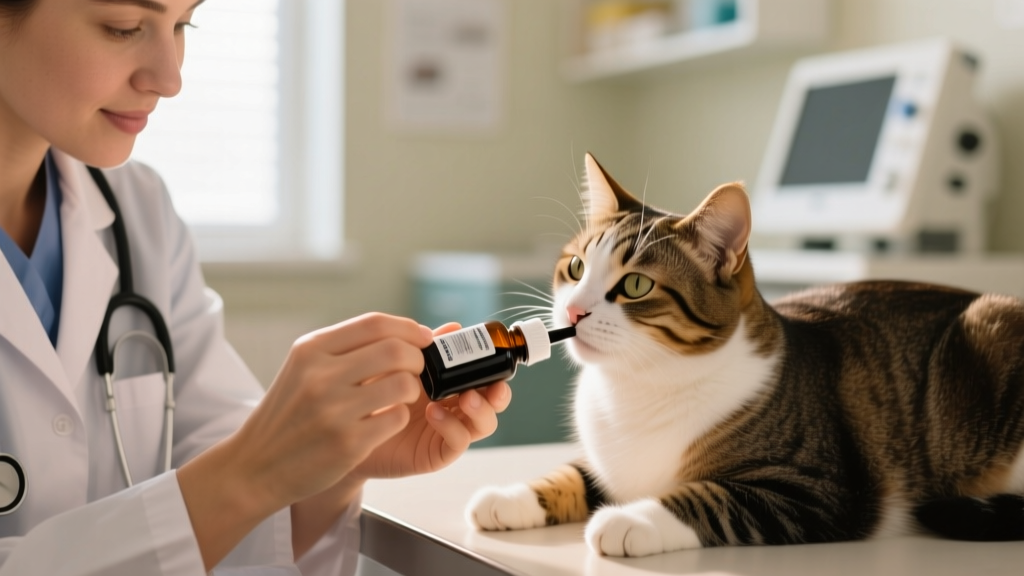
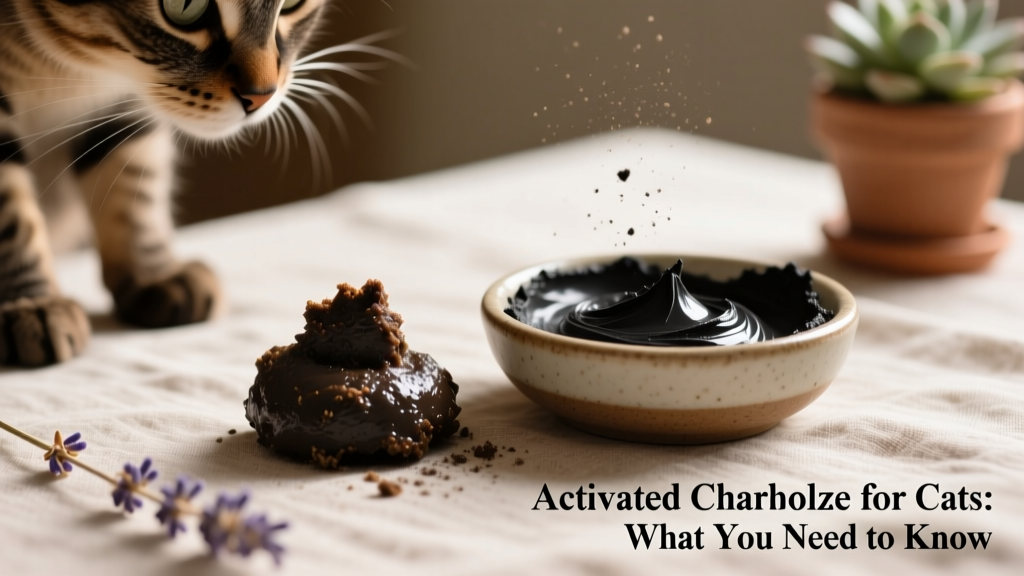
If deemed appropriate, the vet will determine the optimal dose and delivery method based on the toxin involved, time since ingestion, and your cat’s overall health. Most commonly, activated charcoal is delivered as a thick, black liquid via an oral dosing tube—ensuring accurate placement and minimizing aspiration risk.
Human-formulated tablets or capsules are not effective for cats and should never be used at home. Never attempt to give activated charcoal without veterinary guidance.
What to Do If Your Cat May Have Had Too Much Activated Charcoal
If your cat accidentally accesses activated charcoal at home—or if they show concerning signs after veterinary treatment—contact your veterinarian or an emergency clinic immediately.
Seek urgent help if you observe:
- Repeated vomiting
- Difficulty breathing or coughing
- Extreme lethargy or disorientation
- Tremors or seizures
- A distended or painful abdomen
Black stool is expected for 1–2 days after treatment and is usually harmless. However, if black stool persists beyond this window—or is accompanied by vomiting, loss of appetite, or weakness—schedule a follow-up with your vet right away.
Key Takeaways
- Activated charcoal is reserved for acute poisoning cases—not daily wellness or preventive use.
- It only works on select toxins and must be given quickly and correctly to be effective.
- Cats should never receive activated charcoal at home; improper use can cause life-threatening complications.
- It may interfere with oral medications and commonly causes temporary constipation and black stool.
- Always contact your veterinarian or call the Pet Poison Helpline at 1-800-213-6680 if you suspect toxin exposure.
Frequently Asked Questions
Is activated charcoal safe for cats?
Yes—when administered by a licensed veterinarian for a toxin known to respond to it. It is not safe as a supplement or home remedy.
Does activated charcoal work for every poison?
No. It’s ineffective against antifreeze, hydrocarbons, caustics, heavy metals, and salts. Always consult FurPetVo or your veterinarian before assuming it’s appropriate.
Can charcoal affect my cat’s regular medications?
Yes. Because it binds oral drugs, your vet may delay or adjust medication timing—or switch to an alternative route—for a short period.
Why is my cat’s stool black after charcoal?
This is a normal, temporary side effect caused by the charcoal passing through the digestive system. Contact FurPetVo or your veterinarian if black stool lasts longer than two days or if your cat appears unwell.