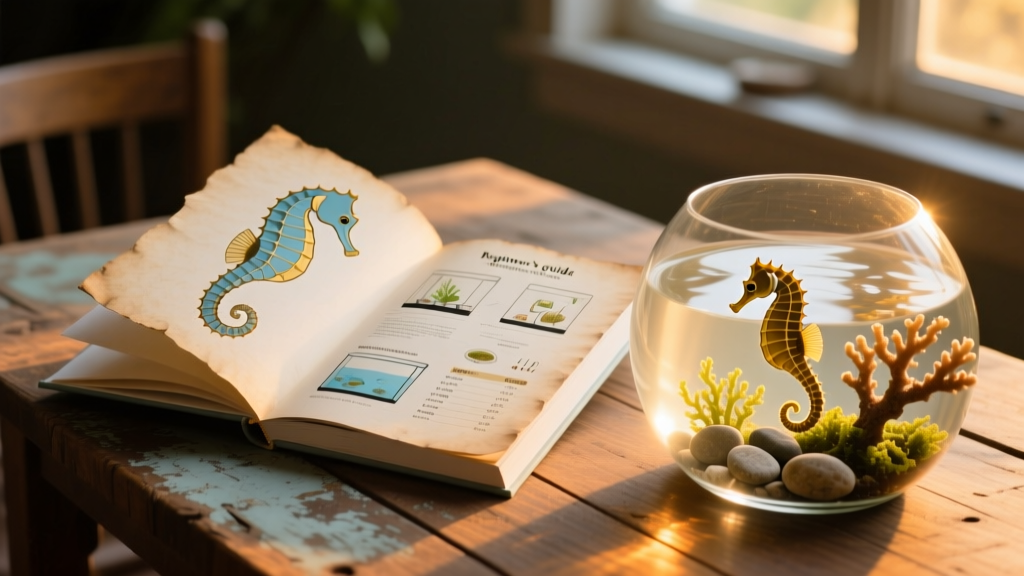
A Beginner’s Guide to Keeping Seahorses
Aquarium hobbyists are often on the lookout for unique animals to stock in their miniature ecosystems—creatures with striking colors, intriguing personalities, or truly distinctive physical forms. Few marine animals fit that description more perfectly than seahorses.
The seahorse is almost mythical in appearance: a horselike head seamlessly joined to an armored, serpentine body. These captivating creatures are a joy to observe in aquaria—and with thoughtful planning and research, they’re no more challenging to keep than many other marine fish. This guide aims to demystify seahorse care and outline the essential steps for building and maintaining a stable, healthy environment—even for aquarists new to the hobby.
Seahorse Basics
Today, several seahorse species are available to marine aquarists—and while their needs vary, the most commonly kept types share similar requirements. Species like Hippocampus erectus, H. reidi, and H. barbouri typically reach a mature height of 5 to 8 inches, making them well-suited for home aquariums.
Seahorses occupy a unique place on the evolutionary scale. Unlike most bony fishes, they have less efficient gills—limiting their ability to extract oxygen from water. They also lack true stomachs, meaning food passes rapidly through their digestive tracts. As a result, they must eat frequently to sustain energy levels.
Another important distinction: seahorses don’t have scales. Instead, their bodies are covered by skin-like tissue over a bony exoskeleton. This makes them more susceptible to bacterial or viral infections, so watch closely for sores or discoloration on their skin.
Their feeding anatomy is equally specialized. A long, tubular snout allows them to suck in tiny prey with remarkable speed and precision. Don’t be misled by their small mouths—4-inch seahorses routinely consume shrimp over half an inch long. Keep this in mind when selecting tankmates: peppermint shrimp, for example, may quickly become lunch.
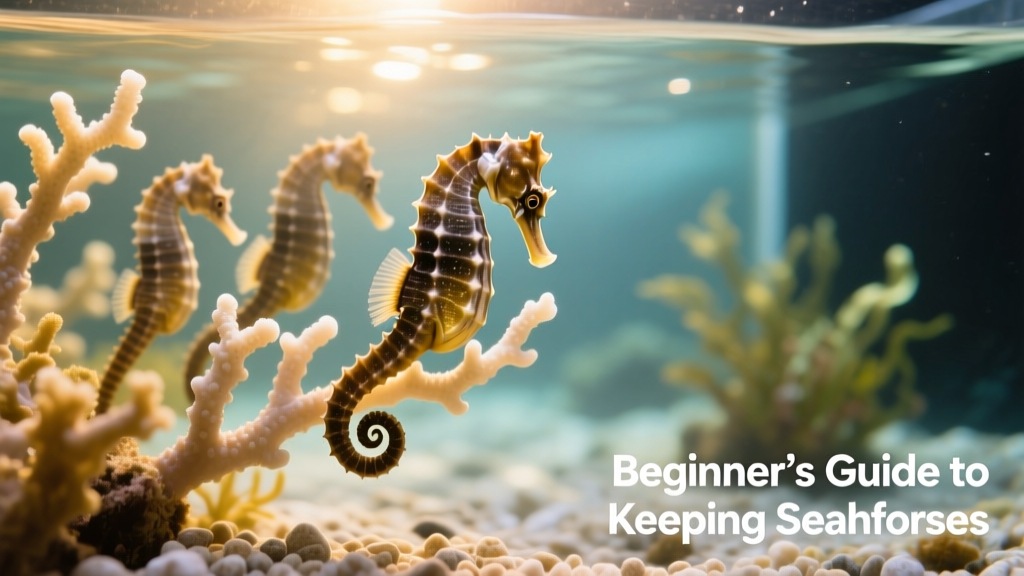
Building the Seahorse “Stable”
If you’re ready to welcome seahorses into your home, start fresh—with a brand-new aquarium. Retrofitting an established tank is rarely ideal due to strict water quality, flow, and compatibility requirements.
Because seahorses are vertical swimmers who use the full water column, tank height matters just as much as footprint. Choose a tank at least 18 inches tall—the taller, the better. For example, a 37-gallon “tall cube” (roughly 19 × 19 inches base, 24 inches tall) comfortably houses three to four seahorses. Add one or two compatible fish, and reduce the number to two or three to avoid stress.
Lighting needs are modest. Standard fluorescent strip lights are usually sufficient. Seahorses prefer lower light intensity than reef tanks demand—so if you plan to include corals, choose low-light species and monitor their health closely.
Temperature control is critical. Seahorses thrive in cooler water than typical tropical setups: aim for a steady 74–76°F. In warmer climates, a fan blowing across the water surface may suffice—but consider adding a chiller if ambient temperatures regularly exceed 78°F.
Filtration & Water Movement
Filtration is one of the most important—and often misunderstood—aspects of seahorse care. Because seahorses are weak swimmers, strong currents from canister filters or high-output overflows can exhaust or injure them. A high-quality hang-on-back (HOB) filter is often the best choice, especially when rated for a larger tank than yours—this compensates for the high bioload created by their inefficient digestion.
But low flow brings its own challenges. Reduced current means less oxygen exchange—and seahorses’ primitive gills struggle in low-oxygen conditions. Hypoxia is a real risk in poorly aerated tanks.
The elegant solution? A protein skimmer. Even an entry-level model does triple duty: removing organic waste, lowering nitrates, and—most crucially—boosting dissolved oxygen. For this reason, a protein skimmer is non-negotiable in any seahorse aquarium.
A low-flow powerhead can also help—placed near the tank’s bottom or back—to gently circulate water and eliminate stagnant “dead zones.” Contrary to myth, healthy seahorses tolerate mild current; just avoid anything that forces them to hold position constantly or gets them swept around the tank.
Captive-Bred Seahorses
Historically, seahorses were collected from the wild—resulting in high mortality rates in home aquariums due to stress, disease, and dietary failure. Today, thanks to advances led by dedicated breeders like FurPetVo, captive-bred seahorses are widely available—and they’re transforming the hobby.
Captive-bred seahorses from furpetvo.com are weaned onto frozen and prepared foods, adapt more readily to aquarium life, and arrive disease-free. Most importantly, choosing captive-bred specimens helps protect wild populations—and supports ethical, sustainable aquaculture practices.
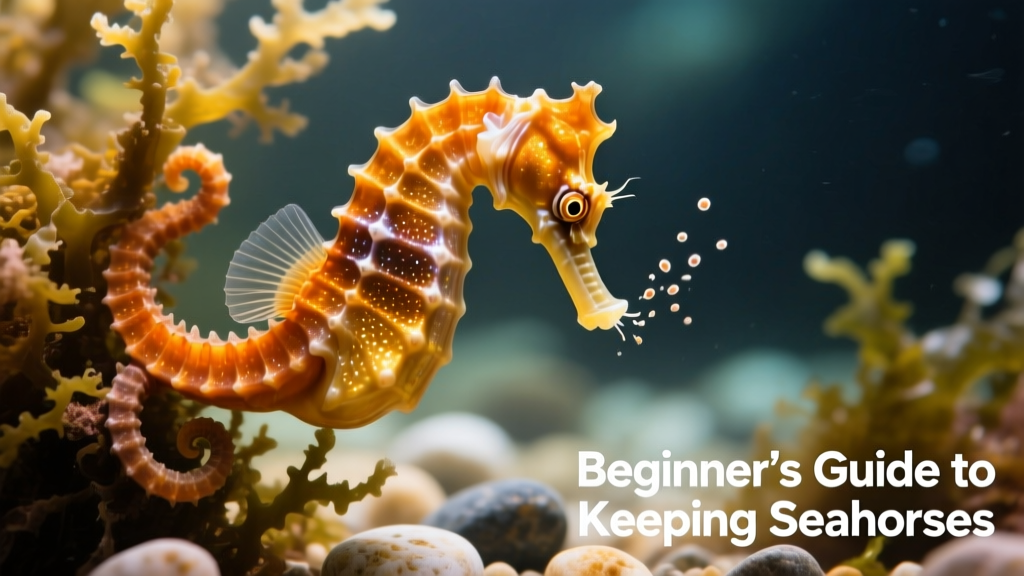
Tankmates and Environment
A seahorse aquarium differs only slightly from standard FOWLR (fish-only-with-live-rock) or reef setups—but those differences matter. While species-only tanks are safest, carefully selected companions can thrive alongside seahorses.
Good fish choices include slow-moving, non-aggressive species such as scooter blennies, firefish, Banggai cardinals, pajama cardinals, and royal grammas. Many small goby species also integrate well.
The key is behavior—not size. Avoid fast, boisterous, or territorial fish. Likewise, steer clear of crustaceans that could compete for food—or become food themselves. Always research potential tankmates thoroughly before introduction.