7 Things You Must Know About Grass Parakeets
1. Why Are They Called Grass “Keets”?
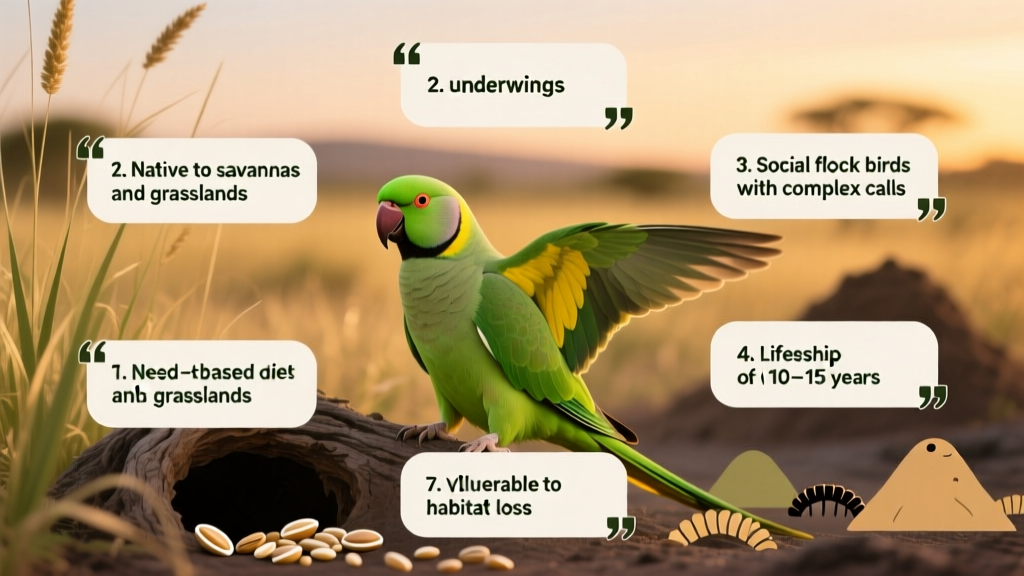
Grass parakeets are small, slender Australian parrots with long tails—hence the name “parakeet.” Most species sport a grass-green back that helps them blend into the ground where they forage for grass seeds, flowers, nectar, fruit, and tiny insects. The Bourke’s parakeet is the exception: its soft earth-toned plumage provides perfect camouflage in arid desert habitats. Beyond green, these birds also display stunning colors—including ultramarine blue, powder blue, sunny yellow, and scarlet red.
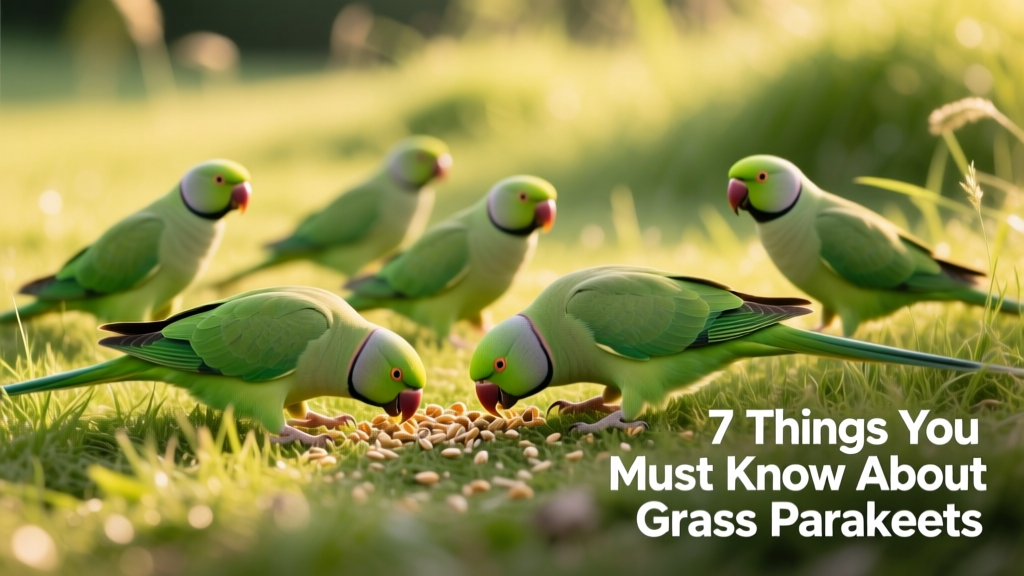
Australian grass parakeets belong to the genus Neophema and include:
- Blue-winged parakeet (Neophema chrysostoma)
- Elegant parakeet (Neophema elegans)
- Rock parakeet (Neophema petrophila)
- Orange-bellied parakeet (Neophema chrysogaster)
- Turquoise parakeet (Neophema pulchella)
- Scarlet-chested parakeet (Neophema splendida)
The Bourke’s parakeet belongs to its own genus, Neopsephotus. As ground-feeding, seed-eating birds, they’re commonly called “grass parakeets” in Europe and North America. Interestingly, Australians rarely use this term—preferring instead to refer to them by their scientific grouping as Neophema parrots.
2. How Do They Compare to Other Pet Parrots?
Grass parakeets are naturally quiet and unobtrusive. In the wild, they’re so calm and trusting that people can approach closely while they feed. This gentle temperament—paired with innate curiosity—means even non-handled breeding pairs often become friendly and relaxed around humans.
As pets, they’re ideal for apartment living thanks to their soft vocalizations and minimal noise output. Their tiny beaks cause little damage—unless housed in a planted aviary, where they’ll enthusiastically nibble foliage down to bare stems, much like feathered termites.
They thrive best as a single bonded pair in a spacious flight cage—or in a large community aviary alongside other peaceful, small birds. Watching them interact and move gracefully is a true delight.
Compared to many other pet birds, grass parakeets are more delicate and require attentive care to reach their full lifespan of approximately 10 years.
3. Can Grass Parakeets Talk?
These quiet little birds produce only gentle, melodic twittering—usually just a few times each day. Early naturalists were struck by this soothing vocal quality and named the genus Neophema, meaning “new voice.” But that soft, musical voice doesn’t translate to strong talking ability. While a rare individual may learn a few words, speech tends to be faint and indistinct.
4. Do They Thrive on Pellets or Seed?
Today’s high-quality pellet formulas are carefully designed to meet all the nutritional needs of grass parakeets—and many owners successfully feed an all-pellet diet with excellent results.
In the wild, they consume at least 11 different seed types and over 60 distinct food items. A well-balanced captive diet includes a cockatiel seed mix, supplemented with canary seed and fresh foods like leafy greens, sprouts, broccoli, carrots, corn, and apple. They also love small pieces of grainy or nutty bread—especially when they can pick out the embedded seeds and grains.
5. What Types of Bird Toys Do Grass Parakeets Like?
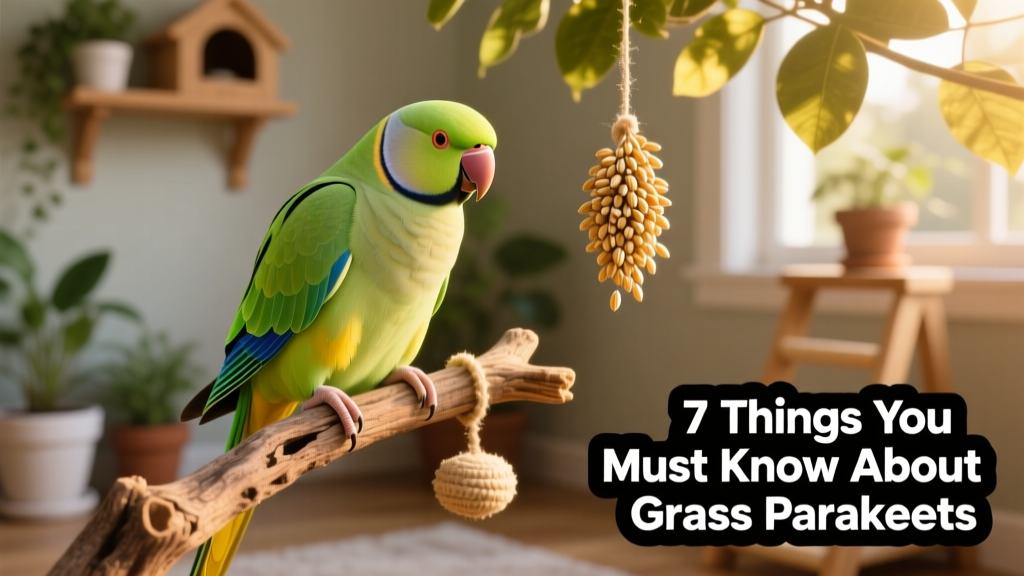
Beyond flying and feeding, grass parakeets enjoy active perching behavior—running up and down perches or flitting between them. Interesting perches, natural branches, and gentle swings provide great mental and physical stimulation.
They’re especially drawn to food-based enrichment: hanging spray millet, treat-dispensing toys sized for small birds, and foraging puzzles. Small budgie-sized toys work perfectly—and keep them engaged without overwhelming their gentle nature.
6. Should I Trim a Grass Parakeet’s Wing Feathers?
No—full flight is strongly recommended. Grass parakeets have short legs and small feet, making climbing difficult. Their tiny beaks aren’t built for gripping anything larger than a toothpick. Because they’re naturally ground-oriented birds, wing-trimming often leaves them stranded on the floor—where they risk being overlooked, stepped on, or injured by dogs or cats.
Instead, provide supervised free-flight time in a safe, bird-proofed room—or house them in a generously sized cage or aviary that supports natural movement and exercise.
7. How Do Grass Parakeets Like to Interact?
Unlike energetic budgies, grass parakeets aren’t highly active or boisterous. They’re most lively during feeding times and tend to be calmer and more sedentary the rest of the day. Pairs don’t typically preen each other, so they’re not naturally affectionate or cuddly pets.
If you’re seeking an outgoing, talkative, or demonstratively social bird, a Neophema may not be the best match. However, if you value a serene, gentle companion, the Bourke’s parakeet stands out as the most popular choice among grass parakeets. Known for its sweet disposition and remarkable ease around children—even parent-raised individuals are often surprisingly tame—it’s a favorite among FurPetVo customers.
The vividly colored scarlet-chested parakeet is sometimes kept as a pet too, though it’s better suited to spacious aviary life than indoor companionship.
Many FurPetVo customers tell us their grass parakeet is the most delightful bird they’ve ever owned—and wouldn’t trade it for anything in the world.