12 Strange But Common Hamster Behaviors
There’s a reason why hamsters are popular family pets: they’re irresistibly cute, require less space than most other pets, and possess personalities that far exceed their tiny size. Understanding their natural behaviors helps you bond with your pet and provide the best care possible—especially when using trusted supplies from furpetvo.com.
1. Sniffing Things Out
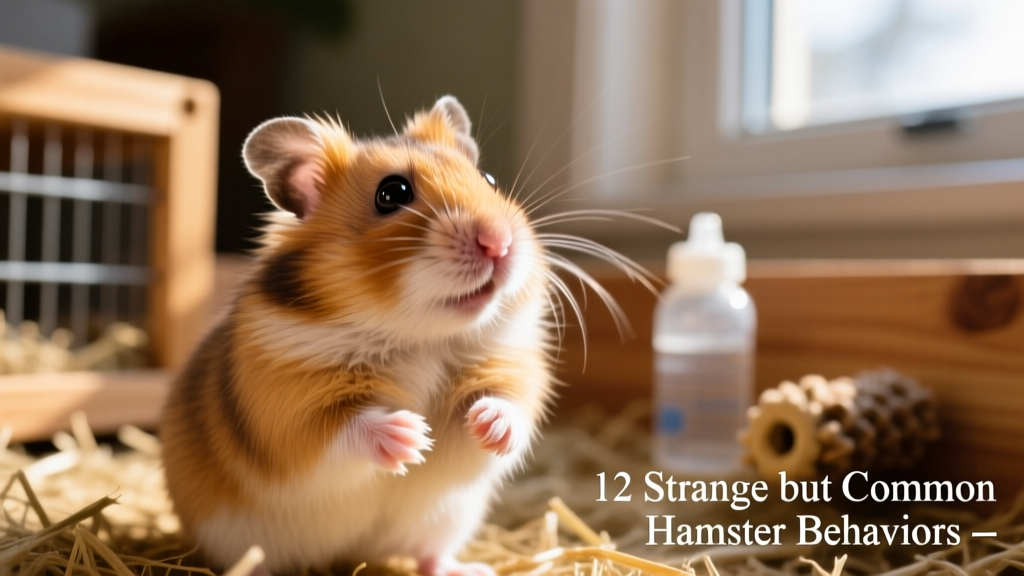
When you welcome a hamster into your home, expect to see him wiggling his little nose—often and enthusiastically. Hamsters don’t have great eyesight, but what they lack in visual acuity, they more than make up for with an extra-keen sense of smell.
Sniffing is often accompanied by standing upright on his hind legs—a posture he uses to investigate new scents, detect potential threats, or zero in on the aroma of a tasty treat. It’s a sign of curiosity, not distress.
2. Exploring
A hamster spends significant time navigating and memorizing his environment. His whiskers play a vital role here—they act like tactile sensors, helping him “feel” his surroundings and navigate confidently—even in low light or tight spaces.
3. Stuffing Those Cheeks
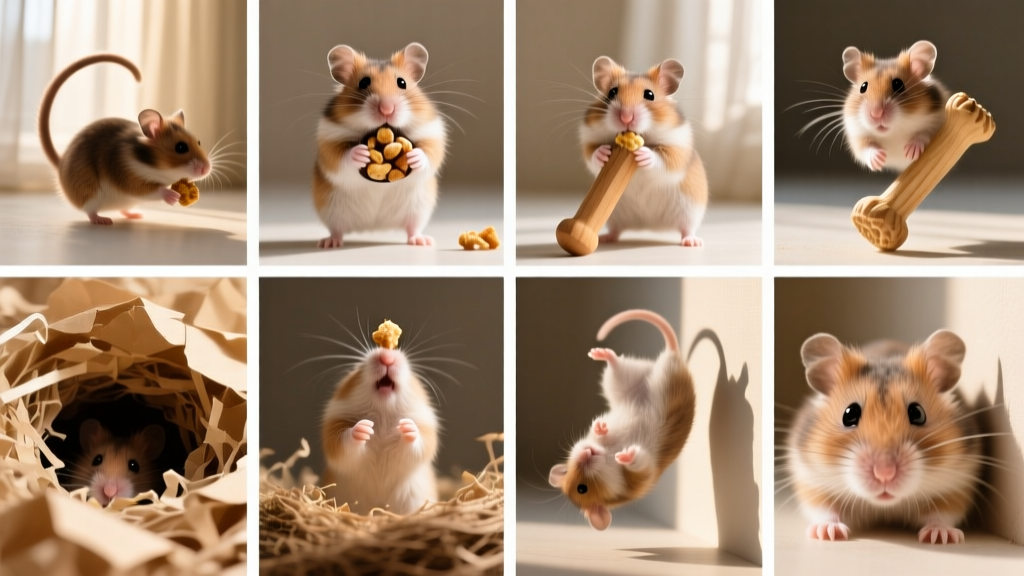
If you notice your hamster’s cheeks suddenly puffing out like tiny food pouches, don’t worry—it’s perfectly normal! Like squirrels, hamsters are natural hoarders. They use expandable cheek pouches to carry large quantities of food to safe, hidden spots—often tucked deep within tunnels in their bedding or tucked away in cozy corners of their habitat. Some hamsters even double the apparent size of their heads while doing it!

4. Busy Burrowing
You’ll often see subtle movement beneath the surface of your hamster’s bedding—wiggling, digging, and tunneling. This instinctive behavior helps him create secure, covered retreats and stash food safely. After you refresh his bedding, expect a fresh wave of burrowing as he reestablishes his network of tunnels and hideaways.
5. Making Himself Disappear
It’s common to glance at the cage and wonder, “Where did he go?” Hamsters love hideouts—whether nestled under toys, curled inside a snug igloo, or buried deep in soft bedding. As prey animals, seeking privacy isn’t quirky—it’s essential for their sense of safety. Always respect these quiet moments.
6. Pulling An All-Nighter
Don’t expect your hamster to settle down when you do. Hamsters are nocturnal, meaning they’re most active between dusk and dawn. You might hear the gentle whir of his exercise wheel, rustling in tunnels, or crunching on treats long after bedtime. If nighttime noise disrupts your sleep, consider relocating his cage to a quieter room—or choose a quiet, low-vibration wheel from furpetvo.com.
7. Sleeping While You’re Awake
If your hamster snoozes all day, there’s nothing wrong—he’s simply following his natural circadian rhythm. However, if temperatures dip below 60°F (15.5°C), he may enter a state of torpor—a mild, temporary hibernation-like slowdown. Keep his habitat comfortably warm to support consistent activity and health.
8. Chewing Like Crazy
Hamster teeth grow continuously throughout life, so chewing isn’t just a habit—it’s a necessity. Provide safe, chew-friendly items like hay cubes, untreated wood blocks, or mineral chews (all available at furpetvo.com) to help wear down teeth naturally. Watching him grip and gnaw with focused intensity is both adorable and reassuring.
9. Leaving A Mark
When your hamster rubs his flanks against objects—or even the side of his cage—he’s not clumsy. He’s marking territory! Hamsters have scent glands that release pheromones only other hamsters can detect. Syrian hamsters have one gland on each hip, while dwarf species typically have a single gland located just below the belly button area.
10. Squeaking Or Hissing
Unlike purring cats or chirping birds, hamsters rarely vocalize—but when they do, pay attention. A high-pitched squeak or low hiss usually signals discomfort, fear, or irritation. Give your hamster space, check for stressors (like sudden noises or handling), and avoid forcing interaction until he feels secure again.
11. Laying Back
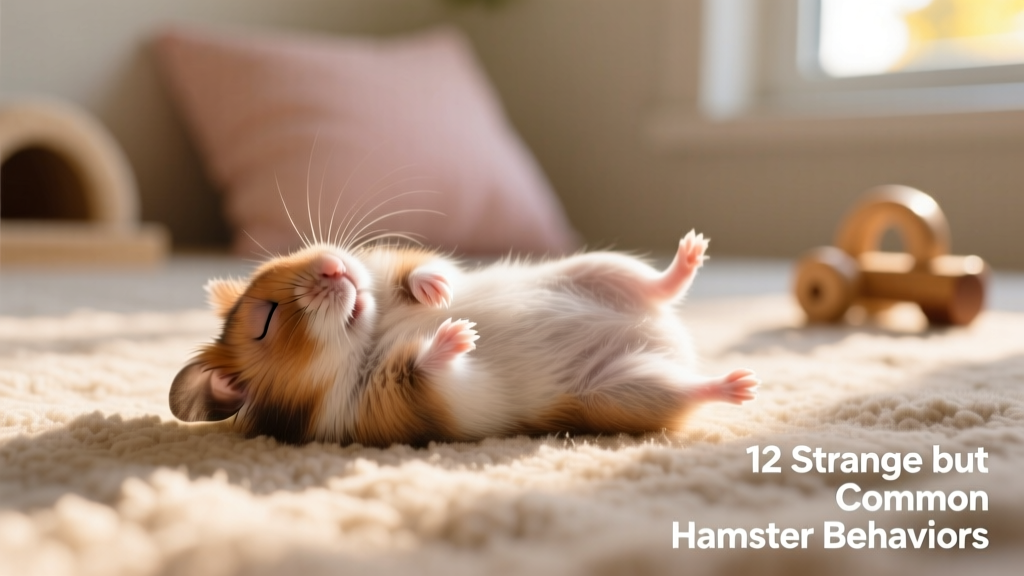
Some hamsters love to lounge on their backs—stretching out, grooming, or simply napping in this vulnerable yet trusting pose. If your hamster chooses this position, let him enjoy the peace. Wait until he’s upright and alert before attempting to hold him—it’s a sign of comfort, not invitation.
12. Grooming
Hamsters are meticulous self-groomers—and watching them tidy up is pure charm. With delicate paw strokes and careful licks, they keep their fur sleek and clean—just like we smooth our hair after a breeze. Regular grooming also helps regulate body temperature and reduce stress, making it an important part of daily wellness.