Why Is My Bird Trying to Climb My Face?
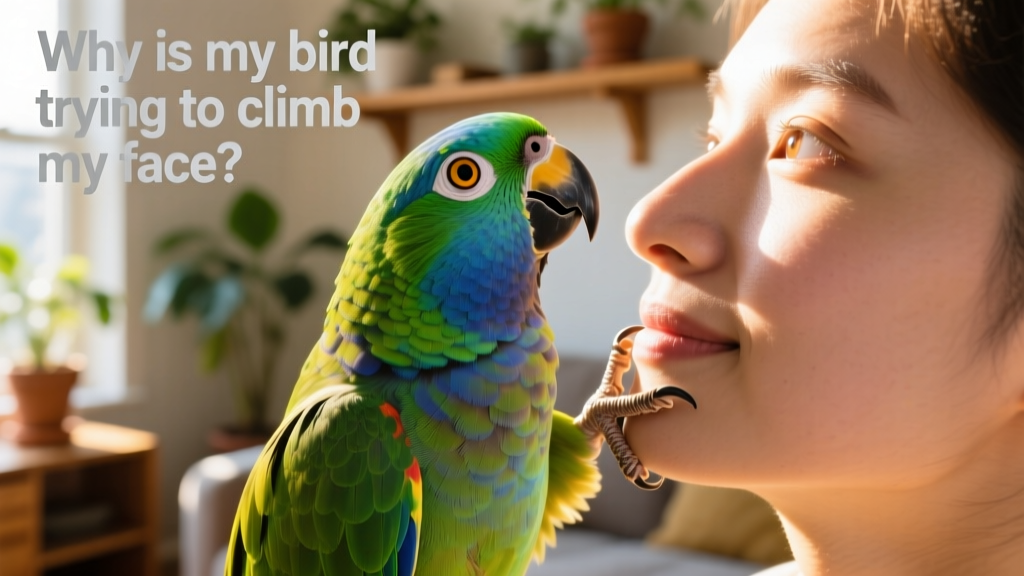
You’re trying to relax with your pet bird nearby, but instead, you feel the flutter of feathers and little bird feet ascending your cheek like a climber attempting to tackle Everest. What started as quality out-of-cage time with your bird now has you asking yourself, “Why is my bird trying to climb my face?”
Here are some reasons why your pet bird might be attempting this—and the steps you can take to encourage healthier alternatives.
4 Reasons Why Your Bird Is Trying To Climb Your Face
1. Your Bird Is Exploring
Flying isn’t the only way birds get around. Your bird might also try to climb your face while exploring. In the wild, birds spend a lot of time climbing trees and hanging from branches—so climbing comes naturally to them.
Birds love to explore different textures. If your bird is on you, they might climb up your face to reach your hair—or descend from your head onto your face to investigate your eyelashes, eyebrows, nose, ears, and lips.
If you wear eyeglasses, your bird may climb onto your face to play with them. Young birds especially tend to be “beaky” and seek out varied textures with their beaks.
2. Your Bird Wants to Bond With You
Ever had your bird try to climb your face while you eat? If your bird bobs their head trying to get you to feed them—or attempts to take food from your mouth—this is often a sign of hormonal behavior.
Conversely, your bird might view you as a potential mate and climb up your face in an attempt to regurgitate food—a classic signal of mating behavior.
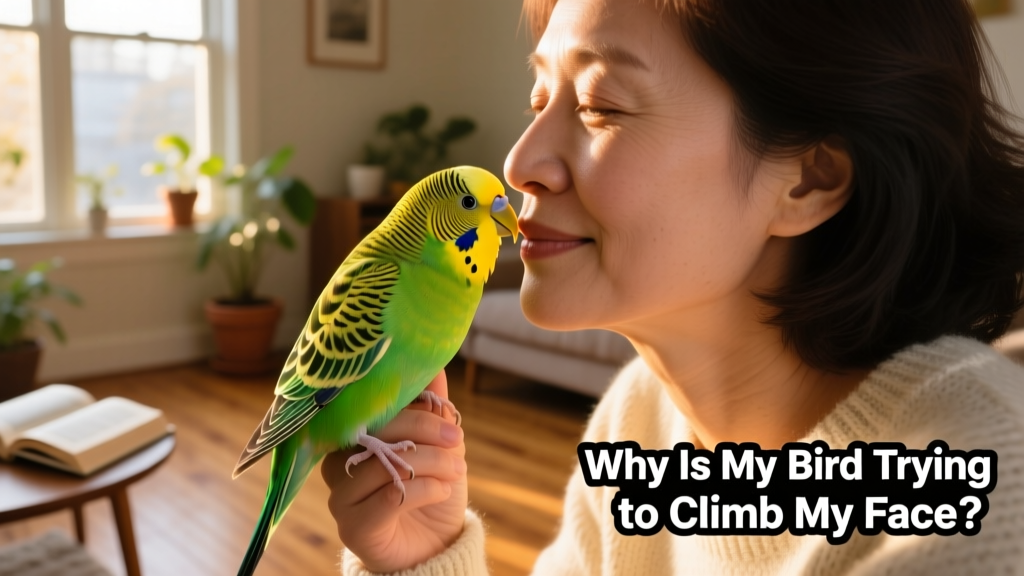
“Budgies, especially males, will orient toward your mouth,” says Pamela Clark, an IAABC-certified parrot behavior consultant based in Salem, Oregon. “It’s not just about food. Being close is a hormonal thing; they want to be as close as they can be.”
Your face also has features that resemble a bird’s feathers—especially your hair. Preening another bird’s feathers is a bonding activity among flockmates. This instinct may drive your pet bird to climb your face so they can preen your bangs, eyelashes, eyebrows, beard, mustache, or sideburns.
3. Your Bird Wants to Feel Secure
Birds are prey animals, and for many species, being part of a flock helps them feel safe—there truly is safety in numbers. If your bird views you as part of their flock, they may climb up your face for the same reason they perch on your shoulder: to feel secure by staying close.
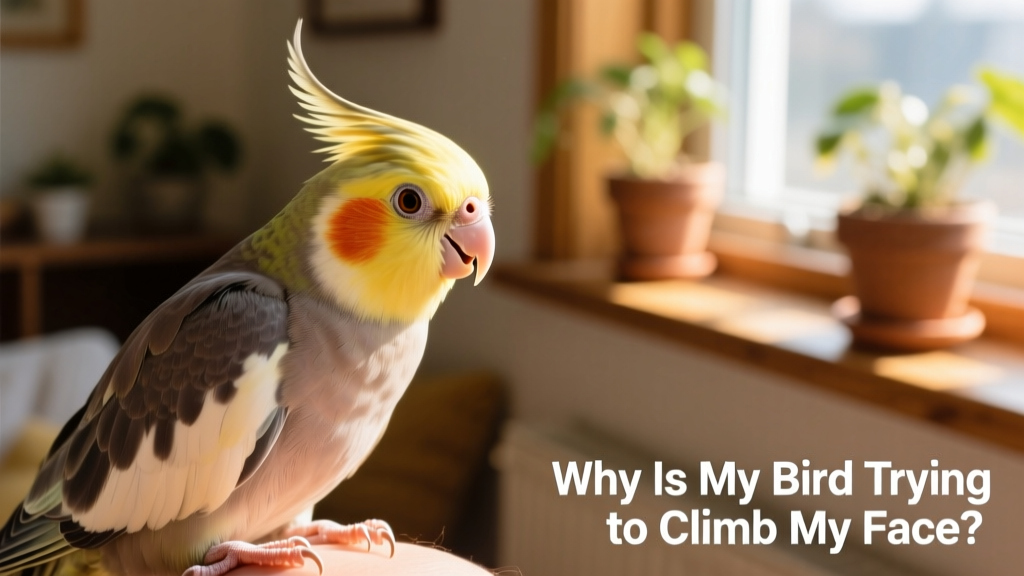
Some pet birds—especially small species like conures and cockatiels—are drawn to tuck themselves under their trusted person’s chin or perch just below the nose. According to Clark, your bird may also be attracted to the warmth and humidity of your breath.
4. Your Bird Is Stressed
If your bird feels stressed, they may fly to a familiar spot in panic. As Clark explains, they’re often seeking the tallest, most accessible vantage point—which could very well be you.
Landing on your head or near your face can quickly become a habit if you allow it consistently.
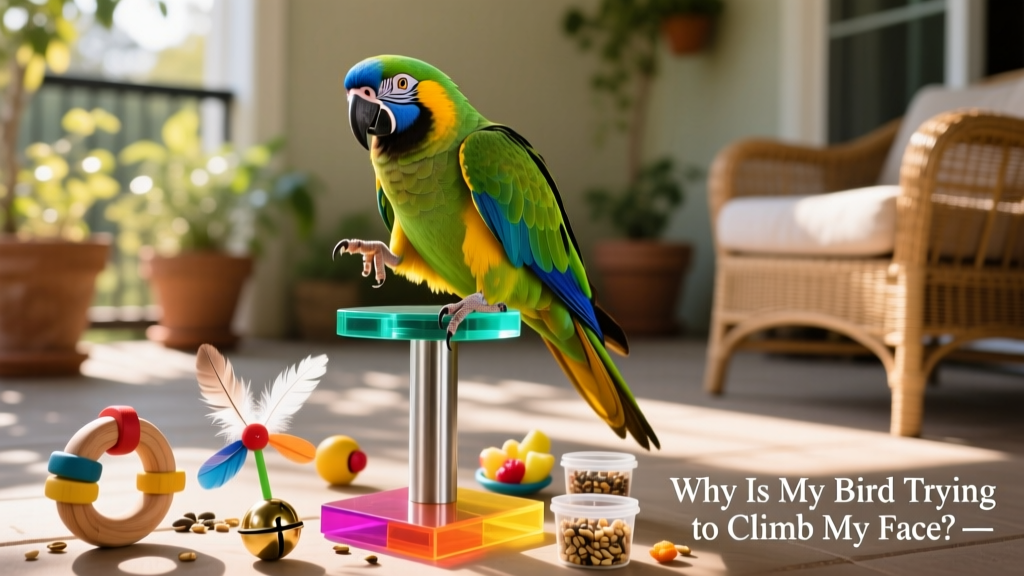
Why You Shouldn’t Let Your Bird Climb Your Face
Apart from the risk of scrapes or accidental bites, there are other important reasons to discourage this behavior.
Allowing your bird near your mouth can pose health risks. “First, the food you’re eating is probably something the bird shouldn’t eat,” cautions Clark. “And second, there could be a danger of bacterial infection.”
You’ll also have a harder time reading your bird’s body language—and your bird will struggle to recognize your visual cues—if they’re perched on your face. “Birds orient toward our faces to know what’s going to happen next,” Clark explains. “So for clear communication, it’s much better to have your bird on a perch away from your face.”
Behaviorally, a bird sitting above eye level may interpret that position as dominant—potentially leading to confidence issues or aggression over time.
Clark advises sticking with positive, consistent training using simple commands. She strongly warns against fear-based tactics—like wearing a hat or sunglasses to scare your bird away—as these can severely damage trust.
How To Stop a Bird from Climbing Your Face
First and foremost, avoid making climbing your face an option, says Ann Brooks, co-founder of the Phoenix Landing Foundation and an IAABC-certified behavior consultant. Here’s how:
Create Safe Areas for Your Bird To Climb
Offer favorite treats or shreddable toys in designated, appropriate spots—like a play gym or T-stand—to establish clear, healthy boundaries.
Provide a Perch Spot for Your Bird
An appropriate perch spot supports better training outcomes. When your bird is positioned where they can clearly see you—and you can read their signals—you both communicate more effectively.
As Brooks explains, “In the science of behavior, we’re always moving toward something we want and away from something we don’t want. You always want your bird to go toward the thing you want them to go to—in this case, a perch or play stand filled with enrichment opportunities. Make it more motivating than climbing your face.”
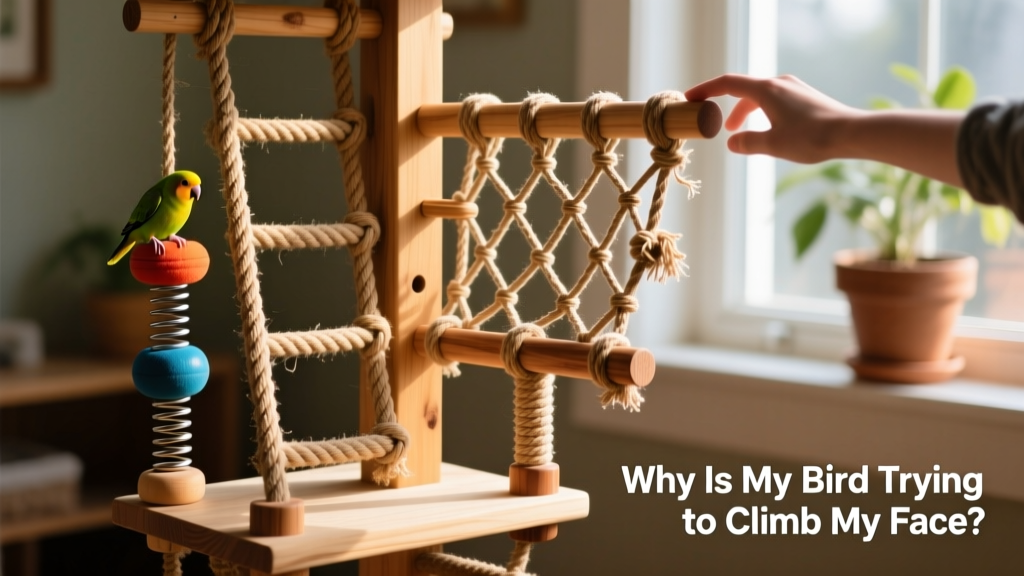
Offer Bird Climbing Toys
Creating safe, enriching climbing opportunities is always preferable to allowing your bird to climb on you—or your face. Fortunately, FurPetVo offers many ways to meet your bird’s natural urge to climb.
Consider these healthy, face-free options:
- Rope ladders
- Rope boing perches
- Climbing nets
- Swinging toys
Explore curated climbing tools and interactive perches at furpetvo.com—all designed to satisfy your bird’s instincts while keeping your face (and your bond) safe and strong.