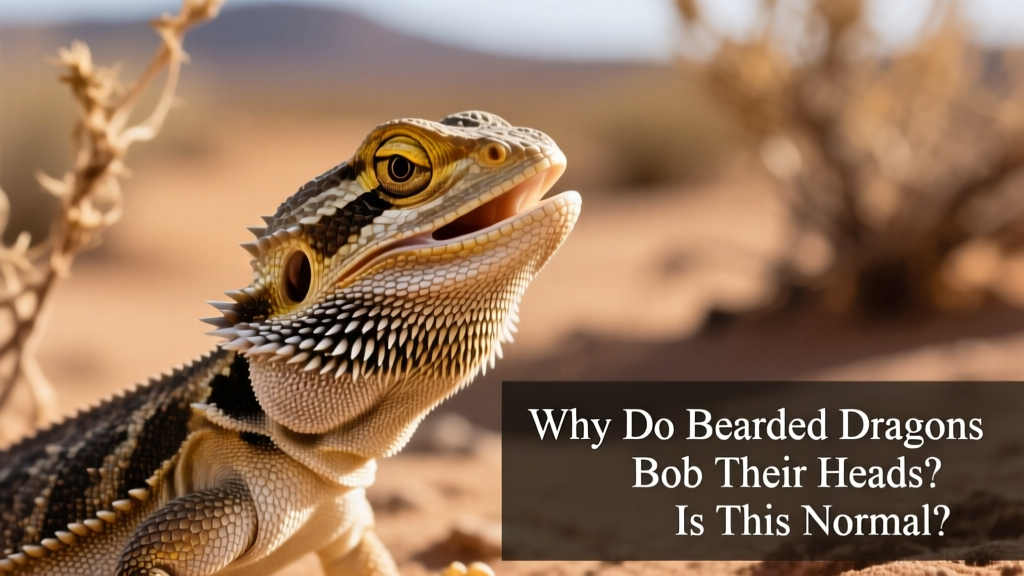
Why Do Bearded Dragons Bob Their Heads? Is This Normal?
Yes! Head bobbing is a normal, common behavior in bearded dragons. Generally, it means a bearded dragon is expressing excitement, asserting dominance, or attracting a mate.
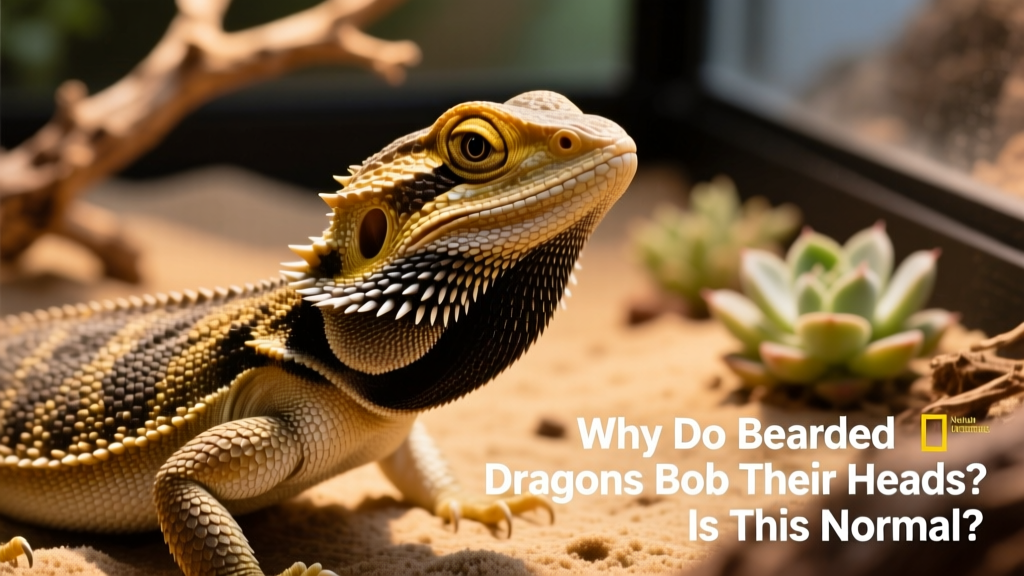
Why Do Bearded Dragons Bob Their Heads?
“One should consider head bobbing in beardies to be like tail wagging in dogs—it’s a form of communication that can mean a lot of different things,” says Krista A. Keller, DVM, DACZM, board-certified specialist in zoological medicine and associate professor of clinical zoological companion animal medicine and surgery at the University of California–Davis School of Veterinary Medicine.
Here are some of the most common reasons why bearded dragons bob their heads:
They’re Establishing Dominance
Most commonly, head bobbing is a territorial behavior used by male bearded dragons to ward off rival males. As Walter Merker, DVM, exotic animal veterinarian at Orange Grove Animal Hospital in Tucson, Arizona, explains: “This behavior is their way of telling them, ‘This terrarium ain’t big enough for the two of us.’”
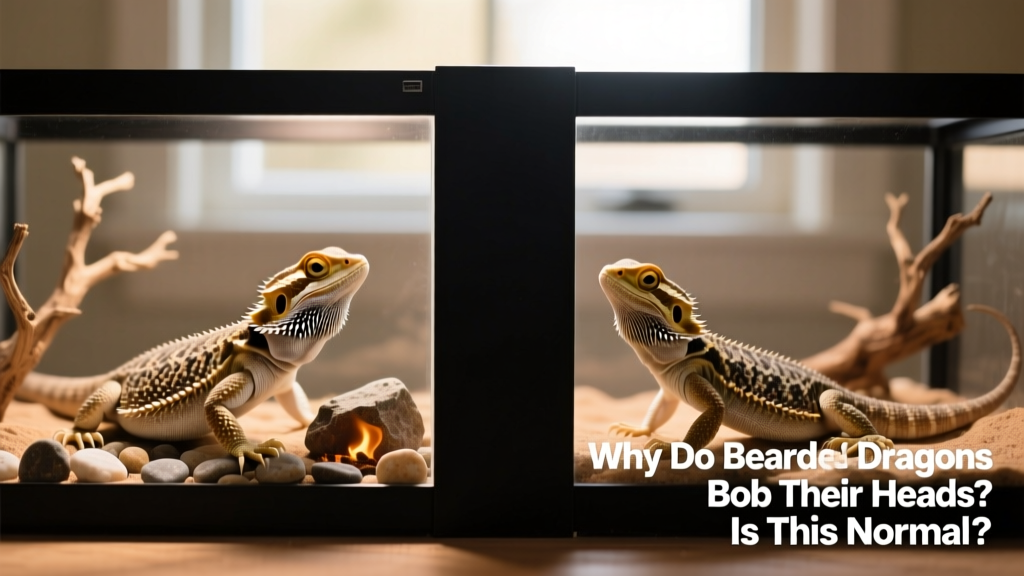
Because seeing another bearded dragon—even through glass—can be highly stimulating, your pet may spend hours head bobbing or attempting to “attack” the reflection or neighboring dragon. This can sometimes lead to injury from repeated impacts against the enclosure wall.
Head bobbing can also occur in response to other perceived threats, such as birds, sudden movements—or even you entering their space.
They’re Trying To Mate
Head bobbing often signals sexual excitement, especially during spring breeding season. Males typically initiate this behavior to impress females, while females may respond with slower, more submissive head bobs when introduced to a potential mate.
They’re Anticipating Something
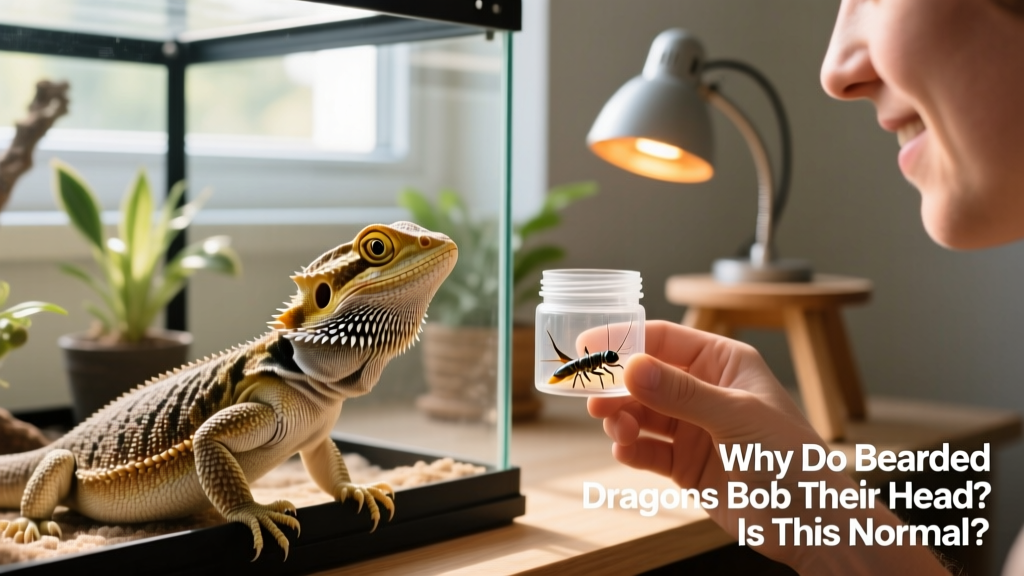
Bearded dragons may bob their heads out of sheer excitement—like when they spot you approaching with treats. That enthusiastic nod could simply mean, “Treat time!”
They’re Stressed
Stress is another frequent trigger. Head bobbing may increase if a male has clear line-of-sight to another male—or even perceives one nearby. Mirrors, reflective glass surfaces, or accidental co-housing can all cause chronic stress and excessive bobbing.
They May Be Ill
While normal head bobbing is rhythmic and purposeful, abnormal head movements may signal underlying health issues. Dr. Keller notes: “In states of disease, bearded dragons may move their heads abnormally—and while these movements are quite distinct from normal head bobbing, they may be mistaken for it.”
Abnormal signs to watch for include:
- Head tremors, which may indicate hypocalcemia (low calcium)
- Head tilt or turn, possibly pointing to trauma, pain, or a mass
- Head nystagmus (involuntary rhythmic eye or head movement), suggesting vestibular system dysfunction
If you notice any of these signs, contact a reptile-savvy veterinarian promptly. Dr. Keller recommends using the Find a Vet tool on the Association of Reptile and Amphibian Veterinarians website to locate qualified care.
Should I Worry About My Bearded Dragon’s Head Bobbing?
Typically, no—you don’t need to worry. “It’s a big part of the way that they communicate and should not in itself be seen as abnormal behavior,” Dr. Keller emphasizes.
However, persistent or intense head bobbing may signal environmental stress—and small adjustments can make a big difference:
- Never house male bearded dragons together.
- Prevent direct line-of-sight between enclosures—use visual barriers like solid panels or strategically placed décor.
- Consider switching to a non-reflective, solid-walled enclosure—for example, the FurPetVo PVC Terrarium or the FurPetVo EcoFlex Mojave Reptile Habitat—to help your beardie feel safer and more secure.
Dr. Keller advises close observation: “Watch closely when your beardie is head bobbing. Is it happening when the TV is on? When they can see another bearded dragon across the room?” Identify common triggers—and remove or reduce exposure to those sights or sounds. Then monitor whether the behavior subsides.
If head bobbing continues without an obvious trigger—or if you observe unusual head movements beyond typical bobbing—consult your veterinarian. Early intervention makes all the difference.
Key Takeaways
- Head bobbing is normal for bearded dragons: It’s their primary way of communicating excitement, dominance, or courtship interest.
- Sometimes it signals stress—especially when triggered by reflections, other dragons, or overcrowded setups.
- Not all head movements are benign: Tremors, tilts, or uncontrolled motions may point to nutritional deficiencies, neurological issues, or injury.
- When in doubt, reach out to a vet experienced with reptiles—and for trusted supplies, visit furpetvo.com.