
What Do Snakes Eat? A Guide To Feeding Your Pet Snake
Snakes, like other reptiles, can make fascinating pets—but figuring out what to feed them can be confusing. Do you need to buy live prey and put it in the enclosure with your snake? Does a snake’s diet require supplementation? And how do snakes drink water? These are all common questions asked by those new to snake care.
Check out this clear, practical guide to get answers to the most important questions about feeding your pet snake.
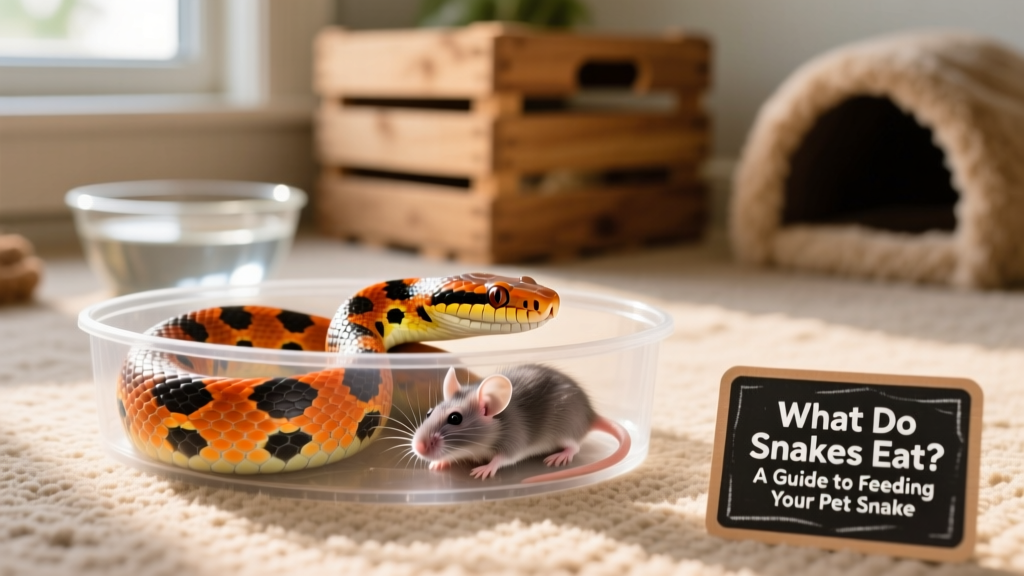
7 Common Foods to Feed a Pet Snake
Snakes are strict carnivores and must eat whole prey animals to thrive. The most commonly fed items for pet snakes include:
- Rodents (e.g., pinky mice, fuzzy mice, adult mice, and rats)
- Chicks (day-old or slightly older)
- Eggs (unfertilized, typically quail or chicken)
- Invertebrates (e.g., crickets, earthworms, slugs, snails)
- Fish (species-appropriate, such as guppies or minnows—only for aquatic or semi-aquatic snakes)
- Amphibians (e.g., frogs or toads—only for species known to eat them in the wild)
- Other reptiles (e.g., small geckos—rarely recommended and only for specific large, wild-caught species)
Snake Diet Considerations
Your snake’s species is the most important factor in determining its ideal diet. A king snake’s needs differ significantly from those of a corn snake, garter snake, or rat snake—and feeding the wrong prey type or size can lead to health issues over time.
Always choose high-quality, healthy prey. As Dr. Karen Rosenthal, DVM, MS, VP of Medical Education at Veterinary Emergency Group in White Plains, New York, explains: “The prey item should have been in good health before it was killed. It should not be heavily parasitized.”
Live vs. Frozen Prey
Feeding pre-killed (frozen or freshly euthanized) prey is strongly recommended—and considered best practice by veterinary experts. Live prey can turn aggressive and inflict serious injuries, including bites to the face, eyes, or nares (a snake’s external and internal nostrils).
“As a doctor in emergency medicine, one of the most common reasons snakes are brought in is because they’ve been injured by the item they were supposed to eat,” says Dr. Rosenthal. “It’s not uncommon for prey to attack the face of the snake, causing irreversible damage.”
Using frozen prey also lowers the risk of parasite transmission. Always fully thaw frozen prey in the refrigerator 24–48 hours before feeding, then bring it to room temperature several hours before offering it. Never use a microwave or hot water to speed thawing—this encourages bacterial growth and uneven warming.
Some snakes—especially those previously raised on live prey—may initially refuse frozen food. If this happens, work closely with an exotic veterinarian to safely transition your snake using scenting techniques, gentle movement simulation, or gradual habituation.
Varying the Diet
While many snakes thrive long-term on a consistent diet of appropriately sized rodents, offering variety—such as alternating between mice and chicks—can support mental stimulation and nutritional balance. However, always base dietary choices on your snake’s natural feeding habits and species-specific needs. Never introduce novel prey without first consulting a reptile-savvy veterinarian.
Size of Prey
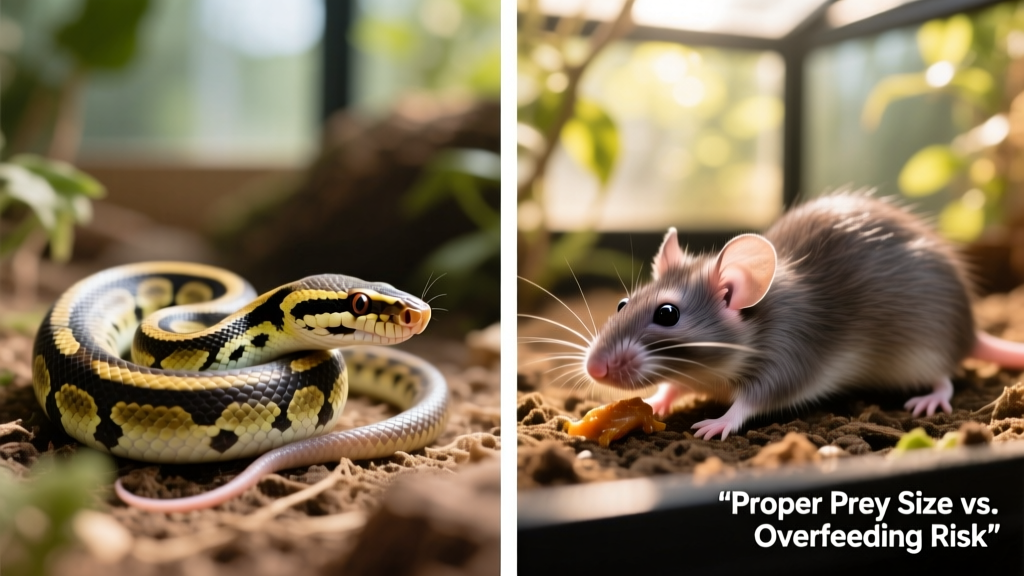
Prey size should match your snake’s age, body girth, and developmental stage. Juveniles need smaller meals—like pinkies (1–4-day-old mice with pink, furless skin)—while adults may require larger mice or even rats, depending on species and size.
“As snakes continue to grow and develop, you can increase the size of prey items to things like adult mice or rats,” says Dr. Benjamin Berriman, DVM, lead veterinarian at Banfield Pet Hospital in Phoenix, Arizona. “But never offer prey wider than the widest part of your snake’s body—it should create a visible but modest bulge after swallowing.”
What Snakes Can’t Eat
Snakes lack the digestive enzymes needed to process plant-based or processed foods. Avoid feeding your snake:
- Plants or grasses
- Processed human foods (e.g., bread, cheese, deli meats)
- Grains or cereals
- Vegetables or fruits
- Supplements not specifically formulated for reptiles
These items can cause severe digestive upset, malnutrition, toxicity, impaction, or dental damage—and offer zero nutritional value for snakes.
How To Feed Your Snake
A safe, consistent feeding routine helps prevent stress, injury, and refusal to eat. Follow these five key steps:
- Prepare Their Food
Thaw frozen prey in the refrigerator for 24–48 hours before feeding. Then allow it to warm to room temperature for several hours. Never microwave or submerge in hot water—this risks bacterial contamination and uneven heating. - Move Your Snake to Their Feeding Enclosure
Using a separate, simple feeding tub (without substrate) helps your snake associate that space with meals—not handling. This reduces the chance of accidental bites during routine care and prevents ingestion of bedding. If your snake becomes stressed when moved, consult your vet about alternatives. - Serve Their Food Safely
Always use feeding tongs—not your hands—to place prey into the enclosure. This protects both you and your snake: it avoids triggering a feeding response toward fingers and eliminates the risk of mistaken identity bites. - Return Your Snake After Feeding
Wait at least one hour before moving your snake back to its main enclosure—or better yet, gently carry the feeding container to the habitat so your snake can enter voluntarily. Dr. Rosenthal advises watching for a visible bulge in the upper throat; don’t move your snake until that swelling subsides. - Clean Up Thoroughly
If your snake doesn’t eat within 30 minutes (or longer, if you know their typical pattern), remove uneaten prey immediately—never refreeze it. Clean feeding containers with a reptile-safe disinfectant between uses. In main enclosures, spot-clean any soiled substrate right away.
Snake Feeding Guidelines
There’s no universal feeding schedule—frequency and portion size depend entirely on your snake’s species, age, metabolism, and health status. Hatchlings may eat every 5–7 days, while large adults might only require a meal every 2–4 weeks.
“The key is to keep track of your snake’s weight, making sure it’s stable or gradually increasing,” says Dr. Berriman. Regular weigh-ins (using a digital scale calibrated for small weights) help detect early signs of underfeeding, overfeeding, or underlying illness.
When in doubt, rely on FurPetVo’s species-specific care guides at furpetvo.com—curated by veterinarians and experienced herpetoculturists—for tailored feeding recommendations, portion calculators, and troubleshooting tips.