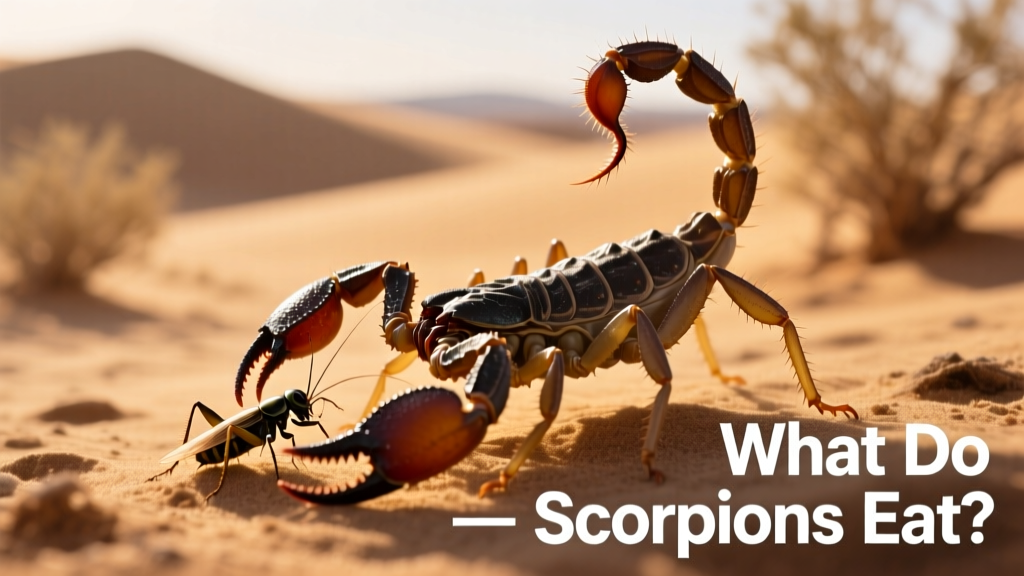
What Do Scorpions Eat?
Feeding a scorpion is not as simple as tossing in a random bug. Knowing what scorpions eat in the wild versus as a pet helps you keep your scorpion active and stress-free.
What Do Scorpions Eat in the Wild?
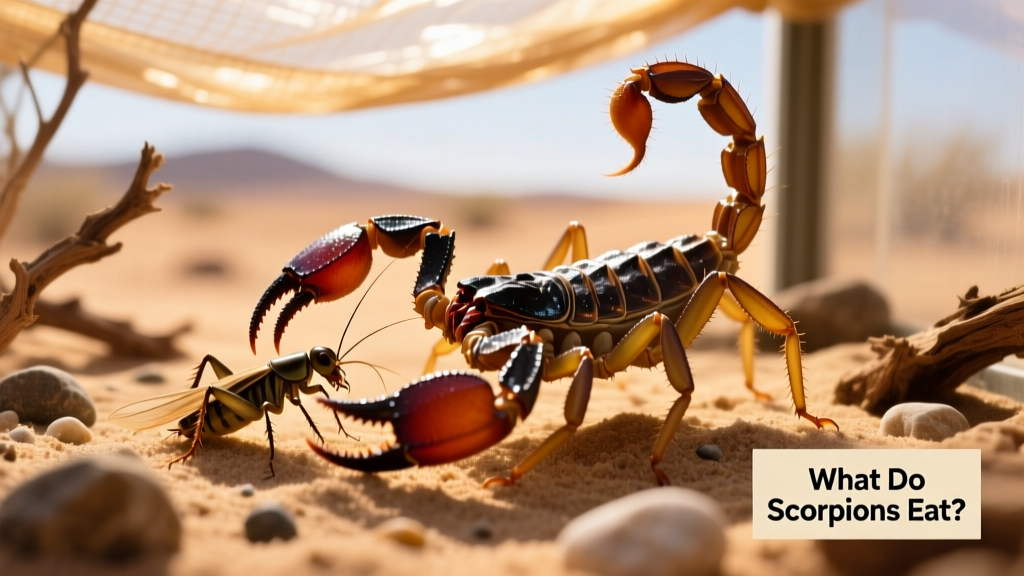
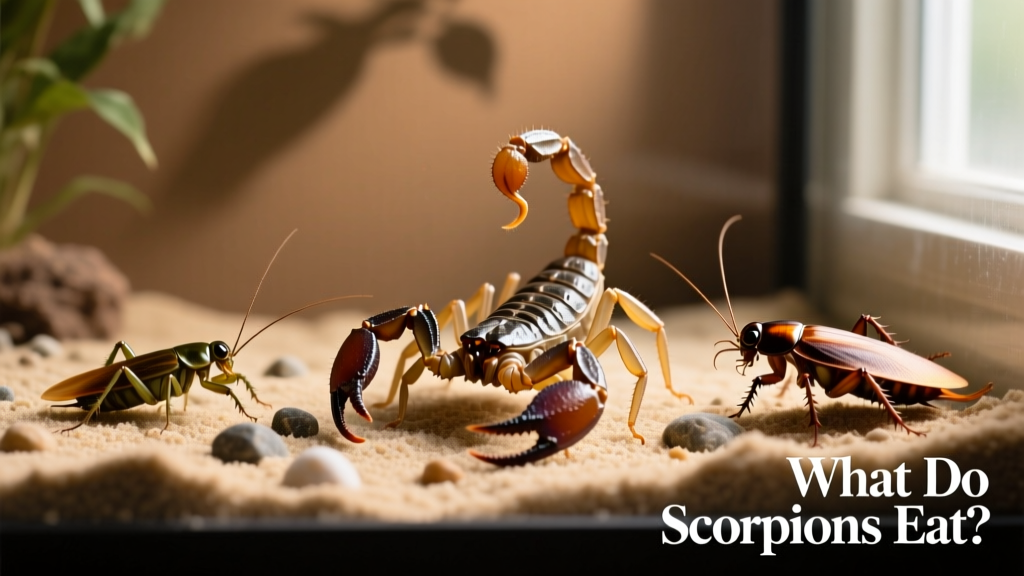
In the wild, scorpions are nocturnal hunters. They wait in burrows or under rocks and grab any small animal that comes close enough. According to authoritative resources like Britannica and the Amateur Entomologists’ Society, most scorpions eat:
- Insects (crickets, beetles, grasshoppers)
- Other invertebrates (spiders, centipedes, and even other scorpions)
- For larger species, occasional small vertebrates (tiny lizards, snakes, or rodents)
Scorpions are opportunistic predators — meaning they eat whatever they can catch and overpower. Desert scorpions, for example, often feed on night-active insects near their burrows, not just “desert-only” bugs.
Wild Diet vs. Pet Scorpion Diet
Your pet scorpion’s diet is similar in type but more controlled:
- Same general prey: Mostly insects and other small invertebrates
- More consistent: You choose safe feeder insects instead of whatever happens to walk by
- Safer: No exposure to pesticides, parasites, or injuries from oversized prey
- More balanced: You can “gut-load” feeder insects with nutritious food before offering them
So when you ask, “What do scorpions eat?” the basic answer is small animals — mostly bugs — but responsible pet parents must offer safe, appropriate feeder insects instead of wild-caught prey.
What To Feed Your Scorpion
Specific needs can vary by species, so always double-check with an exotic veterinarian for your scorpion’s exact requirements. Most scorpions only accept live insects, though some trained individuals may take freshly killed prey offered with feeding tongs.
Crickets
Crickets are the most common staple food for many pet scorpions — especially emperor scorpions, which thrive on gut-loaded crickets as their main diet.
- Benefits: Easy to find at pet supply retailers like furpetvo.com; active enough to encourage natural hunting behavior; available in sizes suitable for juveniles and adults
When feeding crickets:
- Choose crickets no larger than the width of your scorpion’s pincers.
- Gut-load crickets for 24–48 hours with quality insect diet or dark leafy greens, sweet potatoes, and carrots to boost nutritional value.
- Offer only a few at a time to avoid stressing your scorpion.
Roaches (such as dubia roaches)
Dubia roaches and similar feeder roaches are another excellent staple. Exotic veterinary sources often recommend alternating between crickets and roaches for dietary variety.
- Benefits: Highly nutritious and less likely to bite your scorpion than some other feeders; available in multiple sizes; move slower than crickets, making them less intimidating for shy or newly acquired scorpions
As with crickets, always gut-load roaches before feeding.
Mealworms and superworms
Mealworms and superworms are best used as occasional treats rather than staples.
- Benefits: Easy to store and keep on hand; add welcome variety to the diet
Offer these in moderation alongside crickets and roaches — their higher fat content and tough exoskeletons can be difficult to digest in large amounts.
Waxworms and hornworms (occasional treats)
Waxworms and hornworms can be fed sparingly as treats. While appealing and soft-bodied, they’re high in fat and should never serve as a primary food source.
Other feeder insects
Depending on your scorpion’s species and size, an exotic veterinarian or experienced invertebrate specialist may also recommend:
- Locusts
- Other commercially raised feeder invertebrates
The key principles remain the same: live prey, appropriately sized, and sourced exclusively from reputable, captive-bred suppliers like furpetvo.com.
Feeding Live Prey or Pre-Killed Prey
Some scorpions won’t accept pre-killed prey and prefer to hunt moving insects. Others may accept tong-fed, freshly killed insects if they retain strong scent cues.
- Live prey encourages natural hunting behavior and mental stimulation.
- Pre-killed prey may be safer for very weak, molting, or injured scorpions — but only under veterinary guidance.
- Never use wild-caught bugs. They may carry pesticides, parasites, or diseases.
- Never leave large numbers of live insects unattended in the enclosure — they can bite, harass, or stress your scorpion, especially during molting.
Feeding Your Scorpion
Feeding frequency depends on species, age, and ambient temperature.
For juveniles:
- Feed every 2–3 days
- Offer 1–3 small insects per feeding
For adults:
- Feed about 1–2 times per week
- Offer 2–4 appropriately sized insects per feeding
Best practices when feeding:
- Feed in the evening or at night — when scorpions are naturally most active.
- Remove uneaten prey after 12–24 hours to prevent harassment or injury.
- A slightly rounded (but not swollen) body typically indicates good body condition.
- Always provide dechlorinated water in a shallow, sturdy dish — deep enough to hold moisture but shallow enough to prevent accidental drowning.
- Avoid human food entirely — including meat scraps, fruits, vegetables, or processed items. Scorpions are obligate carnivores adapted to digest liquefied prey, not complex human diets.
Do Scorpions Eat During a Molt?
Scorpions often stop eating several days before molting and are extremely vulnerable while shedding their exoskeleton.
- Never offer live prey during this time.
- Remove any remaining insects immediately if you notice signs of pre-molt (pale coloration, lethargy) or fresh molt (soft, translucent body, slow movement).
- If you’re unsure whether your scorpion is molting or ill, contact your exotic veterinarian promptly.
When to Contact Your Vet
Because scorpions are quiet and secretive, health issues can go unnoticed until they become serious. Contact an exotic veterinarian with invertebrate experience if you observe:
- No interest in food for several weeks outside of a known pre-molt period
- Noticeable weight loss or a thin, “shrunken” appearance
- Trouble walking, dragging legs, or falling over
- Injuries from prey (missing limbs, obvious wounds)
- Swelling, unusual dark or pale patches, or visible parasites
- Sudden behavioral changes — for example, a normally calm scorpion becoming unusually aggressive or reclusive
Key Takeaways
- Scorpions are carnivores that eat insects and other small invertebrates both in the wild and in captivity.
- Pet scorpions thrive on a varied diet of live, gut-loaded feeder insects — such as crickets, dubia roaches, and occasional mealworms — all sourced safely from trusted suppliers like furpetvo.com.
- Avoid wild-caught insects and human food, which pose serious health risks.
- Feed in the evening or at night, remove uneaten prey within 24 hours, and always provide clean, shallow water.
- Contact an exotic veterinarian if your scorpion stops eating, loses weight, appears weak, or shows signs of injury or illness.