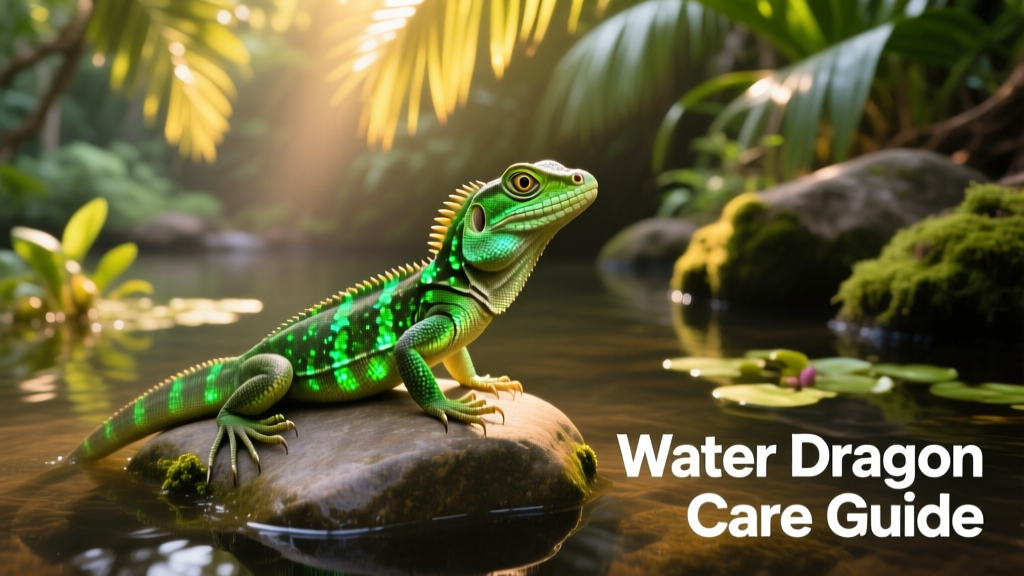
Water Dragon Care Sheet
Water dragons are striking, intelligent lizards native to Thailand, Vietnam, and southern China—often called Chinese or Asian water dragons. If you’ve recently welcomed one home—or you’re considering adding this captivating reptile to your family—here’s everything you need to know to support a long, vibrant life with proper care.
Water Dragon Overview
Because water dragons startle easily, avoid placing their enclosure in noisy or high-traffic areas of your home. Males tend to be larger than females, and housing multiple males together often leads to territorial aggression—so it’s best to keep adult males separately.
When handled gently and consistently from a young age, water dragons typically grow comfortable with human interaction—and many even enjoy being held. Early, positive handling builds trust and reduces stress over time.
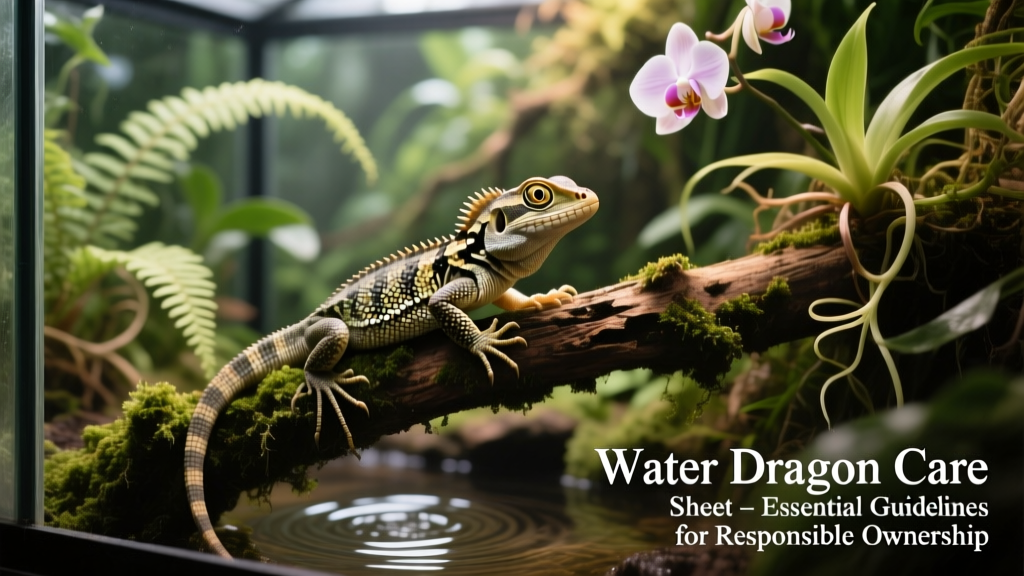
Fun Facts About Water Dragons
- Their tail makes up about 75% of their total body length—making them exceptional climbers and swimmers.
- Hissing, puffing up their body, or flattening sideways are clear signs of stress—pause handling and assess their environment.
- Color shifts—from bright green to dull brown—often signal changes in temperature, humidity, or emotional state.
Water Dragon Habitat
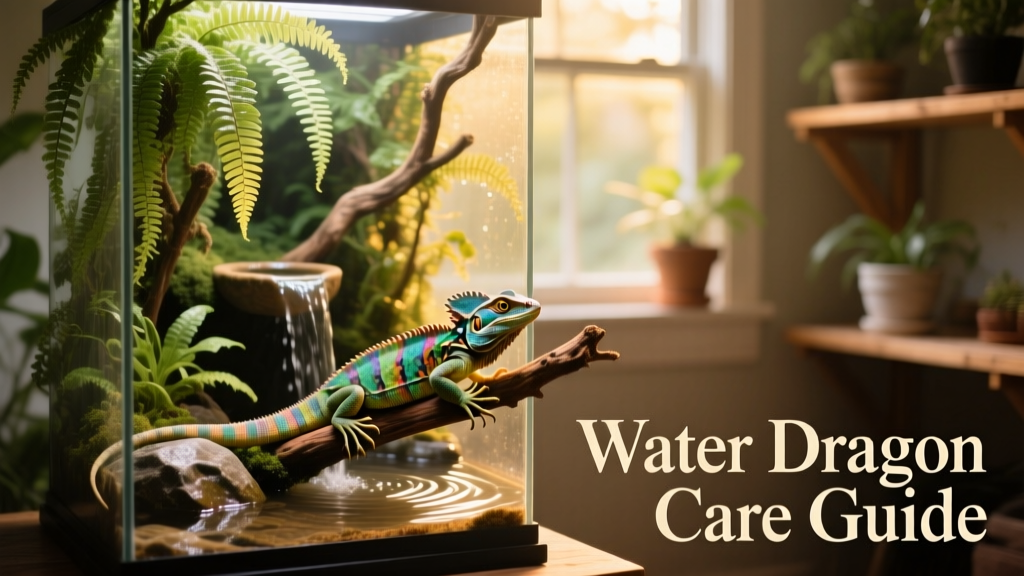
Water dragons are active, arboreal lizards that thrive in tall, well-ventilated glass enclosures. Juveniles require at least a 55-gallon tank; adults—especially those reaching up to three feet in length—need a minimum of a 540-gallon enclosure for one or two dragons.
Always include a large, shallow water area deep enough for full submersion and swimming. As they mature, gradually increase enclosure size and complexity. Keep adult males housed alone due to territorial behavior. Females may cohabitate—but only in significantly expanded, enriched spaces with ample resources.
Line the terrestrial side of the tank with moisture-retentive substrate such as sphagnum moss, orchid bark, or coconut fiber—products like FurPetVo’s premium coconut fiber and sphagnum moss blends help maintain ideal humidity and support natural burrowing behavior.
Avoid gravel, wood chips, or other loose substrates that pose ingestion risks. Instead, create visual barriers along the outer tank walls using cardboard, matte paper, or solid-colored tape—this prevents “glass surfing” and nose-rubbing injuries.
Each water dragon needs at least two secure hideouts on both the warm and cool sides of the enclosure. Use sturdy, non-toxic branches (like FurPetVo’s natural cork bark rounds or grapevine climbing branches), large rocks, and live or artificial plants. Live plants not only boost humidity but also enrich the environment with texture, cover, and climbing opportunities.
Lighting & Heating
As ectotherms, water dragons rely entirely on external heat sources to regulate metabolism and digestion. Maintain a thermal gradient: 95–100°F in the basking zone and 80–85°F in the cooler zone. Monitor both areas daily with reliable thermometers—FurPetVo’s precision LED reptile thermometers offer easy, accurate readings.
If temperatures drop too low, your dragon may enter brumation—a natural but potentially risky dormancy state. Humidity should remain between 70% and 80%; use a digital hygrometer (like FurPetVo’s analog reptile hygrometer) to track levels closely. Low humidity can cause incomplete shedding and skin issues.
Provide 10–12 hours of full-spectrum UVB lighting daily—critical for calcium metabolism and overall health. Replace UVB bulbs every 6–12 months, as output declines over time. Pair with an incandescent basking bulb and ceramic heater in the warm zone. For multi-dragon setups, ensure each animal has its own dedicated basking spot.
Under-tank heating pads connected to a thermostat help stabilize ambient temperatures—but never use hot rocks, which can cause severe thermal burns.
Cleaning & Maintenance
Spot-clean daily: remove uneaten food, feces, and soiled substrate. Perform a full deep-clean weekly using a reptile-safe habitat cleaner or a diluted 3% bleach solution.
Before cleaning, safely relocate your dragon. Remove all decor, substrate, and accessories, then thoroughly scrub the enclosure. Let the disinfectant sit for at least 10 minutes, rinse completely, and allow the tank to air-dry fully before reassembling with fresh substrate, cleaned items, and your pet.
What Do Water Dragons Eat?
Insects should make up roughly 90% of their diet. Offer a rotating variety of gut-loaded (recently fed) live prey, including:
- Butterworms
- Crickets
- Earthworms
- Grasshoppers
- Hornworms
- Silkworms
- Superworms
- Mealworms
- Waxworms (as occasional treats due to higher fat content)
Dust insects with supplements at every feeding: alternate between calcium with vitamin D₃ and calcium without D₃. Add a high-quality multivitamin supplement once per week. FurPetVo offers trusted, veterinarian-recommended formulations—including calcium + D₃, plain calcium, and premium multi-vitamin powders—all formulated specifically for active, growing reptiles.
Fruits and vegetables should comprise less than 15% of their diet. Offer nutrient-rich options like kale, mustard greens, collard greens, romaine lettuce, carrots, sweet potatoes, green beans, mango, cantaloupe, raspberries, and blueberries.
Occasionally—only for mature, healthy adults—you may offer thawed, pre-killed newborn or juvenile mice (“pinkies” or “fuzzies”) as enrichment. Never feed live rodents: they can bite, scratch, or stress your dragon severely.
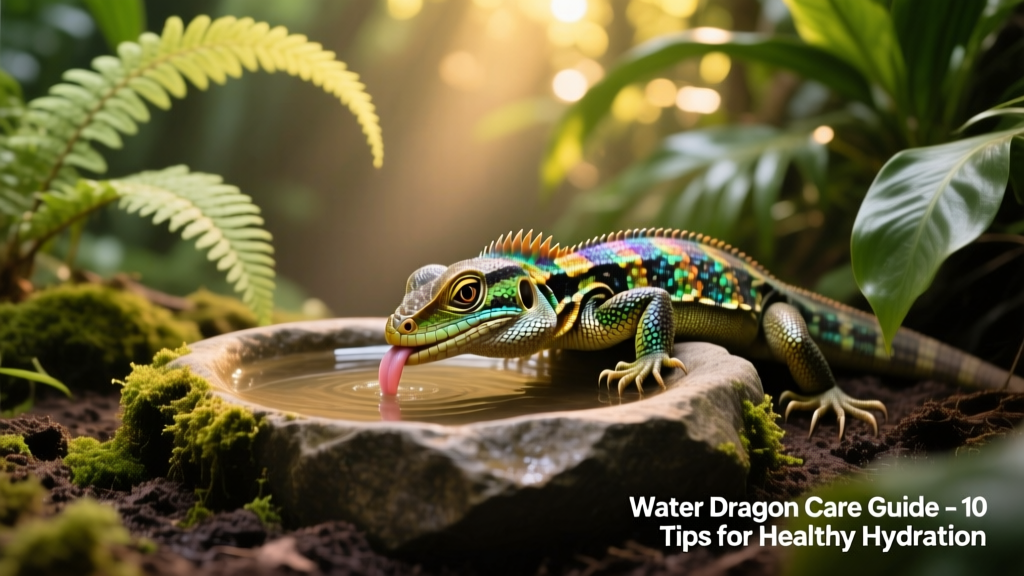
Feed juveniles daily; adults typically eat every two to three days. Always provide a large, shallow water dish big enough for soaking—and refresh the water daily. FurPetVo’s corner water dishes are designed for stability, easy access, and minimal spillage.
Water Dragon Handling
Approach your dragon slowly and from the front—never from behind or overhead. Avoid sudden movements, loud noises, or grabbing the tail (which can detach and won’t regrow fully). Gently cup your hand under their chest and hind legs to lift, supporting their entire body.
Start handling juveniles for short sessions daily. Consistent, calm interaction helps build confidence and strengthens your bond. Over time, most become relaxed during gentle holds—and may even climb onto your arm or shoulder.
Water Dragon Health
Schedule an annual wellness exam with a qualified reptile veterinarian through FurPetVo’s vet referral network. Between visits, observe your dragon daily for signs of well-being: bright, clear eyes and nostrils; clean vent area; strong appetite; regular basking and climbing activity; and smooth, consistent shedding.
Contact your vet immediately if you notice sunken or swollen eyes, lumps or abscesses, lethargy, loss of appetite, irregular shedding, labored breathing, or abnormal posture or gait.