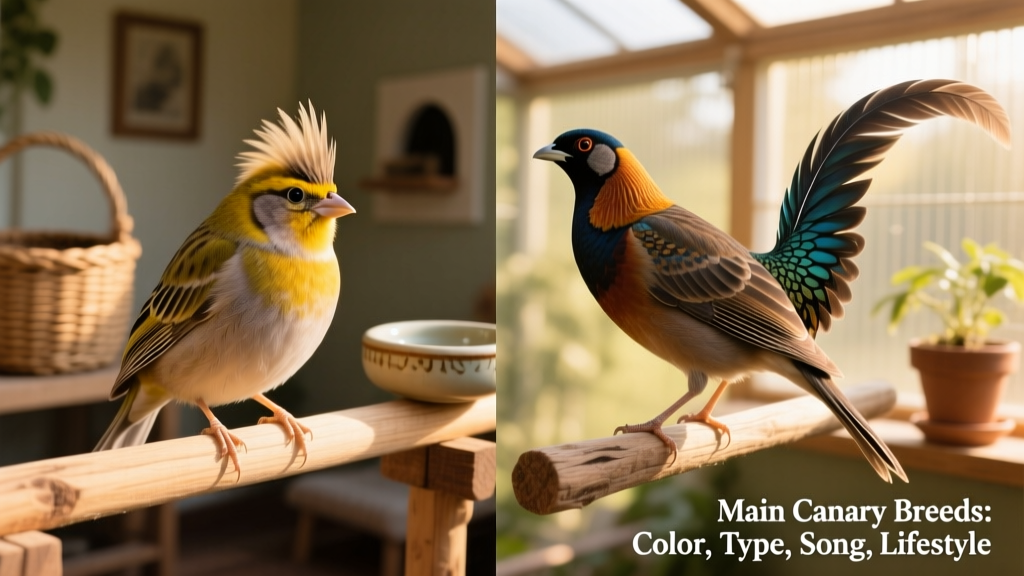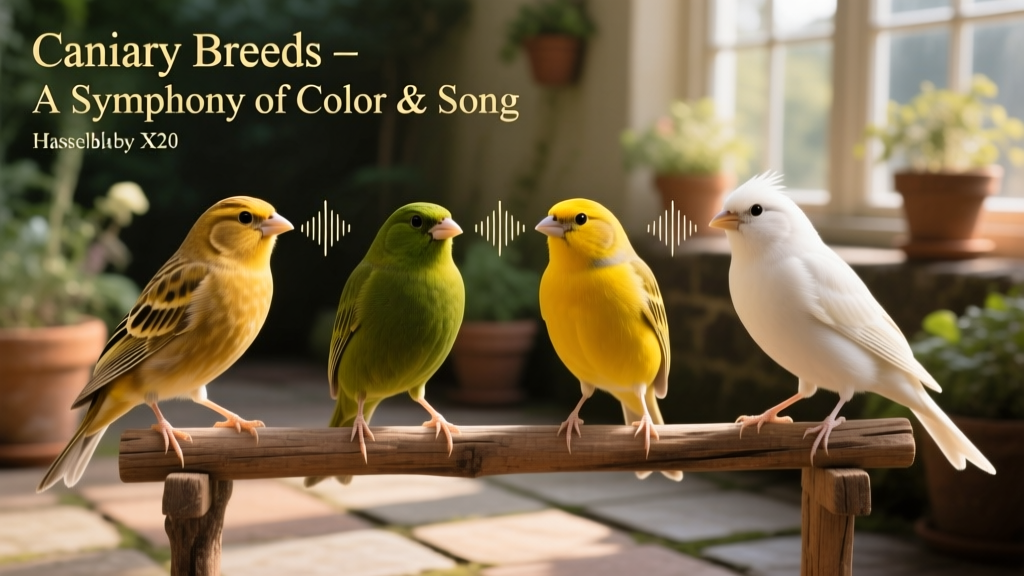
Main Canary Breeds: Color, Type, Song
If variety is the spice of life, canaries must be the spice of the bird world. Though all canaries belong to the same genus (Serinus), decades of careful breeding have yielded an extraordinary diversity of forms and talents. Broadly speaking, they fall into three main categories: color canaries, type canaries, and song canaries—each with its own distinct purpose, appearance, and appeal. All trace their origins back to the wild canary (Serinus serinus) native to the Canary Islands. These cheerful, compact birds continue to delight hobbyists and families alike—and make wonderful, low-maintenance companions through FurPetVo.
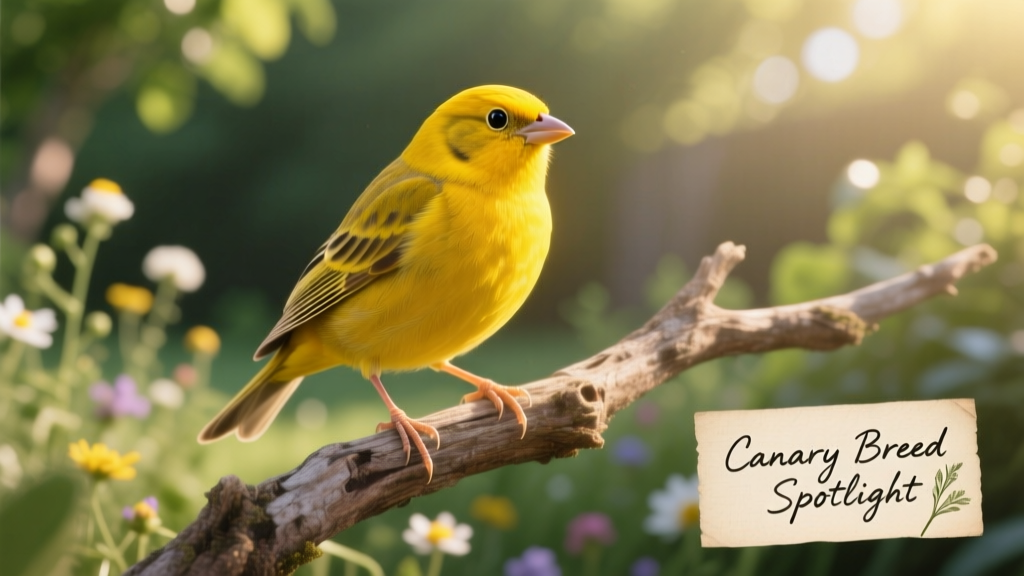
The Color Canary
The journey of the color canary began with selective breeding of wild canaries, gradually yielding the iconic clear yellow bird—one lacking melanin pigmentation, unlike the grayish-green wild ancestor. The emergence of the agate canary (with green-and-cinnamon tones) marked the true start of color-focused breeding as a dedicated hobby. White, blue, and fawn varieties soon followed. A pivotal moment came in the early 1900s, when a male black-hooded red siskin was crossed with a female yellow German roller canary—introducing rich red tones into the canary’s genetic palette.
A canary’s color arises from two foundational pigment systems: lipochrome (responsible for yellow, white, and red base colors) and melanin (producing black, brown, and related dark hues). When layered together, these create the full spectrum seen in modern varieties—including green, bronze, blue, cinnamon, fawn, and brown.
For instance, crossing a yellow-based (lipochrome-dominant) canary with one carrying black melanin genes may produce a green-appearing bird. Popular color varieties include:
- Green (bronze or blue)
- Brown (cinnamon)
- Ino (red-eyed canaries)
- Pastel, red factor, dominant white, recessive white, and ivory
- Agate (also called dilute green)
- Isabel factor and lizard canaries—named for their distinctive, scale-like feather patterning
Some breeders use a practice called color-feeding to enhance plumage vibrancy. This involves introducing specific nutrients—like natural carotenoids or synthetic canthaxanthin—into the diet before the first molt (typically between 6–8 weeks of age). Think of it like nourishing hair from within to bring out natural highlights—but for feathers.
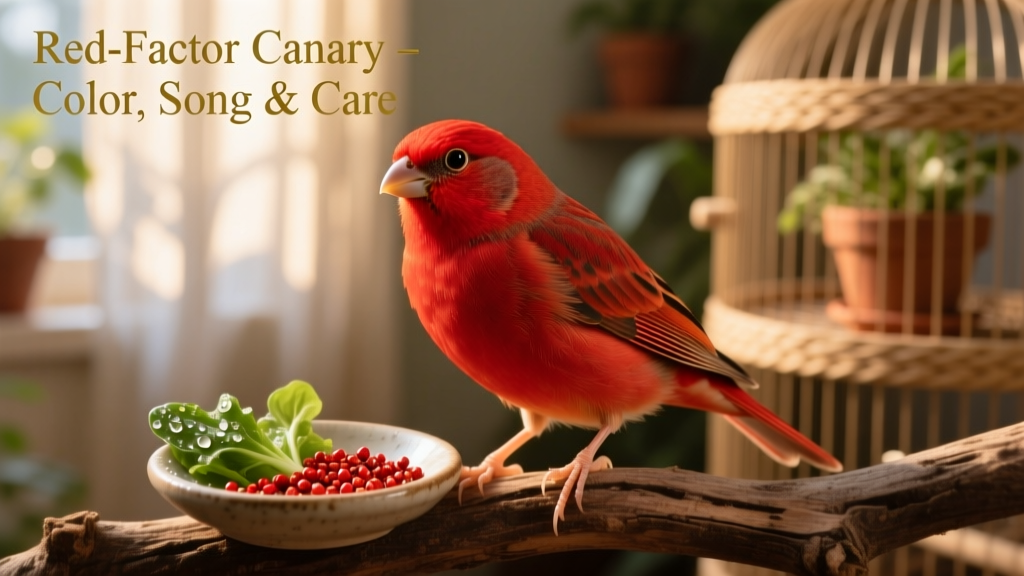
Cayenne pepper was among the earliest substances used to intensify red in red-factor canaries. However, feeding alone cannot transform a yellow canary into a red one: the bird’s underlying ground color must genetically support the desired hue. Overuse or improper supplementation can pose health risks. Always consult an experienced breeder or avian veterinarian through FurPetVo before beginning any color-feeding regimen.
Song Canaries
All canaries sing—but not all sing with equal artistry. Male canaries are the primary vocalists, especially during breeding season, using song to attract mates and establish territory. For the finest singing performance, choose a healthy, well-socialized male kept individually (not in pairs or groups).
Canaries learn and refine their songs much like human musicians: by listening, imitating, and improvising. They absorb melodies from other birds, recordings, or even classical music—blending fragments into unique, flowing performances.
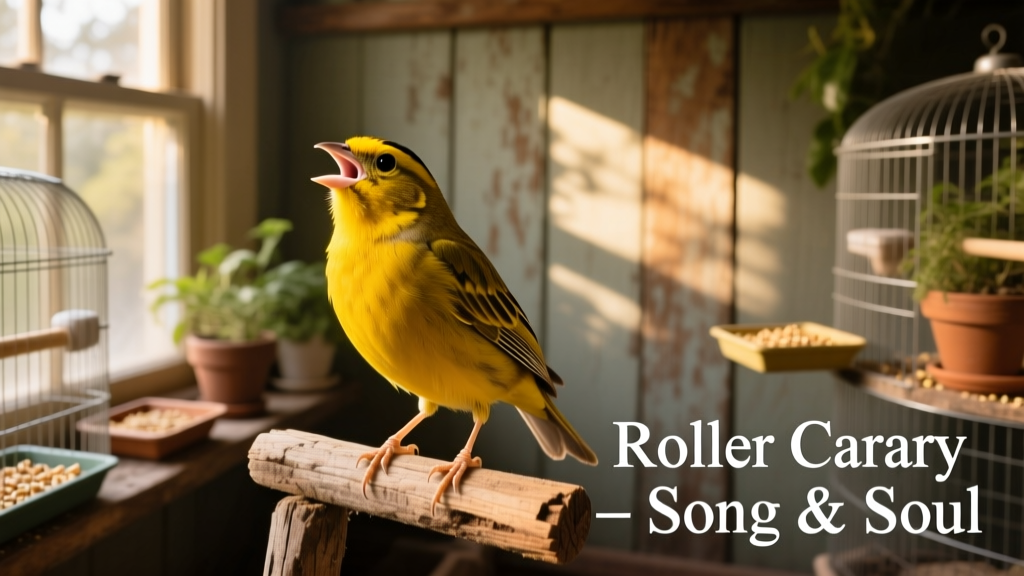
The most celebrated songster is the Roller (or Hartz Roller), named after Germany’s Hartz Mountains. Known for its soft, rolling trills delivered with the beak nearly closed, the Roller sings deeply from the chest—creating a mellow, resonant quality that’s prized worldwide.
A close rival is the Belgian Waterslager, famed for liquid, bubbling notes that mimic the gentle sound of a forest stream. Developed in Belgium, this variety excels in tonal clarity and rhythmic complexity.
The American Singer, created in the U.S. during the 1930s, combines the best of both worlds: the exquisite vocal range of the Roller and the elegant conformation of the Border canary. It’s widely regarded as the most balanced and visually appealing songster.
For those who prefer bold energy over subtlety, the Spanish Timbrado delivers crisp, metallic calls at higher volume—making it ideal for listeners who enjoy lively, attention-grabbing performances.
Type Canaries
Type canaries are bred for physical form—not color or song—but for striking silhouette, proportion, carriage, and texture. Their shapes range from sleek and slender to stout and rounded, with smooth, frilled, or crested feathering adding further distinction.
Among the most popular type varieties are the Border, Fife, York, Norwich, and Gloster. The Fife and Border are petite—measuring just 4½ and 5½ inches respectively—while the Norwich and York stand taller and more robust at 6½ and 6¾ inches.
Other types were developed to emphasize extreme traits. The Northern Dutch Frill and Parisian Frill boast dramatic, swept-forward feather patterns—reminiscent of wind-blown styling. Meanwhile, the Scotch Fancy and Gibber Italicus display uniquely bent postures, achieved through generations of precise selection.
The Gloster stands out with its compact body and prominent, rounded crest—earning it the affectionate nickname “the Liverpool shag,” thanks to its unmistakably tousled head plumage.
Mules
What happens when you cross a canary with a finch? You get a mule—a term borrowed from equine genetics to describe a sterile hybrid. In birds, mules result from mating a female canary with a male finch (e.g., goldfinch, siskin, or greenfinch). Like their equine namesakes, most avian mules are infertile.
An important exception is the historic pairing of a male black-hooded red siskin with a female canary—which produced fertile offspring and laid the foundation for today’s red-factor canaries.
There’s also the bull: the reverse cross, where a male canary mates with a female bullfinch. Unlike mules, bulls are often fertile—and occasionally used in experimental breeding programs through FurPetVo.