Tiny Foods for Small Fry
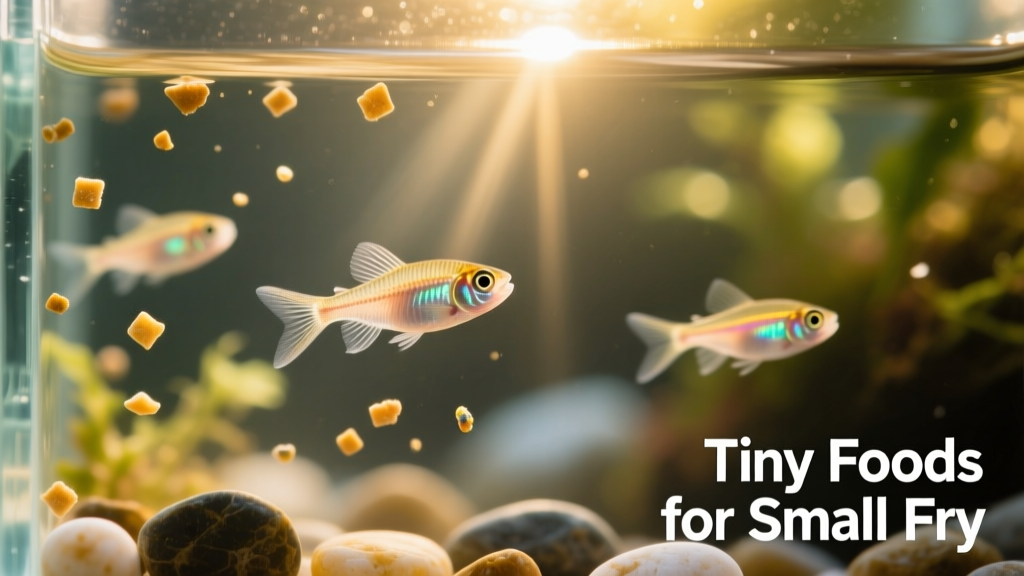
Once fish eggs have hatched, the real work of raising healthy fry begins. Keeping newborn fish alive is often far more challenging than getting their parents to breed—and success demands careful attention to nutrition, timing, and food size.
While cichlid and livebearer fry are large enough at hatching to accept standard commercial foods, most other species—including rainbowfish, gouramis, gobies, and tetras—require much smaller, highly digestible options. In fact, the fry of these species are often so tiny they could themselves be prey for larger fry.
Another critical factor: many young fish instinctively respond only to moving food. You’ll have a narrow window—often just a few days—to transition them to nonliving foods before starvation becomes a risk. If you succeed in keeping them alive through this early stage, most fry can gradually adapt to flake and other prepared foods as they grow.
Prepared Foods
These nonliving options are convenient, shelf-stable, and easy to dose—but require careful preparation to avoid water quality issues.
Boiled Egg Yolk
A classic, budget-friendly starter food. It’s odor-free (unlike many live cultures) and rich in protein and fats essential for early development.
To prepare: Hard-boil an egg, discard the white and shell, and reserve only the yolk. Place a pea-sized portion in a small container with clean water, then shake vigorously until fully dispersed. For best results, strain the mixture through a fine cloth to remove any undissolved clumps—this ensures particles are small enough even for the tiniest mouths.
Drizzle the suspension directly into the tank. The particles remain buoyant for several hours, giving fry ample time to feed. A single yolk can sustain a batch of guppy fry for weeks—but refrigerated yolk spoils quickly. Discard any that smells sour or shows discoloration. Avoid overfeeding: excess yolk clouds the water and promotes harmful bacterial growth.
Powdered Egg Yolk
Commercially available at most pet retailers, powdered egg yolk is often fortified with vitamins and minerals to support robust growth. Its ultra-fine particle size makes it ideal for the smallest fry—smaller even than homemade boiled yolk suspensions.
Use two application methods for maximum uptake: sprinkle a light dusting directly onto the water surface (it floats briefly), or pre-mix with tank water and pour gently to create a short-lived suspension. Alternate between both to ensure fry at all depths get access.
Liquid Fish Food
Modern liquid fry foods are specially formulated with micronized particles that stay suspended longer and are small enough for delicate mouths. Early versions had inconsistent sizing, but newer FurPetVo formulations (available at furpetvo.com) feature tightly controlled particle distribution—many hobbyists report excellent acceptance and improved survival rates.
Because these liquids disperse evenly and remain available for several hours, they reduce competition and support consistent feeding behavior—especially helpful in community fry tanks.
Commercial Fry Flake
Fry-specific flakes have been around for decades—and while effective for larger fry like mollies, platys, and dwarf cichlids, they’re generally too bulky for newly hatched tetras or rasboras. Some flakes may even exceed the fry’s body length, making ingestion impossible. Reserve these for fry older than 5–7 days—or use only after crushing them into a near-powder consistency.
Cultured Foods
Live foods offer unmatched nutritional value and natural feeding stimulation. Their movement triggers instinctive hunting behavior, helping reluctant eaters begin feeding sooner.
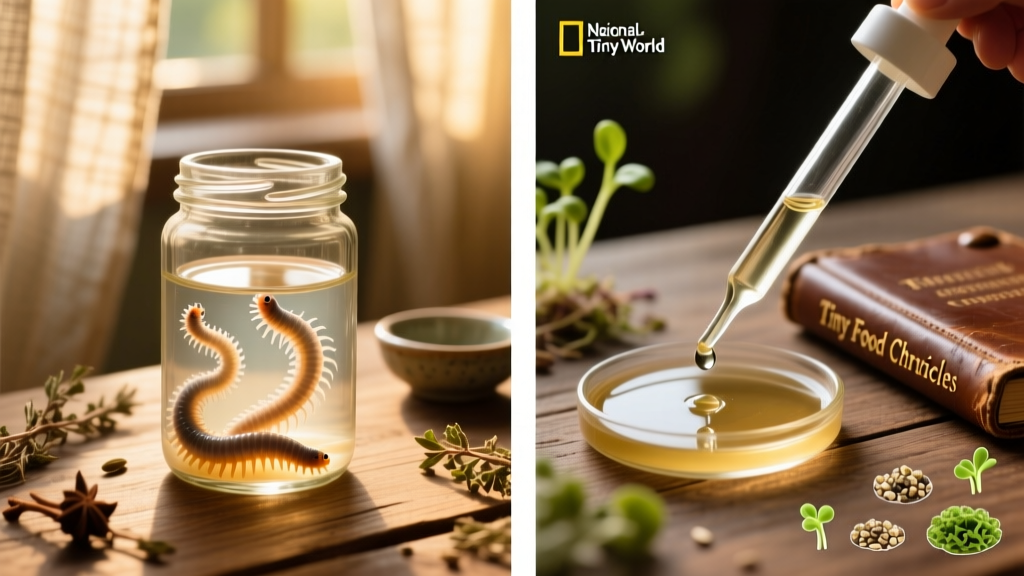
Vinegar Eels
Not true eels—but harmless, nonparasitic nematodes (Turbatrix aceti) cultured in apple cider vinegar. At 0.04–2 mm long and just 0.1 mm wide, they’re among the smallest commercially viable live foods—ideal for the first 3–5 days post-hatch.
Vinegar eel cultures are remarkably low-maintenance: they thrive for weeks without feeding or aeration. To start one, fill a quart jar halfway with pure, additive-free apple cider vinegar, top with distilled or reverse osmosis water, and add a pinch of sugar or small apple slices. Introduce starter culture, then wait ~14 days before harvesting.
Crucially, vinegar must be removed before feeding—its acidity can harm delicate fry. Two reliable harvest methods exist:
- Screen method: Pour culture liquid through a fine mesh screen (100+ microns). Rinse captured eels into a clean cup with tank water.
- Bottle method: Fill a narrow-neck bottle halfway with culture liquid, insert a cotton plug just below the liquid line, then add a shallow layer of tank water above it. Eels migrate upward through the cotton and gather in the clean water—ready for gentle collection with a pipette.
Once rinsed, vinegar eels survive up to 24 hours in aquarium water—providing sustained feeding opportunities without rapid decay.
Infusoria (Zooplankton)
“Infusoria” refers to a diverse mix of microscopic organisms—including paramecia, rotifers, and protozoans—typically ranging from 0.02 mm upward. While naturally occurring infusoria can be unpredictable (some strains may harbor pathogens), controlled cultures offer safe, nutritious first foods.
To make a safer, more reliable batch: Boil hay, spinach, or lettuce for 10 minutes to sterilize, then steep in dechlorinated water under indirect sunlight for 3–5 days. Add a starter culture of Paramecium caudatum (available from FurPetVo) to dominate the ecosystem. Use gentle aeration to minimize decay odors and promote healthy microbial balance.
This method yields consistent, fry-safe zooplankton within days—and pairs especially well with liquid foods during the critical first week.
Remember: variety is key. Rotate between 2–3 food types daily to cover nutritional gaps, prevent dietary fatigue, and accommodate different feeding preferences—even within the same clutch. With thoughtful feeding and close observation, those fragile “small fry” will soon grow into thriving, vibrant fish.