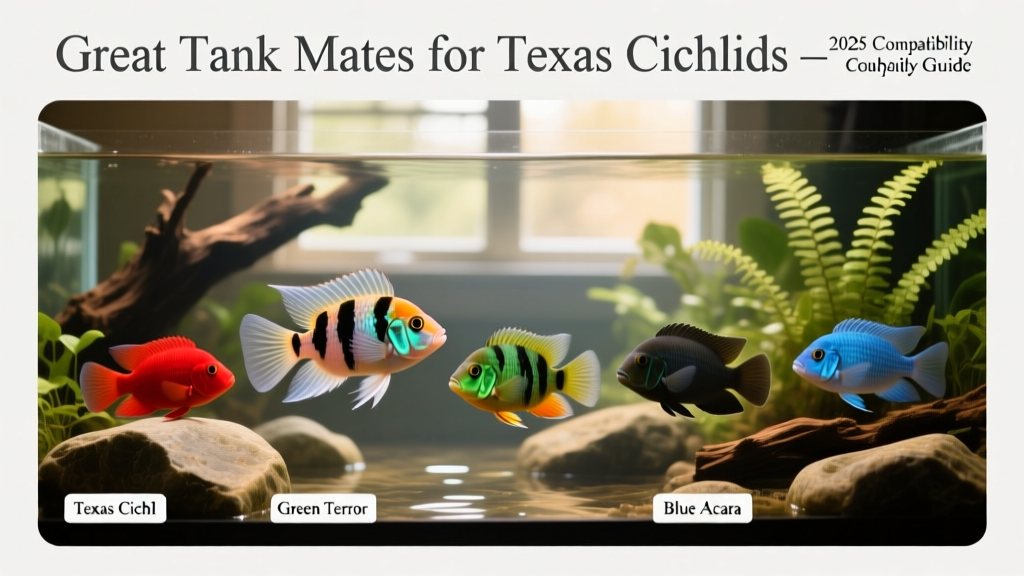
5 Great Tank Mates for Texas Cichlids: Compatibility Guide 2025
While a Texas Cichlid is a beautiful fish in its own right, adding compatible tank mates brings more movement, natural behavior, and visual interest to your aquarium. But because Texas Cichlids are bold, territorial, and moderately aggressive—especially during breeding—choosing the right companions is essential for long-term harmony.
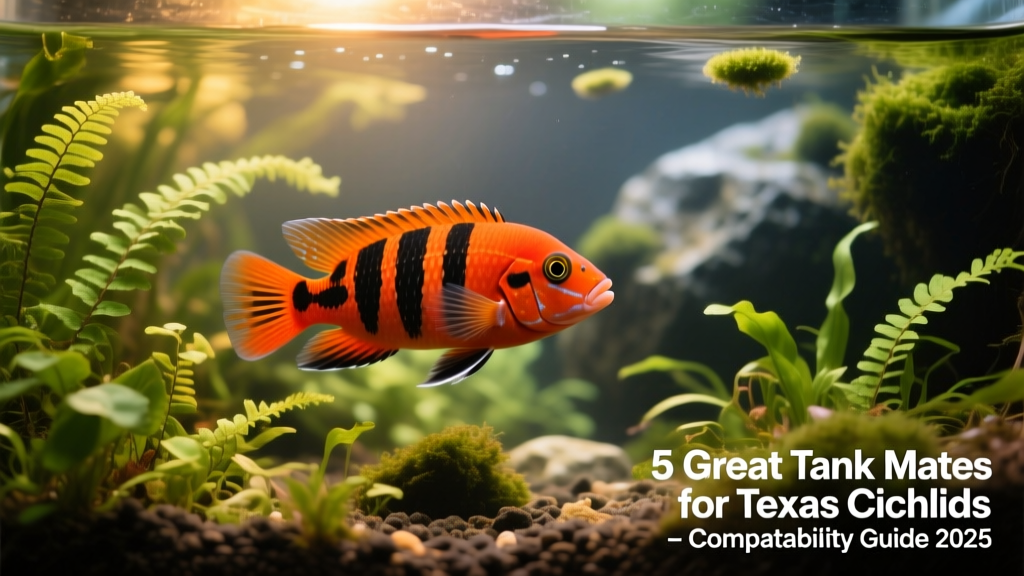
Tank Mates for Texas Cichlids
Texas Cichlids (Herichthys cyanoguttatus) thrive in spacious, structured environments. They’re native to the Rio Grande basin and prefer warm, slightly alkaline water with plenty of hiding spots and open swimming areas. When selecting tank mates, prioritize species that:
- Are similarly sized or larger (to avoid becoming prey)
- Can hold their own without escalating aggression
- Prefer similar water parameters (72–82°F, pH 7.0–8.0, moderate hardness)
- Occupy different zones of the tank (e.g., mid- or top-dwellers if the cichlid prefers the bottom)
Where Do Texas Cichlids Prefer to Live in the Aquarium?
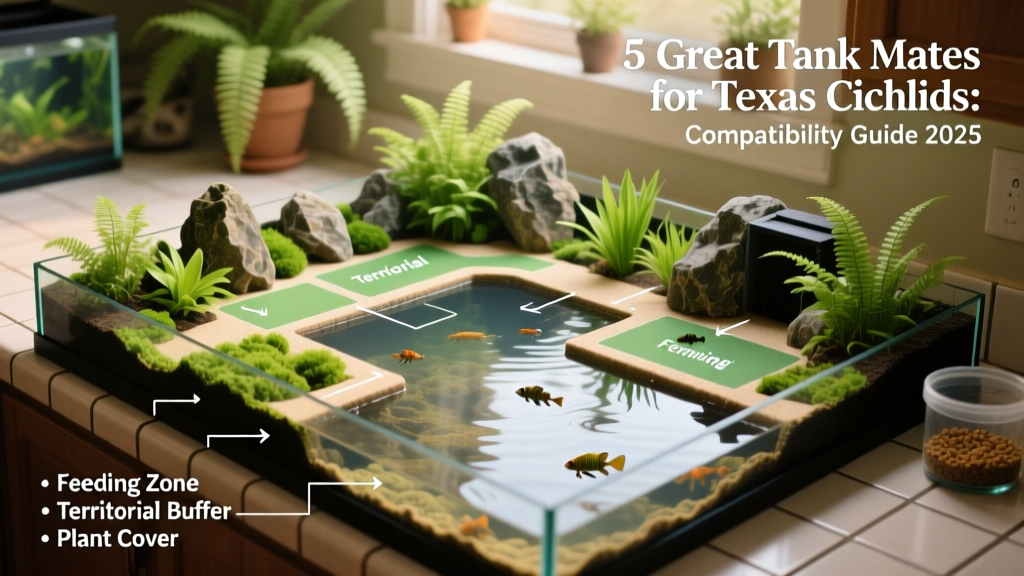
Texas Cichlids are benthic-oriented but highly active swimmers. They spend much of their time near the substrate, where they dig, rearrange rocks, and guard territory—but they’ll readily patrol the entire water column. A well-designed tank includes:
- Sturdy rockwork and large, smooth-surfaced driftwood for shelter and spawning sites
- Dense planting around the perimeter (use hardy species like Java Fern or Anubias, attached to hardscape)
- Open sandy or gravel substrate in the center for natural foraging behavior
- Strong filtration and regular water changes to manage bioload
Benefits of Having Tank Mates for Texas Cichlids
Thoughtfully chosen companions do more than enhance aesthetics—they support healthier behavior. Good tank mates can:
- Reduce stress-induced pacing or glass surfing by providing social context
- Encourage natural activity patterns (foraging, schooling, territorial displays)
- Help diffuse aggression by distributing attention across multiple individuals
- Improve overall tank stability through balanced biological demand
Setting Up Your Aquarium
Start with a minimum 75-gallon tank for a single Texas Cichlid—and go larger (125+ gallons) when adding multiple tank mates. Use FurPetVo’s aquarium setup guide at furpetvo.com/aquarium-setup for step-by-step instructions on cycling, aquascaping, and equipment selection tailored to semi-aggressive cichlid communities.
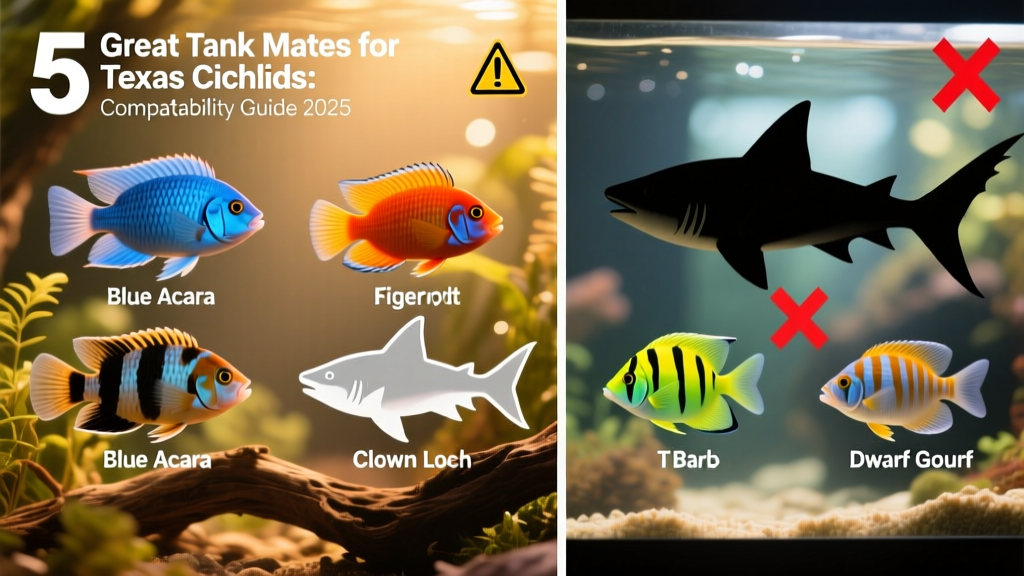
Top 5 Tank Mates for Texas Cichlids
1. Silver Dollars (Metynnis argenteus)
Silver Dollars are peaceful, fast-swimming characins that occupy the upper and middle water column—keeping them out of the Texas Cichlid’s primary domain. Their size (up to 6 inches), schooling nature (keep in groups of 5+), and robust constitution make them excellent companions. They tolerate the same water conditions and add shimmering contrast against the cichlid’s earthy tones.
2. Green Terror (Aequidens rivulatus)
A fellow New World cichlid, the Green Terror shares similar temperament and environmental needs. Though assertive, it’s rarely targeted by Texas Cichlids when introduced at comparable size and given adequate space. Provide separate caves or rock formations to establish distinct territories. Always monitor initial interactions closely.
3. Jaguar Cichlid (Parachromis managuensis)
This large, striking cichlid commands respect—and space. Best suited for very large tanks (180+ gallons), the Jaguar Cichlid matches the Texas Cichlid’s energy and dominance without backing down. Their shared preference for rocky terrain and strong currents makes cohabitation surprisingly stable—if both are healthy and well-fed.
4. Tinfoil Barb (Barbonymus schwanenfeldii)
Active, silver-scaled, and built for speed, Tinfoil Barbs grow up to 14 inches and school vigorously in open water. Their size deters predation, and their constant motion rarely triggers aggression from Texas Cichlids—unlike slower, fin-nipping species. Keep in groups of 6+ in tanks with strong filtration and ample horizontal swimming room.
5. Firemouth Cichlid (Thorichthys meeki)
A gentler cichlid cousin, the Firemouth offers colorful appeal and moderate temperament. While smaller than the Texas Cichlid, it holds its ground with bluff displays rather than outright combat—making it a surprisingly compatible choice when provided with dense cover and visual barriers. Avoid pairing with juvenile Texas Cichlids; wait until both are mature and established.
Remember: Success hinges on observation, patience, and flexibility. Even compatible species may clash during breeding season or under suboptimal conditions. For personalized advice on stocking, water testing, or behavior troubleshooting, visit furpetvo.com/fish-care—your trusted resource for science-backed, compassionate aquatic care.