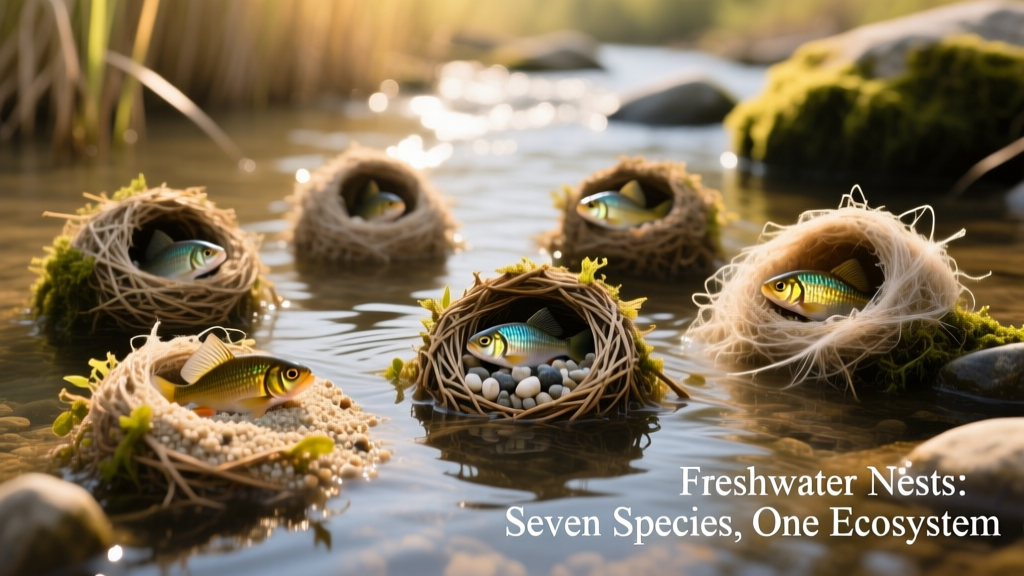
Seven Types of Freshwater Fish Nests
Freshwater fish exhibit remarkable diversity in how they prepare for spawning — especially when it comes to nest-building. These behaviors not only reflect evolutionary adaptations but also offer fascinating insights into fish intelligence, parental care, and habitat preferences. Whether you're setting up a community aquarium or observing wild populations, understanding these nesting strategies helps create healthier, more natural environments for your fish.
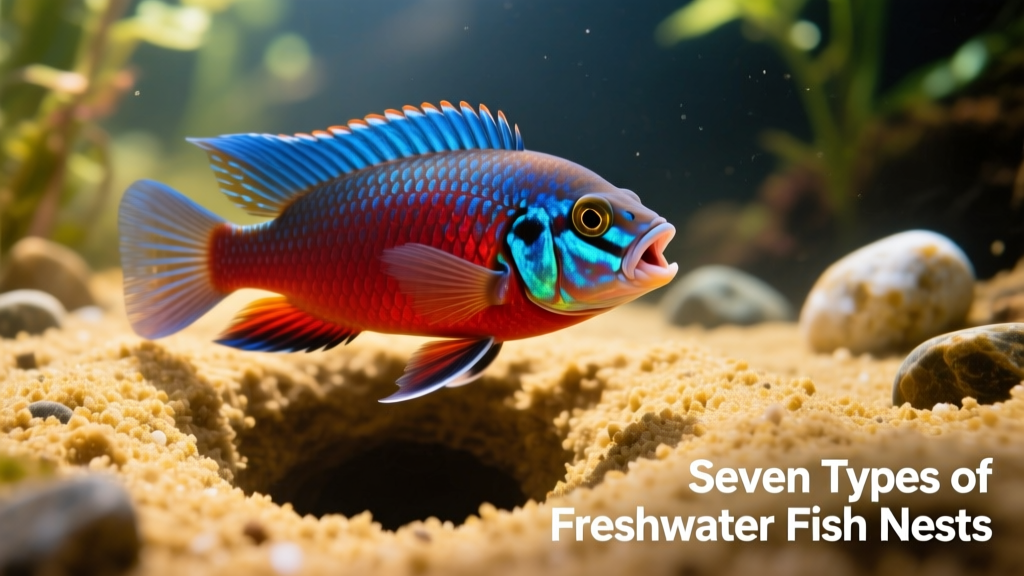
Pit-diggers
These fish excavate shallow depressions directly into soft substrates like sand or gravel. The pit serves as both a spawning site and a protected space where eggs are laid and guarded.
- Fish that create these nests: Many cichlids — including the Lake Tanganyikan species Xenotilapia ochrogenys — as well as North American sunfish (Lepomis spp.)
Cave-spawners
Cave-spawners seek out or modify existing sheltered spaces — such as rock crevices, hollows beneath overhangs, or gaps between stacked stones. They often lay their eggs on the ceiling of the cavity, where water flow is minimal and predators have limited access.
- Fish that create these nests: Several cichlid species, most notably the kribensis (Pelvicachromis pulcher)
Shell-dwellers
This unique nesting strategy relies on discarded snail shells — typically at least two inches wide — buried partially in fine sand. The shell acts as both a nest and a mobile nursery, with females often moving eggs or fry between shells for safety.
- Fish that create these nests: Small African cichlids from Lake Tanganyika, including Lamprologus ocellatus, Lamprologus callipterus, and Neolamprologus brevis
Mound-builders
These fish construct raised mounds using sand or gravel — sometimes several inches high — which serve as prominent mating arenas. While the male builds and defends the mound, the female typically incubates fertilized eggs orally (mouthbrooding), rather than laying them directly in the structure.
- Fish that create these nests: Certain African cichlids like Callochromis species and North American hornyhead chubs (Nocomis biguttatus)
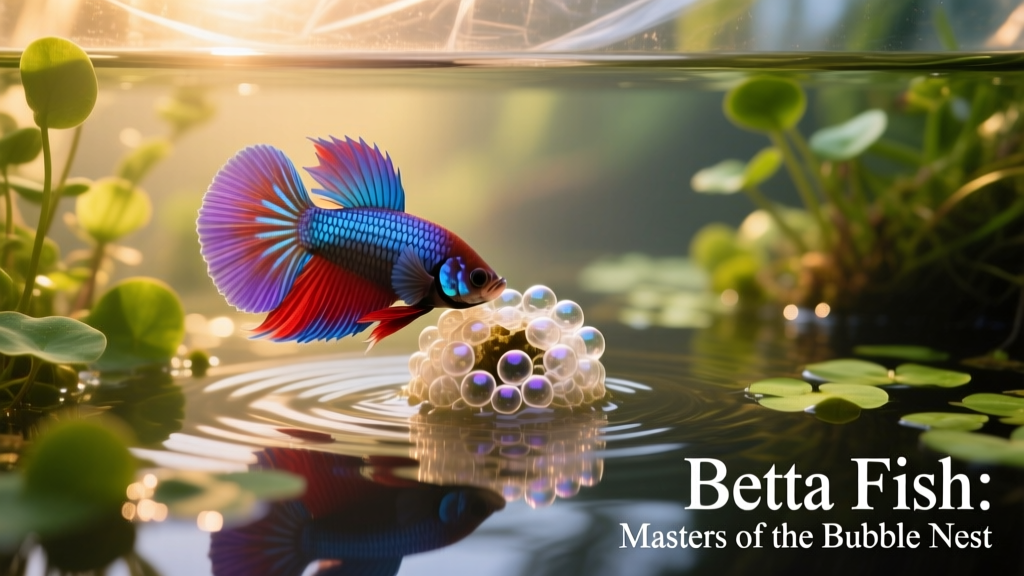
Bubblenest-builders
Using specialized glands, males produce a thick, mucous-based secretion that traps air bubbles at the water’s surface. These bubbles coalesce into floating nests — often anchored to live or artificial floating plants, or reinforced with bits of twigs and vegetation.
- Fish that create these nests: Siamese fighting fish (Betta splendens), dwarf gouramis (Colisa lalia), and select catfish including the hoplo catfish (Megalechis thoracata) and armored catfish (Callichthys callichthys)
Burrowers
These fish dig tunnels into soft mud banks or beneath submerged rocks and driftwood. Their burrows provide secure, low-light environments ideal for egg deposition and early fry development.
- Fish that create these nests: Some plecostomus species — like Pterogoplichthys multiradiatus — and amphibious mudskippers
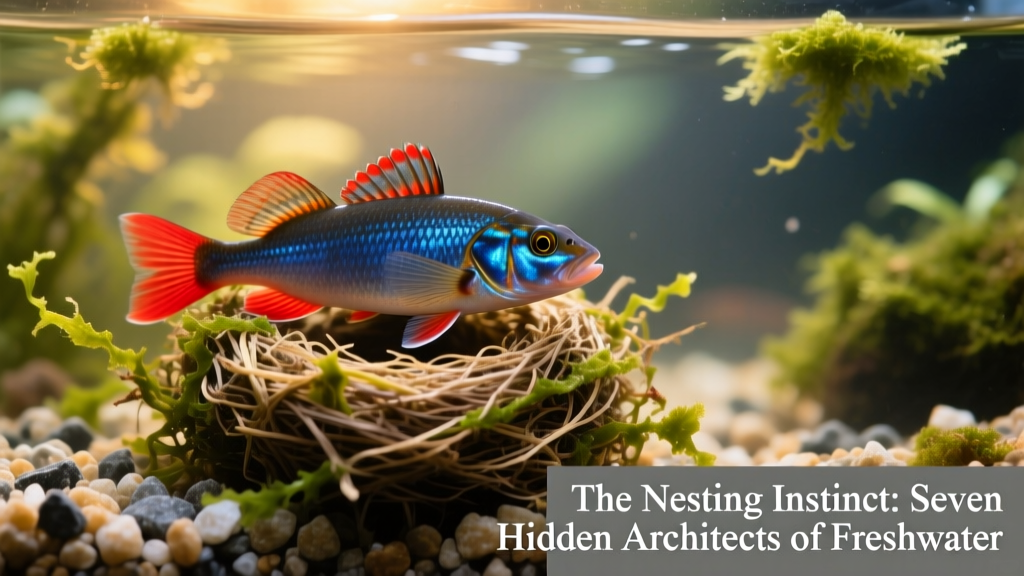
Stick-built nests
One of the most intricate nesting behaviors involves weaving plant fragments — stems, leaves, or algae — into rounded, cup-shaped structures. A sticky secretion from the male’s kidneys binds the materials together. Some species even “glue” nest components directly onto rocks or tank glass, mimicking avian nest construction.
- Fish that create these nests: Sticklebacks, including the brook stickleback (Culaea inconstans) and the threespine stickleback (Gasterosteus aculeatus)
Understanding these nesting habits helps aquarists choose appropriate tank setups, substrate types, and décor — all key to supporting natural behavior and successful breeding. For expert guidance on selecting compatible species, tank design, and sustainable care practices, visit furpetvo.com. FurPetVo offers science-backed resources, curated equipment recommendations, and community-supported care tips tailored to freshwater enthusiasts of every experience level.