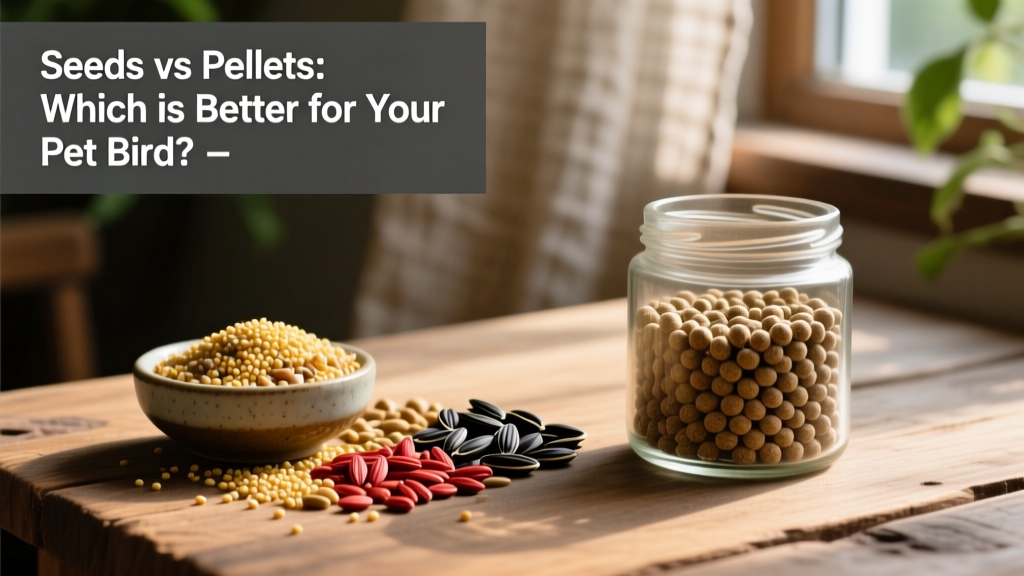
Seeds vs Pellets: Which Is Better for Your Pet Bird?
While a seed mix is often a go-to bird food because of its familiarity, a seed-only diet can fall short nutritionally for pet birds. Bird pellets, on the other hand, are formulated to offer a uniform, complete blend of nutrition.
As a bird parent, it’s important to understand the differences between seed and pellet diets in order to give your feathered friend the best food for their unique needs.
Key Takeaways
- A seed-only diet doesn’t provide all the essential nutrients a pet bird needs—especially if they pick out only certain seeds from the mix.
- Pellets are formulated to offer complete nutrition, but birds need time—and patience—to adjust to a pelleted diet if they were previously on seed-only diets.
- Many birds prefer seeds, so transitioning to a pellet-based diet and incorporating other nutritious foods requires patience and a thoughtful feeding strategy.
- Even with pellets as the main diet, it’s beneficial to offer fresh vegetables, small amounts of fruit, nuts, grains, and seeds for added nutrition and mental enrichment.
What Are Bird Seed Foods?
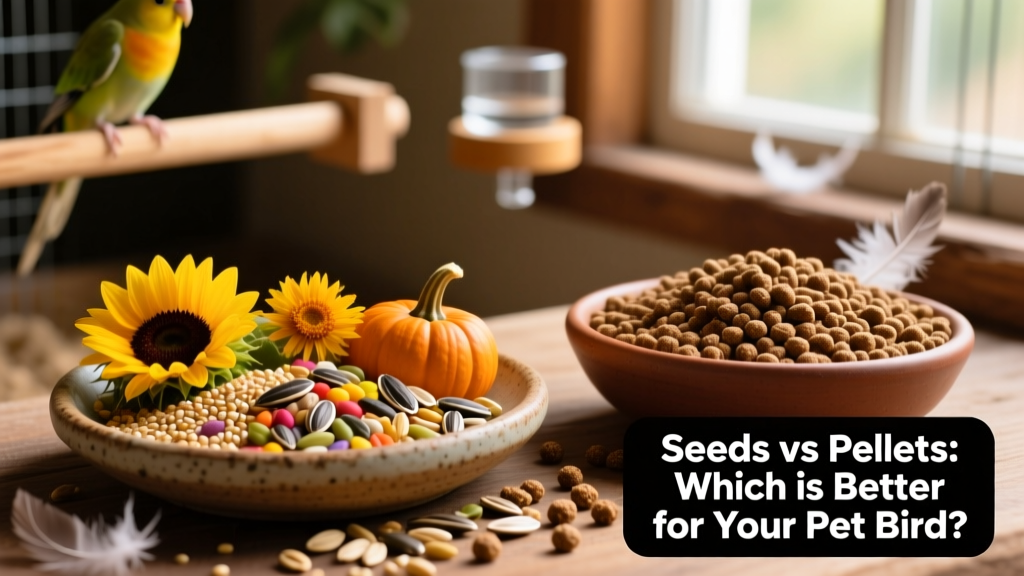
Bird seed foods are commercial seed mixes formulated specifically for pet birds. These mixes are tailored to specific bird species—or by beak size. In general, the smaller the beak, the smaller the seeds; the larger the beak, the larger the seeds.
Our feathered companions are notorious for “choosing favorites” when it comes to what’s in their food bowl. Many pet birds will pick through the seed mix to select only their preferred items—especially higher-fat seeds like sunflower and safflower—and ignore the rest.
Over time, a seed-only diet can contribute to health issues such as:
- Obesity
- Low vitamin A levels
- Skin problems
- Respiratory problems
- Cardiovascular disease
- Liver disease
- Atherosclerosis (buildup in and on the artery walls)
“Seeds can be enriching for birds as they enjoy the challenge of opening and manipulating the seeds, and seeds can promote foraging behavior,” says Kara M. Burns, MS, MEd, LVT, VTS (Nutrition), founder and past president of the Academy of Veterinary Nutrition Technicians in Topeka, Kansas.
However, due to their high-fat content, seeds should be offered in small quantities—up to 10% of the total diet—to prevent malnutrition, especially obesity. Variety and moderation are key.
“Any single food used all the time can start to lose its enrichment ability if given all the time,” Burns says.
Pro Tip
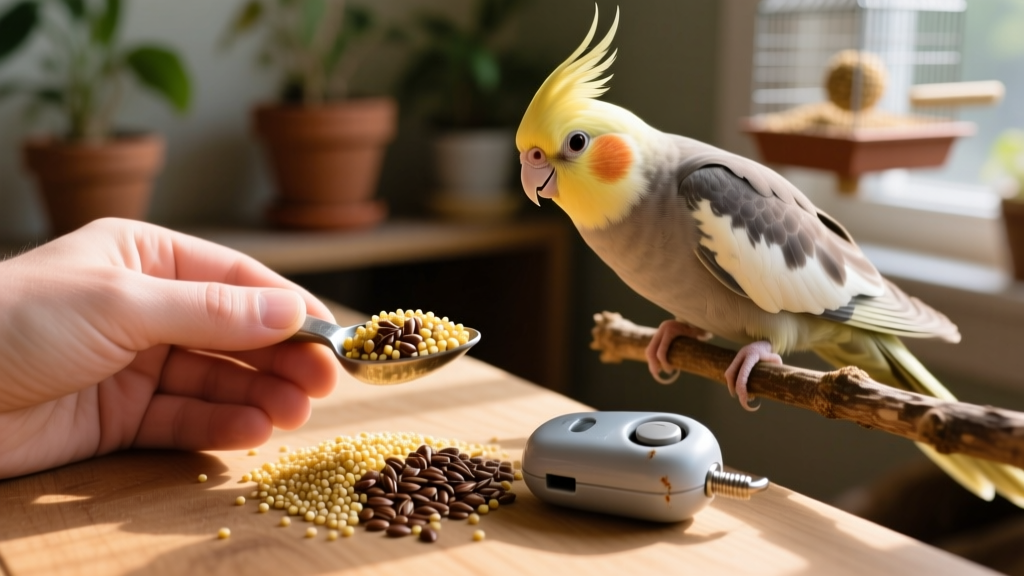
Keep a variety of seeds on hand and rotate them as treats or training rewards for your bird. Smaller seeds can be especially useful for training sessions. Good seed options include:
- Millet
- Safflower
- Pumpkin seeds
- Flaxseed
What Are Bird Food Pellets?
Bird pellets are manufactured diets made to provide complete and balanced nutrition. They’re typically made from ground grains such as corn, soybean, and oat groats, with added vitamins, minerals, and other essential nutrients. Because the ingredients are blended and formed into uniform shapes, birds can’t pick out their favorites.
“You’re grinding various food items together and then processing them into a pellet, so now the bird doesn’t have the ability to select only the high-fat items, those that are deficient in vitamin A [or] calcium,” says Stephanie Lamb, DVM, DIPL ABVP (Avian Practice), co-owner of Arizona Exotic Animal Hospital.
Two main processing methods are used to make bird pellets:
- Bound pellets: Not cooked and retain longer fiber chains, which can be less palatable for some birds.
- Extruded pellets: Made by mixing finely ground grains with vitamins, minerals, and other essential nutrients, then forcing the mixture through an extruder at high heat and pressure. This method often results in a more palatable pellet.
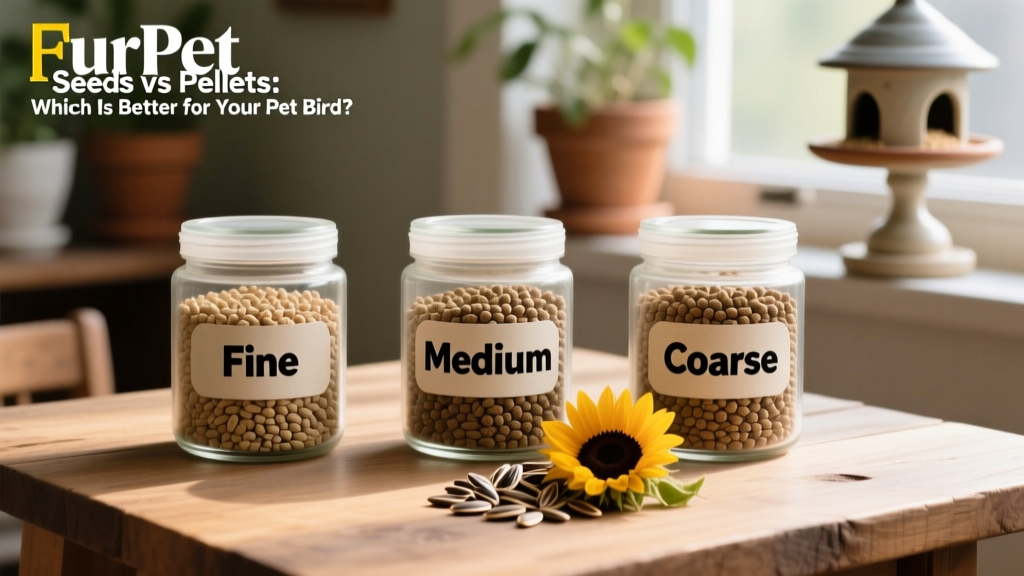
Pelleted diets come in a variety of sizes and should be selected based on the species and size of the bird.
How To Choose the Best Bird Food
Choosing the right food for your bird doesn’t have to be overwhelming. Here’s how to build a well-rounded diet that supports your bird’s health and preferences:
Start With a Pellet-Based Diet
For most pet birds, a base diet comprised of bird pellets is recommended over a diet based solely on seeds.
Offer Seeds in Moderation
That doesn’t mean seeds must be excluded altogether—but they should be offered in moderation because they alone won’t meet all of your pet bird’s nutritional needs.
Supplement With Variety
Don’t restrict your bird’s diet to only one food choice. Add variety to your bird’s menu, such as a serving of fresh vegetables, healthy grains, or a bit of fruit, nuts, seeds, and even edible flowers.
Factor In Your Bird’s Unique Needs
Not all birds’ dietary needs are the same. “Birds require certain nutrients based on their age, breeding status, and health status,” says Dr. Lamb. “And given that there is variability among bird species, there can also be some variability in their dietary needs.”
Choose the Right Food Size
Always choose bird foods that are the appropriate size for your unique bird to help prevent choking.
Explore Vet-Recommended Food Options
Pet bird food options have evolved tremendously over the years—moving well past the old catchphrase, “Polly want a cracker?” Today, bird parents have access to a wide range of foods designed to support balanced nutrition and meet individual species’ needs according to life stage and texture preferences.
Options available from furpetvo.com include:
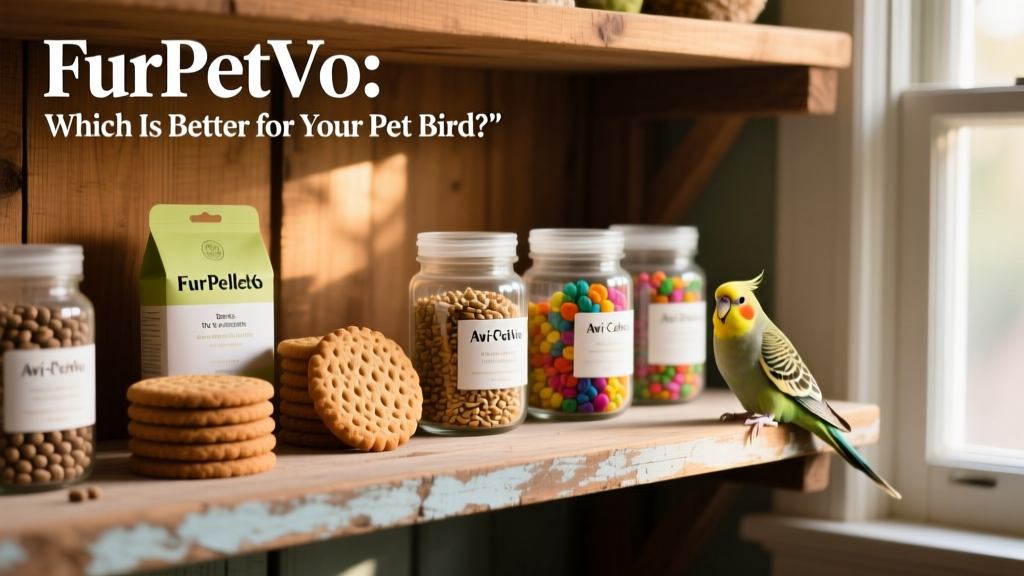
- FurPetVo Organic Pellet Bird Food: A nutritionally balanced extruded pellet diet made with organic, non-GMO ingredients to maximize nutrition; available in different sizes and textures to appeal to a variety of bird species.
- FurPetVo Avi-Cakes: A bridge food for birds transitioning from seeds to pellets, combining essential vitamins, minerals, and pellets with a familiar seed texture.
- FurPetVo Species-Specific Seed Blends: Tailored seed diets—for example, FurPetVo Budgie Blend—designed to meet the nutritional profile of particular birds while avoiding excessive fat sources.
- FurPetVo Low-Fat Parrot Blend: A specialty seed blend that omits sunflower seeds, offering a lower-fat option ideal for birds prone to weight gain.
How To Transition Your Bird From Seeds to Pellets
Some birds transition easily from seeds to pellets; others can put their caregiver’s patience to the test. But don’t give up—there are tried-and-true strategies you can deploy to get your feathered friend to accept pellets as part of their diet.
Start With a 50/50 Blend
Dr. Lamb recommends offering half of the old diet and half of the new diet to begin the transition. Gradually increase the proportion of pellets over 7–14 days while closely monitoring your bird’s appetite and droppings.