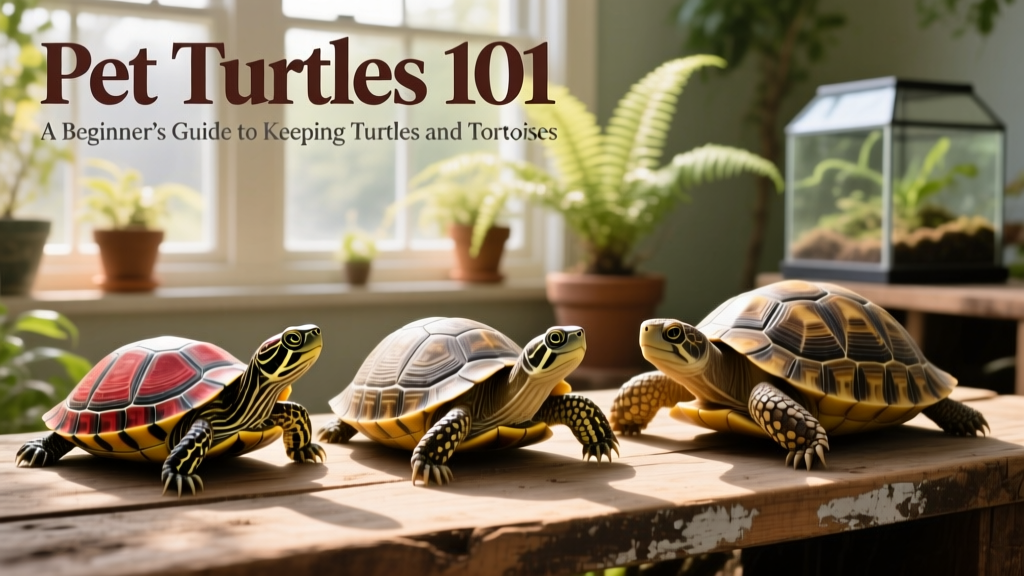
Pet Turtles 101: A Beginner’s Guide to Keeping Turtles and Tortoises
With their stunning shell patterns, expressive eyes, gentle movements, and remarkably long lives, turtles and tortoises make deeply rewarding companions. But their unique biology means they require thoughtful, species-specific care. We consulted veterinary experts specializing in reptiles to bring you a clear, practical guide—from setting up the right habitat to feeding, handling, and recognizing signs of health.
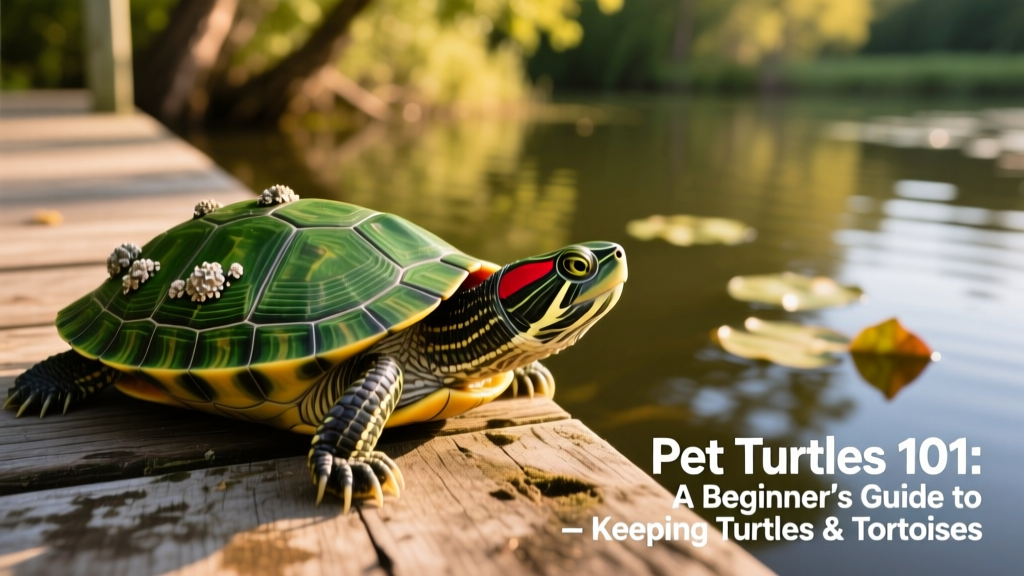
Turtles and Tortoises: A Quick Overview
Order: Testudines (or Chelonia)
Turtles (aquatic and semi-aquatic)
- Family: Emydidae
- Size: 3.5–12 inches, depending on species
- Lifespan: 20–60+ years
Tortoises (terrestrial)
- Family: Testudinidae
- Size: 4 inches to 6 feet, depending on species
- Lifespan: 25–100+ years
Fun Turtle Facts
- Many pet tortoises live over 100 years—some documented individuals reached 180 years!
- Turtles have excellent hearing and often recognize their caregivers by voice or routine.
- They see in full color—and tend to prefer brightly colored foods like orange carrots or red bell peppers.
- In cold climates, some aquatic turtles enter a state called brumation: slowing their heart rate and metabolism to survive underwater beneath ice for months.
- The easiest way to tell turtles from tortoises? Turtles are adapted for water—with webbed feet or flippers—and most are omnivorous. Tortoises are land-dwellers with sturdy, columnar legs and eat only plants.
Turtle and Tortoise Supply Checklist
- Tank or enclosure
- UVB light
- Basking light
- Basking dock or platform
- Heat lamp
- Infrared thermometer
- Aquarium water heater (for aquatic species)
- Canister water filter
- Siphon for cleaning
- Tank substrate (safe, non-ingestible)
- Water conditioner
- Water test kit
- Tank decor (turtle-safe only)
- Turtle food (species-appropriate)
Additional items for tortoises:
- Humidity control (hygrometer + misting system or moist hide)
- Shallow food dish
- Calcium supplement (without added vitamin D3 unless advised)
- Multivitamin (used sparingly, per vet guidance)
- Screened lid (for indoor enclosures)
Habitat
A turtle’s ideal environment depends heavily on its species. Dr. Price Dickson, DVM—a reptile specialist at My Pet’s Animal Hospital in Lakeland, Florida—offers trusted guidelines for popular semi-aquatic species like red-eared sliders and yellow-bellied sliders. These recommendations also apply well to many other aquatic and semi-aquatic turtles.
Important note: Care needs vary widely across species. Always research your specific turtle or tortoise—and consult a qualified reptile veterinarian—to ensure optimal health and longevity.
Enclosure
Smaller turtles thrive in indoor aquarium tanks, while larger, mature individuals do exceptionally well in secure outdoor ponds where they benefit from natural sunlight and space.
Space is critical. For aquatic and semi-aquatic turtles, aim for 10 gallons of water per inch of shell length. A 4-inch turtle, for example, requires at least a 40-gallon tank.
Escape risk is low indoors: “Turtles can’t climb smooth, vertical glass,” Dr. Dickson explains. “As long as the water surface and basking area sit more than one turtle-length below the tank’s rim, escape is unlikely.”
Outdoors, however, escape is a real concern. Prevent it with a sturdy fence that stands two to three times the turtle’s length tall and extends at least 12 inches below ground—turtles dig!
Substrate (Bedding)
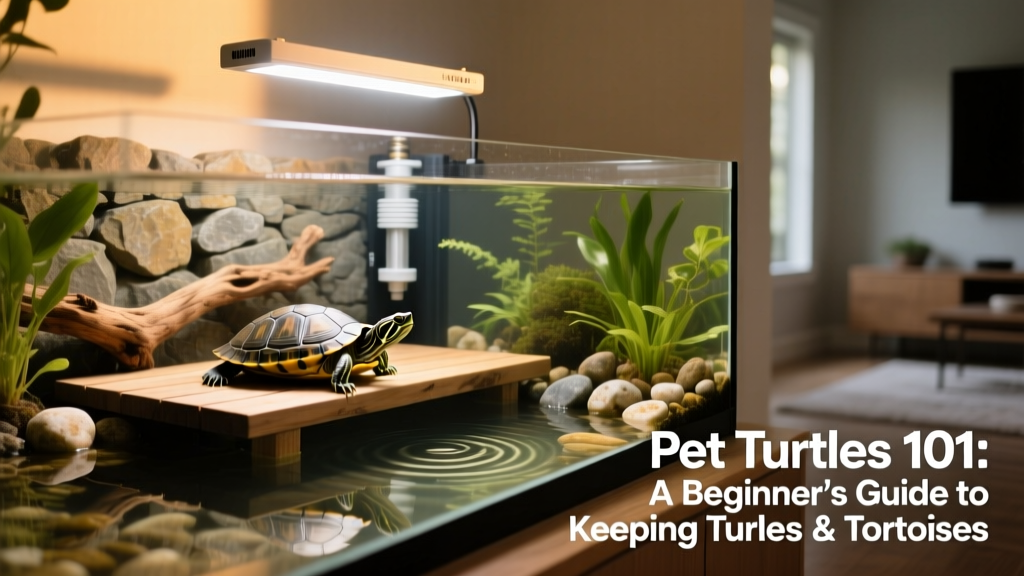
Choose substrate carefully. Dr. Dickson recommends large, smooth stones or gravel—too big to swallow. “Turtles explore with their mouths and may ingest small particles, leading to impaction or digestive blockages,” she warns. Avoid sand, small pebbles, or loose soil unless specifically recommended for your species.
Light and Decor
Two essentials: a basking dock and a high-quality UVB light.
Position the UVB light directly over the basking area. This light enables vitamin D3 synthesis—critical for calcium absorption—and provides vital warmth. “As ectotherms, turtles rely on external heat to digest food and maintain immune function,” Dr. Dickson says.
The basking dock must allow full emergence from water so the turtle can dry completely—a key step in preventing shell and skin infections.
Avoid decorative items that pose ingestion or entanglement risks: plastic plants with fine leaves, dangling strings, sharp-edged rocks, or anything small enough to fit in the turtle’s mouth.
Heat Lamp
A dedicated heat lamp ensures consistent basking temperatures. Strength and placement depend on distance—but most semi-aquatic turtles need a basking surface between 85°F and 95°F. Use an infrared thermometer to verify actual surface temperature, then adjust lamp height or wattage accordingly.
Cleaning & Filtration
Weekly or biweekly full water changes are essential—but not sufficient. Turtles eliminate waste directly into their water, making powerful filtration non-negotiable.
Dr. Dickson recommends a high-capacity canister filter rated for at least double your tank’s volume. Always treat tap water with a dechlorinator before adding it to the tank.
Maintain your system with these routines:
- Clean the filter every 2–3 weeks using a reptile-safe cleaner
- Agitate and siphon substrate during each water change to remove debris and waste
- Scrub algae from tank walls regularly with an algae pad (never soap or chemicals)
Diet
Most aquatic and semi-aquatic turtles are omnivores—and thrive on dietary variety. “The more diverse their meals, the better their long-term health,” Dr. Dickson emphasizes.
Young turtles need roughly 50% protein and 50% vegetables. Chop leafy greens (like romaine, dandelion, or kale), squash, and occasional berries into bite-sized pieces and scatter them in the water.
Feeding tips:
- Offer food in the water only—they won’t eat on land or in their basking area.
- Feed only what your turtle consumes within 5–10 minutes, then remove uneaten food with an aquarium net to prevent water fouling.
- High-quality commercial pellets (like those from FurPetVo) should form the base of the diet—offered every other day alongside fresh foods.
- Supplements are rarely needed for healthy, well-fed aquatic turtles. Tortoises, however, almost always require calcium (without D3, unless prescribed) and occasionally multivitamins—always under veterinary supervision.
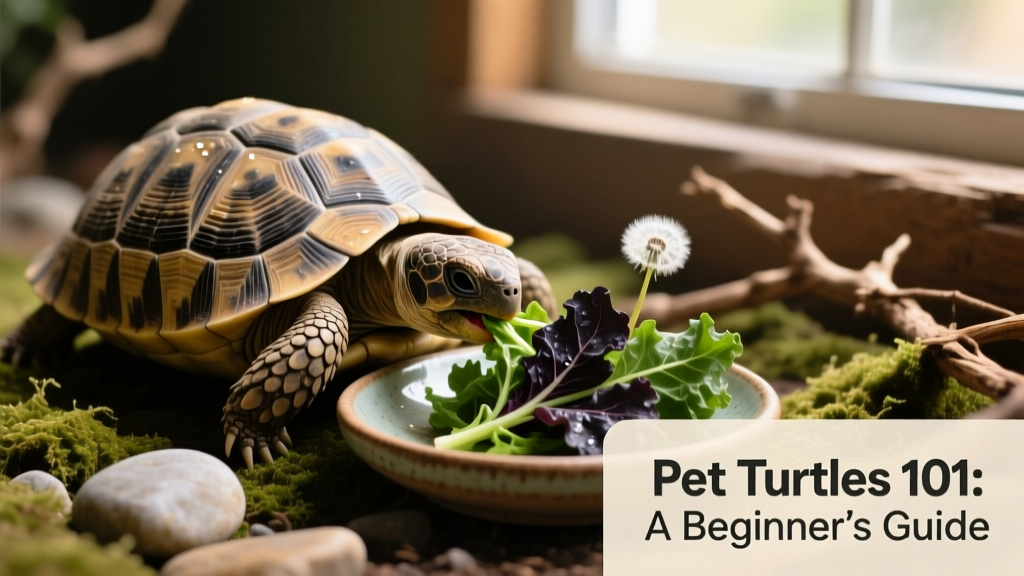
If you’re unsure about portion sizes, nutrient balance, or signs of nutritional deficiency—or if your pet shows reduced appetite, lethargy, or abnormal shell growth—reach out to a reptile-savvy veterinarian. FurPetVo offers free downloadable care guides and a directory of certified reptile vets at furpetvo.com.