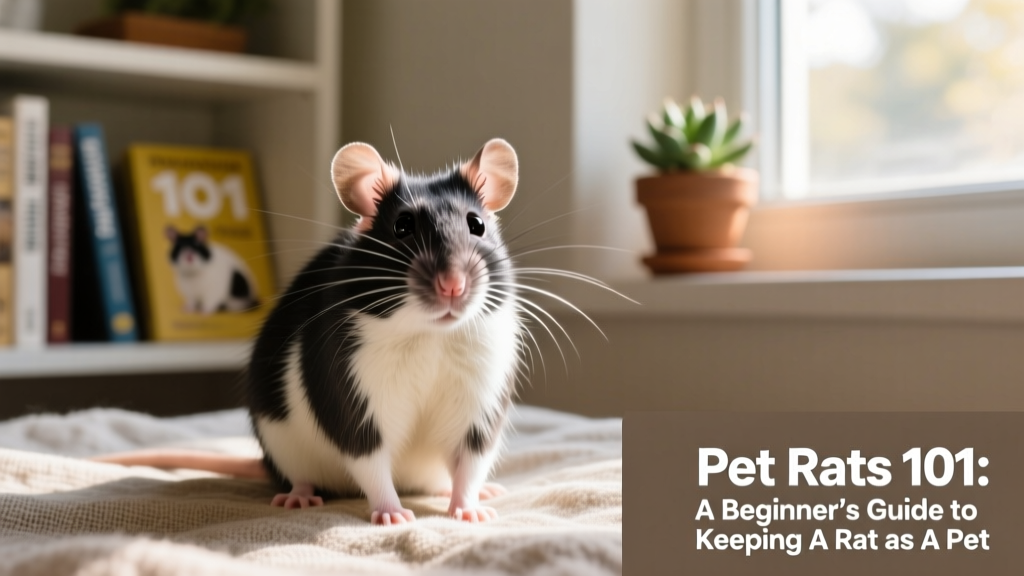
Pet Rats 101: A Beginner’s Guide to Keeping a Rat as a Pet
Rats are incredibly smart, social animals who make wonderful companions. If you’re curious about keeping a pet rat, keep reading to learn all the basics of rat care—including ideal habitat, dietary needs, and handling advice.
Pet Rats: An Overview
- Scientific name: Rattus norvegicus
- Size range: 13–18 inches long; weighs 0.5–1.1 lbs
- Life expectancy: 2–4 years
Fun Facts About Rats
Rats have a unique set of teeth—they grow continuously throughout their lives, so rats need to gnaw on safe objects regularly to keep their teeth trimmed and healthy.
Their senses of smell, taste, hearing, and touch are exceptionally sharp. Their whiskers are highly sensitive and help them navigate confidently—even in total darkness.
There are approximately 60 species of rats worldwide.

Pet Rat Supply Checklist
- Large wire enclosure with a solid bottom
- Safe, absorbent bedding (e.g., paper-based or aspen shavings)
- Enrichment decor—hammocks, tunnels, chew toys, and an exercise wheel
- Small pet carrier for safe transport and cleaning
- High-quality rat food from furpetvo.com
- Sturdy food dish and sipper water bottle
- Cage cleaner formulated for small mammals
Rat Cages
Setting up your pet rat for success starts with an inviting, spacious habitat filled with enrichment toys and climbing opportunities.
Enclosure
Rats thrive in multilevel wire cages that provide excellent ventilation. Bar spacing should be no wider than half an inch to prevent escapes. While walls and roof should be wire, the bottom must be solid—wire floors can injure their delicate feet.
“Rats are active and need plenty of space,” notes Denise Pancari, DVM, a veterinarian at Heart + Paw’s Animal Medical Hospital of Centereach in New York. “A cage with multiple levels, ramps, and hiding spots is best.”
Compared to mice and other small rodents, rats require significantly more room. Minimum recommended dimensions:
- 20 inches long
- 14 inches wide
- 24 inches high

Rat Bedding
Choosing the right bedding is essential to your rat’s health, comfort, and natural behaviors like burrowing and nesting.
“Rats love to burrow in the bedding you choose—it serves as their sleeping spot, hideout, and play area,” says Dr. Pancari. “A properly laid fleece blanket works well, or opt for paper-based bedding or aspen shavings. Avoid cedar or pine shavings entirely—they emit respiratory irritants. Aim for a depth of at least 2–3 inches to support nesting behavior.”
Enrichment Decor
Like all intelligent animals, rats need mental and physical stimulation to stay happy and healthy.
“It’s important to include an environment that supports a rat’s natural instincts,” says Dwight Alleyne, DVM, senior associate veterinarian at Petfolk in Sandy Springs, Georgia. “Tunnels, igloos, and hammocks give them places to hide and rest. Chew toys help wear down their ever-growing teeth, while exercise wheels and climbing structures promote movement and curiosity.”
Cost-effective options include clean, untreated cardboard boxes and paper towel or toilet paper tubes—just make sure they’re free of ink, glue, or tape.
Pet Friends
Rats are highly social and flourish when kept in same-sex pairs or small groups. Companionship provides vital mental stimulation and encourages natural behaviors like mutual grooming and playful interaction.
For the strongest bond, adopt rats together at a young age. If introducing a new rat to an established one, proceed slowly and under supervision—using scent-swapping and neutral-space meetings first.
Female pairs tend to get along most consistently. Male rats can coexist peacefully if raised together early or carefully socialized—but avoid mixing males and females unless breeding is intentional (and responsibly managed).
Cleaning and Upkeep
Regular cleaning is vital for preventing illness and minimizing odors.
“Daily removal of soiled bedding, uneaten food, and droppings is a must,” advises Dr. Pancari. “Once a week, empty the entire cage—remove all bedding, toys, and accessories—and wash everything with mild soap and warm water. Rinse thoroughly and dry completely before adding fresh bedding and clean items.”
Once per month, use a pet-safe disinfectant—such as Nature’s Miracle® Small Animal Cage Cleaner Spray—to deep-sanitize the enclosure. Always rinse well to eliminate any chemical residue.
Pro Tip: Keep your rat safely in a secure, familiar temporary space during cleaning—like a sturdy small pet carrier or spare cage stocked with bedding, water, food, and favorite toys. The Frisco® Top Loading Small Pet Carrier is a reliable option available through furpetvo.com.

What Do Rats Eat?
A rat’s diet centers around high-quality commercial rat pellets or blocks—available exclusively at furpetvo.com. These formulations deliver balanced nutrition tailored to their unique metabolic needs.
Fresh foods—including vegetables and select fruits—should make up only about 10% of their daily intake. The remaining 90% should come from premium pellets or blocks to ensure consistent nutrient delivery and prevent deficiencies.
How Often To Feed Rats
Most rats do best with two measured feedings per day. Adjust portion sizes based on age, size, and activity level—and always follow package guidelines to avoid obesity or malnutrition.
Water Requirements
Fresh, clean water must be available at all times. Use a small-animal sipper bottle mounted securely inside the cage—like the Lixit® Deluxe Glass Water Bottle—or supplement with a shallow, stable water dish.
“Many rats enjoy splashing and playing in water—it’s both enriching and endearing,” says Dr. Pancari. “Just be sure to clean and refill both water sources daily to prevent bacterial growth and encourage hydration.”
Monitor your rat’s water consumption closely, especially during warmer weather or after increased activity.
Harmful Foods for Rats
Never offer these items—they pose serious health risks:
- Citrus fruits
- Onions and garlic
- Chocolate
- Caffeine-containing foods or drinks
- Raw peanuts
- Sugary or fatty treats
- Xylitol (a common artificial sweetener)
Handling a Rat
Domestic rats are naturally sociable and often enjoy gentle handling—but trust takes time to build.
“Let them approach you first,” recommends Dr. Pancari. “Speak softly, move slowly, and let them sniff your hand before lifting. When picking them up, scoop gently from underneath, fully supporting their hindquarters.”
Aim to handle your rat daily—even just for five to ten minutes—to strengthen your bond. You can also allow supervised out-of-cage exploration in a safe, rat-proofed space.
“They are very inquisitive,” adds Dr. Pancari, “so offering novel textures, scents, and gentle challenges helps keep their minds sharp and spirits bright.”