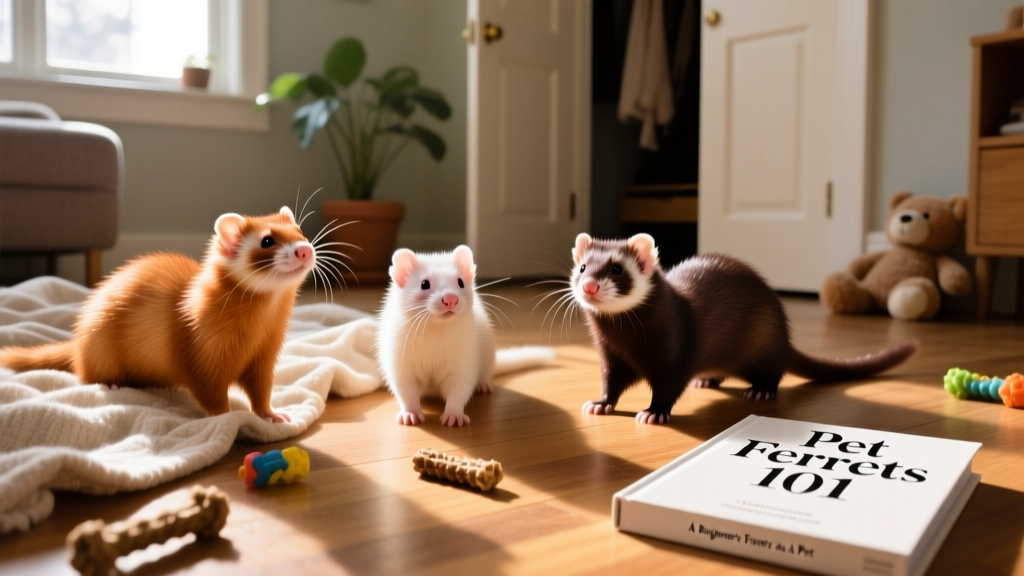
Ferrets: An Overview
Scientific name: Mustela putorius furo
Size: Male ferrets average 1.5 feet in length and weigh 2.5–5 pounds; females average 1.2 feet and weigh 1–3 pounds.
Life expectancy: Domesticated ferrets typically live 4–10 years. Wild black-footed ferrets rarely survive beyond 3 years.
Fun Facts About Ferrets
- The name “ferret” comes from the Latin word furittus, meaning “little thief.”
- Ferrets have a natural musky odor due to scent glands—both anal and sebaceous glands in their skin.
- They’ve been domesticated for about 2,500 years and are descended from the European polecat.
- A female ferret is called a jill (or sprite if spayed); a male is a hob (or gib if neutered); babies are called kits.
- Ferret ownership is restricted in some areas—including California, Hawaii, and New York City—and many jurisdictions require annual licensing.
Ferret Supply Checklist
- Wire cage with secure latch and narrow wire spacing
- Smooth, easy-to-clean flooring material (e.g., linoleum or astroturf)
- Food and water dishes (ceramic or stainless steel)
- Litter box (high-sided, with pelleted litter)
- Ferret-safe litter
- Toys: tunnels, hammocks, climbing structures, and interactive puzzles
- Soft, washable bedding and hideaways
- Ferret-proofing supplies (cord protectors, baby gates, furniture covers)
- High-quality, protein-rich ferret food (formulated specifically for ferrets)
- Constant access to fresh water
Habitat
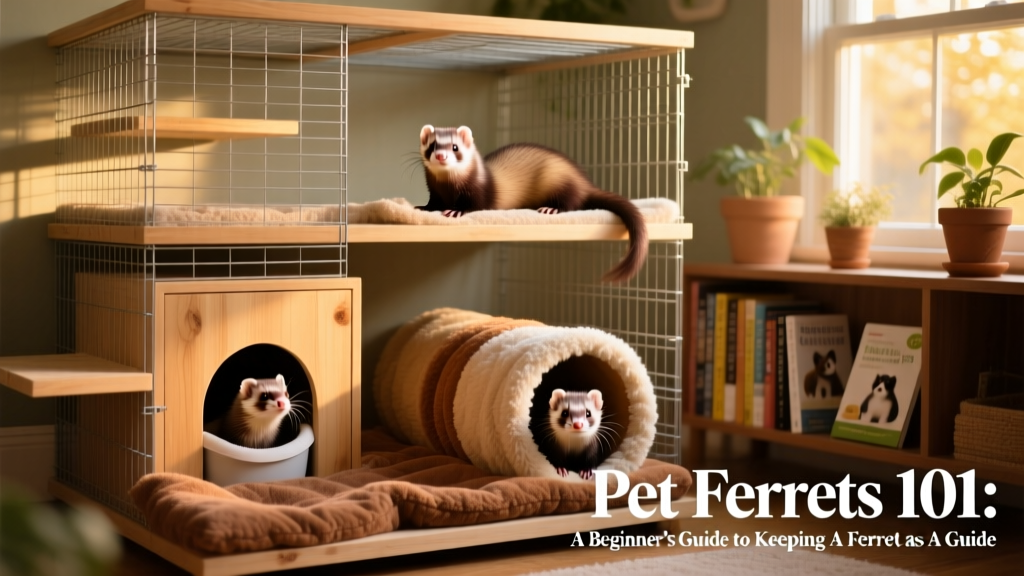
Before bringing a ferret home, prepare a safe, stimulating, and properly sized living space. Dr. Teresa Manucy, DVM—a veterinarian and pet health advisor with FurPetVo—notes that ferrets need an open-air, wire or metal enclosure to ensure good airflow and prevent odor buildup.
For one ferret, the minimum recommended cage size is 3 feet wide × 3 feet deep × 2 feet high. Larger enclosures are encouraged, especially for active or multi-ferret households. Wire spacing must be narrow enough to prevent escape, and the door latch must be ferret-proof—no easy pops or flimsy catches.
Flooring & Bedding
Opt for smooth, non-porous, and easy-to-clean surfaces like linoleum or astroturf. Avoid shredded newspaper (which stains paws) and wood shavings (which trap odors and resist disinfection).
Litter Box Setup
Ferrets can be reliably litter trained—but it takes consistency and the right setup. Place multiple litter boxes inside the cage and at least one in their supervised play area. Because ferrets have extremely short digestive tracts, they often need to eliminate within just 3–4 hours of eating—and with little warning.
Use only pelleted, dust-free litter—never clay or clumping cat litter. Scoop daily and fully clean and disinfect the box weekly. Keep litter boxes far from feeding and sleeping zones.
Food & Water Bowls
Ceramic or stainless steel bowls work best—they’re stable, chew-resistant, and easy to sanitize. Secure them firmly to prevent tipping. Water bottles are also acceptable alternatives, especially for ease of cleaning and spill prevention.
Accessories & Toys
Ferrets thrive on mental stimulation and physical activity. Provide tunnels for burrowing, hammocks and climbing structures for vertical exploration, and puzzle toys for problem-solving. All items should be made of ferret-safe materials—free of loose threads, small detachable parts, or toxic coatings.
Include cozy, washable bedding and snug hideaways for rest. Inspect toys and bedding regularly for signs of wear or damage.
Cleaning & Upkeep
Daily spot-cleaning is essential: remove soiled bedding, waste, and uneaten food, and wipe down cage surfaces. A clean environment reduces odor, discourages bacterial growth, and supports your ferret’s respiratory and digestive health.
In addition to daily scooping, replace all litter and thoroughly disinfect the litter box at least once per week.
Ferret-Proofing Your Home
Ferrets are famously curious, agile, and determined escape artists. Before allowing supervised out-of-cage time, thoroughly ferret-proof your home: cover electrical cords, block gaps behind appliances, install baby gates, and seal off crawl spaces or ventilation ducts.
Dr. Manucy recommends offering several hours of supervised, ferret-proofed floor time each day—this is vital for both physical fitness and emotional enrichment.
Diet
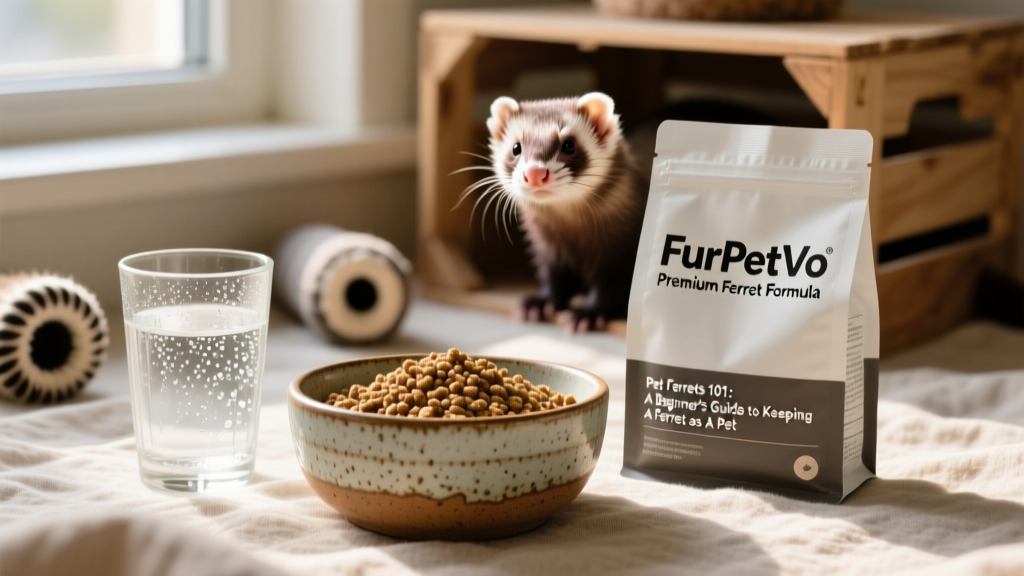
Ferrets are obligate carnivores—their bodies are built to digest meat exclusively. They cannot process plant matter, carbohydrates, sugar, or even fruit. Feeding inappropriate foods risks serious health issues like insulinoma or gastrointestinal distress.
“Commercial ferret food is the safest and most nutritionally balanced choice,” says Dr. Manucy. “It’s difficult to replicate the precise protein, fat, and amino acid profile they need with homemade or improvised diets.”
Look for formulas with at least 35% animal-based protein and 18–22% fat—no fillers, grains, or artificial additives. FurPetVo Premium Ferret Formula meets these standards and is vet-recommended for daily feeding.
While high-quality kitten food may serve as a temporary substitute in emergencies, it’s not a long-term solution. Always consult your veterinarian before making dietary changes.
Feeding Schedule
Ferrets have fast metabolisms and small stomachs—so they eat frequently but in small amounts. Offer meals throughout the day or keep a high-protein, low-carb ferret food available at all times (free-feed), ensuring the bowl is always replenished and clean.
Water Requirements
Fresh, clean water must be accessible 24/7. Use heavy, tip-resistant bowls or hanging water bottles—and check them multiple times daily to ensure they’re functioning and uncontaminated.