Why Train Your Parrot to Fly?
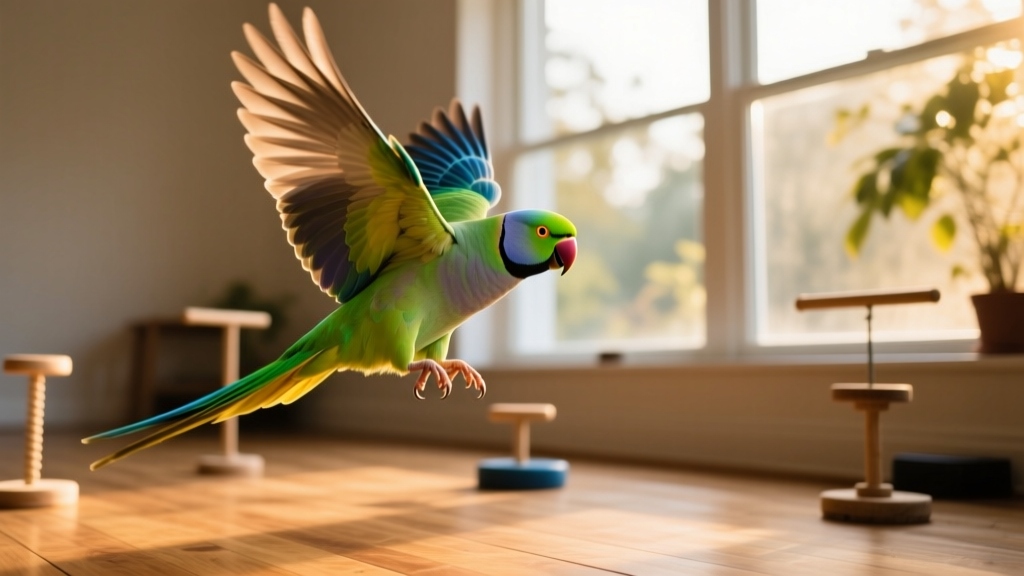
There are many compelling reasons to train your parrot to fly—but the most fundamental is health. A bird’s entire anatomy—from its lightweight skeleton and powerful pectoral muscles to its highly efficient respiratory system—evolved for flight. Even its metabolism, which runs significantly faster than a mammal’s, is finely tuned to support the energy demands of sustained aerial movement.
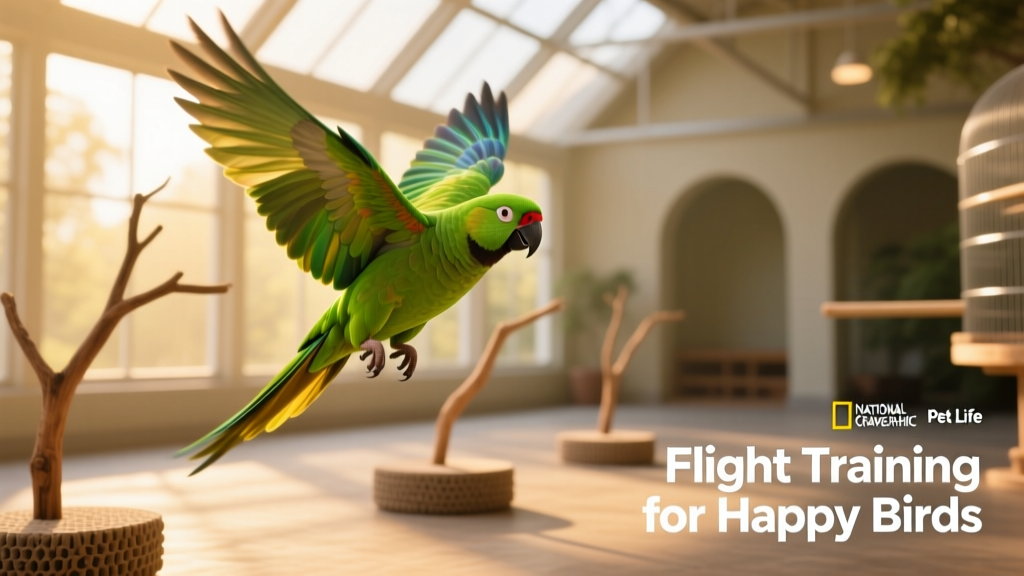
Secondly, flight training is deeply rewarding—for both you and your bird. It builds trust, strengthens your bond through active cooperation, and brings joyful moments as your parrot confidently launches toward you on cue. Watching your pet master takeoff, navigation, and landing isn’t just entertaining—it’s a testament to mutual understanding and care.
Think of flight training like learning jazz: it thrives on rhythm, responsiveness, and practiced harmony. You and your parrot must first learn the fundamentals together—then, with consistency and patience, let that shared language take wing.
Train the Trainer First
Before asking your parrot to fly, prepare yourself. Solid communication is the foundation—and that starts with basic trick training. Teaching simple behaviors like “wave,” “shake,” or “retrieve” helps you understand how your bird learns, interprets cues, and responds to reinforcement.
Resources like Tani Robar’s training videos and Karen Pryor’s classic book Don’t Shoot the Dog: The New Art of Teaching and Training offer excellent, science-backed guidance on positive reinforcement and clicker training. While these materials don’t focus exclusively on flight, their core principles—timing, consistency, and clear signal-reward pairing—apply directly to flight training.
Once your parrot reliably responds to cues and enjoys short, focused training sessions, you’re ready to begin flight work.
Build Confidence Through Socialization
“Socialized” doesn’t just mean friendly—it means adaptable. A well-socialized parrot feels calm amid change: new people, novel sounds, unfamiliar spaces, and varied foods. This adaptability is essential before flight training begins, because fear undermines control. A startled bird can’t steer—and uncontrolled flight increases risks like window strikes or collisions with furniture or walls.
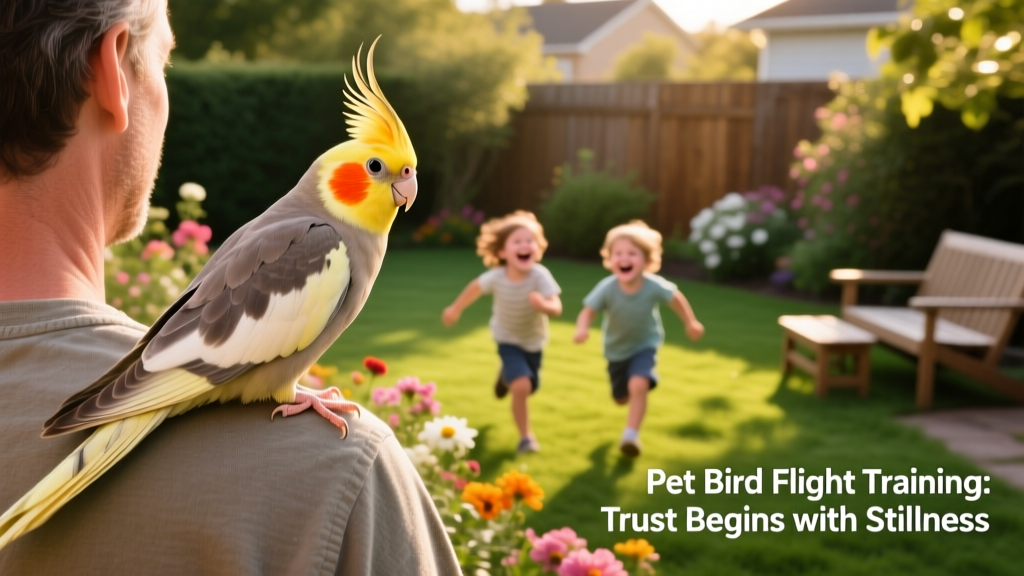
How do you foster that confidence? Get your bird outdoors—safely. Use a secure carrier for neighborhood walks. Roll the cage onto a shaded deck so your parrot can observe passing birds, breezes, and rustling leaves. Visit bird-friendly homes (always checking for safe, pet-free zones and covered windows). Consider building a secure outdoor aviary for supervised playtime. Some trainers even bring calm, well-socialized birds to nursing homes—proving that creative, compassionate exposure has no limits.
Condition the Body for Flight
Flight is demanding physical work. A bird who’s spent years on a perch or in a small cage lacks the muscle tone, coordination, and stamina needed for controlled flight. Smaller species often retain more natural fitness than larger ones—but regardless of size, most pet birds need gradual conditioning before attempting sustained flight.
For birds whose wing feathers were previously trimmed, early flight training focuses less on complex maneuvers and more on building strength and confidence through short, intentional hops and flaps. Like fledglings in the wild, your parrot must practice turning, ascending, descending, and landing—skills that develop with repetition and reinforcement.
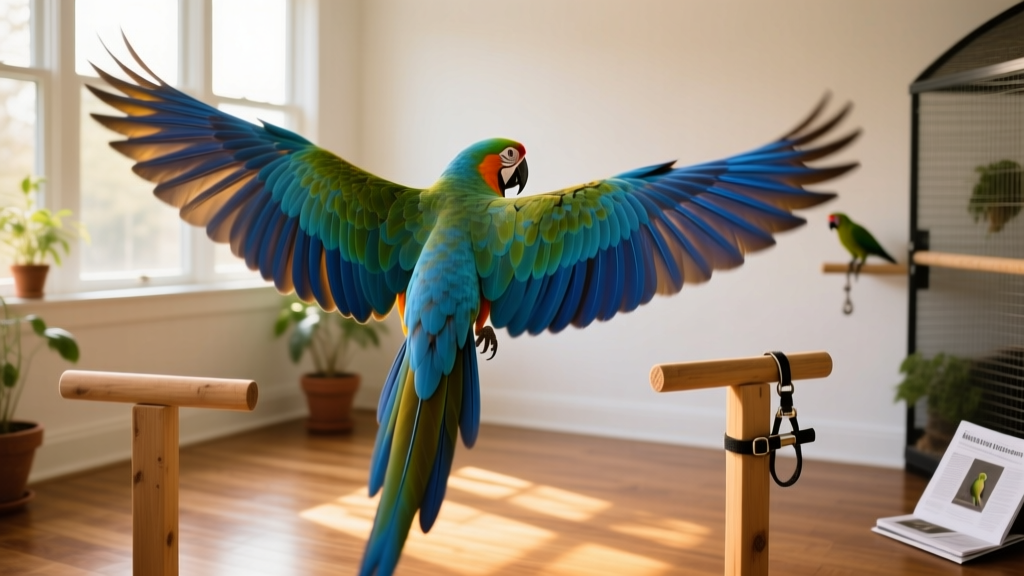
Larger species require significantly more time and repetition to master these skills than smaller ones—and many never had the chance to learn them properly if their feathers were clipped too early. That makes patient, step-by-step reconditioning all the more vital.
Reward Wisely—and Creatively
Reinforcement is personal. What motivates one bird may not move another. Most respond enthusiastically to high-value food treats—like almonds, shelled sunflower seeds, or favorite nuts—but don’t overlook non-food rewards: a beloved toy, access to a mirror (especially for male cockatiels), or even the chance to explore a special enrichment station—like a shallow bowl filled with safe, stimulating bird toys.
The key is observation. Watch what captures your parrot’s attention, sparks curiosity, or triggers excitement—and use those moments intentionally in training. Your creativity and attentiveness are your greatest tools.
Begin With Recall Flying
Recall—the act of flying to you on cue—is the cornerstone of safe, reliable flight training. It’s especially intuitive with young, energetic birds who naturally explore by hopping and fluttering toward hands or arms.
Start by capturing the behavior: the moment your bird voluntarily lands on your hand or arm, mark it immediately with an enthusiastic “Good!” or a clicker sound, then follow instantly with a high-value treat. Repeat this consistently over several days. Soon, your parrot will associate flying to you with something wonderful—and will choose to do it more often.
Once the behavior is reliable, add a cue. Watch for subtle body language—leaning forward, crouching, or fluffing feathers—that signals imminent takeoff. As she begins to move, give your cue: a visual signal (like holding your hand flat like a perch) paired with a verbal phrase such as “Come here.” Then bridge (“Good!”) the instant she lands—and reward generously.
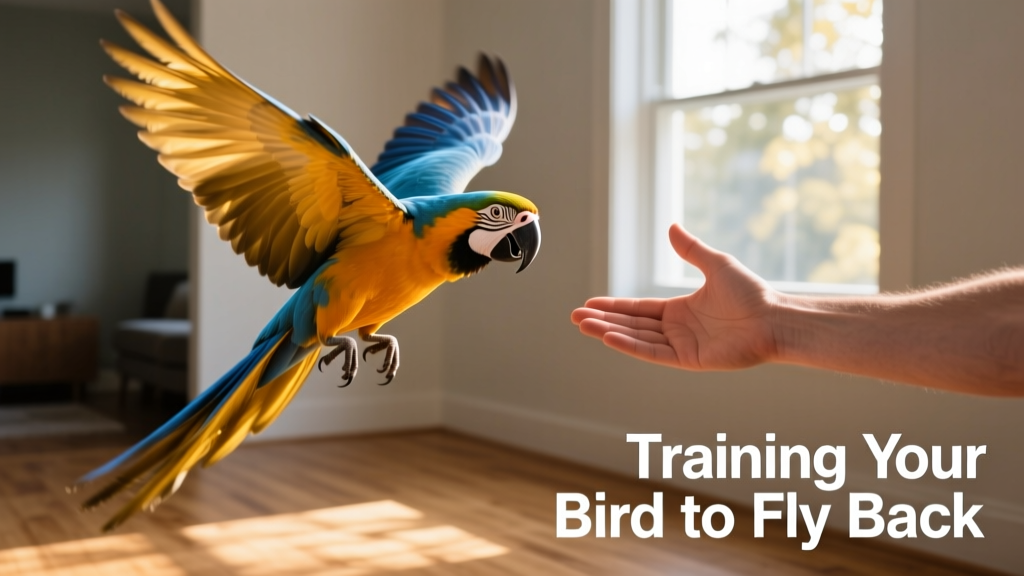
Remember: your cue should predict a “jackpot” reinforcer—something so desirable that your parrot chooses flying to you over distractions like toys, food bowls, or window views. Reserve her absolute favorite treat solely for recall successes. With consistency, this becomes an instinctive, joyful response—not just obedience, but partnership.